India’s Wildlife Is Battling Disease Too
Last week, a Congress Member of Parliament asked in the Rajya Sabha if the wild lions in Gujarat were dying because of the collars they wear to track their movements. This was like asking if tennis elbow is a problem when people are afflicted by a respiratory disease pandemic. Since the last two years, Asiatic lions have been dying in Gir because of a Canine Distemper Virus, which has killed over 50 lions. Yet, there is a history of denial of this predicament.
In 2013, the Supreme Court directed the state of Gujarat to give wild lions to Madhya Pradesh, so a second home could be created for them. This was explicitly to avoid the dangers of an epidemic – ironically, the very kind of danger that the lions are facing today. The court has also said that wild animals are ferae naturae, meaning they have the right to freedom and dignity. They don't technically belong to the state, like office tables and towels would. Yet wild animals are treated as property – and markers of state pride and possessiveness. Gujarat wants to be the only state in the world to have the lions: to the Supreme Court, the state said lions were Gujarat's pride.
This demonstrates that we are looking away from the real issues that plague wildlife, and authorities are unwilling to take hard decisions. Even as we struggle with a pandemic, disease is wiping out flagship species. Within flagship projects.

Translocation Trouble
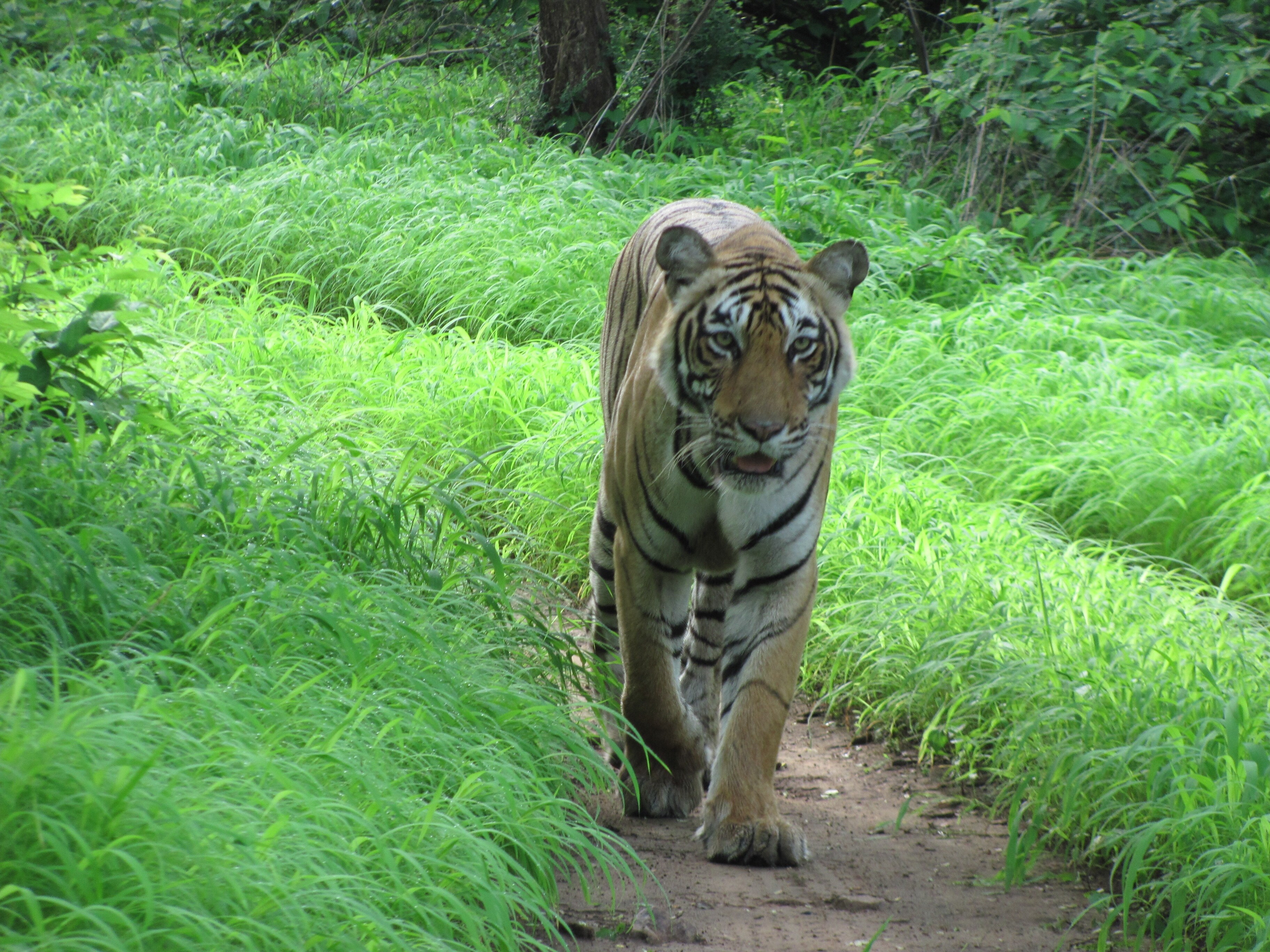
The most photographed tigers in the world are from a small, arid forest in Rajasthan. This is the Ranthambhore tiger reserve – packed with tigers and resplendent forts, and responsible for putting Sawai Madhopur and Rajasthan on the world map. Tiger conservation in this intensely visited reserve has been so successful that efforts were made to increase corridors so tigers could disperse. It took several years to create the Mukundara Hills tiger reserve, which would become Rajasthan's third tiger reserve, and serve as an extension for Ranthambhore. In 2018, the first tigers were translocated from Ranthambhore to Mukundara. Cubs were born. And by 2020, two sets of cubs, two male tigers, and one tigress are all dead due to mysterious reasons, including disease. The last tigress is ailing and this week a decision was announced to send her to a zoo.
Despite the fanfare and funding, there are several allegations that the state forest department acted in secrecy and erroneously said the deaths were due to the tigers themselves fighting amongst each other. They did not give out information on the birth (and death) of cubs and has still not released credible veterinary reports for the different causes of serial deaths. Under political pressure to perform, the cases of Mukundara and Gir are not so different – both states are doing what is good for postcards and political symbolism, rather than what wildlife management actually needs.

Unfortunately, yet another tiger translocation project – this time in Satkosia, Odisha, recently ended in tragedy. A tiger from Madhya Pradesh's Kanha and a tigress from Bandhavgarh were taken to Satkosia, because the latter has lost all its tigers.
Though the tigers were radio-collared, authorities could not detect that the male had stopped moving. He was dead, because of a ‘maggot wound' around his neck. Though the department did not want to attribute the death to poaching, the wound was a clear indication of poaching through wire-snare traps – the tiger died painfully after being caught in one. The tigress was taken into captivity because she came into conflict with villagers.
Big Cat translocations are a relatively new exercise for India, and they are usually done with glitzy announcements by politicians, meshing together political currency with conservation biology. Such projects assume importance, in the way they provide a spotlight on species, infusing new energy in decades-long efforts at conservation. The problem is the secrecy and lack of disclosure after the translocation happens. Perhaps like Mukundara, the groundwork in Satkosia was not complete to receive the tigers, which was further exacerbated by inefficiency.

In a contrast, a site called Kuno in Madhya Pradesh has been preparing for lions from Gir for several years – since the Supreme Court ordered the creation of a second habitat for them. In response to the Canine Distemper Virus outbreak though, Gujarat has announced a snazzy lion plan, which includes hospitals, CCTV cameras, and vaccinations by the dozen. It has once again refused to translocate lions, even as the CDV outbreak drags on.
Action That Is Effective, More Than Visible
Wildlife conservation is not expected to be perfect. But it requires political will – keeping cattle and wild animals separate to stop disease transmission, transparency in terms of deaths and medical findings, and being able to do what's best for the animal, rather than what's best for brownie points. A subject that cannot speak, and which leads a secretive life not dependent on our food provision, is commensurate to the fact that we need to create conditions that strengthen natural immunity and selection. Wild animals should technically not be caught to be administered medicine, vaccinations, or food like a child would be – instead we should create and maintain good habitat.

In the first week of October, India will celebrate National Wildlife Week. Like each year, the numbers of tigers and lions may be stated as an achievement. Once the CDV outbreak gets over, the question of disobeying the Supreme Court order will remain. And as tiger reserves like Satkosia and Mukundara lose tigers, new translocation plans will be drawn up as new reserves go through tiger extinctions, even if questions remain on their implementation.
Between files and stated facts, a world of mismanagement may continue to thrive. During a pandemic, we need more disclosure of disease rather than a pretence that it doesn't exist. Denial of serious problems like viruses is a disease. And in between the pretty pictures of tigers and lions, we must investigate untimely deaths as much as we celebrate life.
Neha Sinha works with the Bombay Natural History Society. Views expressed are personal.
The views expressed here are those of the author and do not necessarily represent the views of BloombergQuint or its editorial team.

-
'Never Seen This Level Of Negativity': Sandeep Tandon Says The Next Rally May Be Closer Than You Think

Veteran investor Sandeep Tandon says foreign selling is easing, large-caps are due a comeback and mid-caps are crowded, while he turns positive on gold, power and pharma this Diwali.
-
Indians Stay With Family, Not In Hotels | The Reason Why
India still lacks enough clean, reliable and affordable hotels for budget-conscious travellers.
-
The Economic Imperative: Analysing The Material Driving Force Behind India-Canada Strategic Reset
This economic complementarity is further reinforced by deep institutional investment ties and talent mobility, which form the bedrock of the bilateral framework.
-
Medicine Pricing: Where Must Profit Stop?
India must confront excessive margins, hidden incentives and regulatory gaps that threaten the integrity of medicine.
-
Why Amazon And Flipkart Are Struggling To Beat Meesho In India's Smaller Cities
With 274 million users and lowest-cost logistics, Meesho is defending its value commerce crown against giants like Amazon and Flipkart.
-
High US Salaries, No Green Card Certainty: The Financial Calculation Facing Indian H-1B Families
The suspension of PERM processing at eight technology employers does not cancel existing H-1B visas. What it does is force a question many Indian families have been avoiding: is the US salary worth tying your career and family plans to one employer?
-
Swiggy vs Eternal: Food Delivery's Two Rivals Are No Longer In The Same Race
Eternal is building a private AI assistant, dark.ai. Swiggy is still working out how to make Instamart pay, with an operating loss of Rs 895 crore in the July-September quarter while Blinkit stayed profitable.
-
Where You Live Shapes How You Get To Work | The Reason Why
Two-wheelers are the most popular way to get to work in India, accounting for nearly 43% of workplace commutes.
-
Unhedged Position: Can India See An Indonesia-Style Time Correction?
The Nifty is trading below levels it first clocked in 2024. Is there, then, as I have suggested in the headline, potential that the current time correction drags on painfully for the next three-five, even ten years?
-
Navigating Friction And Energy Realities: An Analysis Of Marco Rubio's October Visit To India
Occurring at a critical juncture marked by stalled trade negotiations and escalating geopolitical pressures over global energy supplies, the visit offers a profound window into modern US-India relations.










