India's Stock, Forex And Money Markets Closed After Soaring In Previous Session
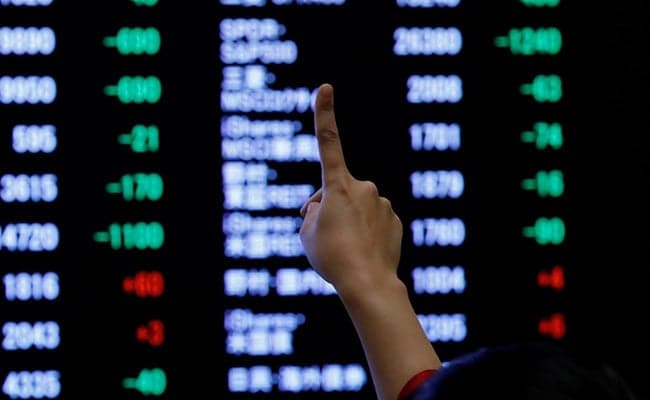
Indian stock, currency and money markets will remain closed on Wednesday on account of Ganesh Chaturthi, a day after soaring to mark several key milestones.
Apart from the stock markets, the commodity markets too are closed. Trading will resume on Thursday.
Equity benchmarks surged over 2.5 per cent and ended higher for a second straight month, gaining over 3 per cent.
The 3-share BSE Sensex index jumped over 1,500 points, and the broader NSE Nifty-50 index at its highest ever monthly close on charts, driven by financial and banking stocks, reversing a deep plunge on Monday.
The Nifty bank index rose 3.3 per cent, while the finance index gained 3.4 per cent.
"Indian macros are improving a lot. Despite the heavy selling witnessed on Monday, foreign investor selling was negligible, which was one important trigger," Vikram Kasat, Head Advisory at Prabhudas Lilladher, told Reuters.
On Tuesday, the Indian rupee notched its biggest one-day gain in a year against a wobbly dollar as domestic equities saw a rush of foreign investor inflows.
"Globally, all countries are facing the churn, and India seems to be the best-placed jurisdiction in terms of growth and inflation outlook in FY23," Soumya Kanti Ghosh, group chief economic adviser, State Bank of India, said in a report.
"We believe the China story may now be facing clear headwinds, and India is likely to benefit from such stark realities over the longer term."
All 30-Sensex constituents finished in the green, with IndusInd Bank, Tech Mahindra, ICICI Bank, Kotak Mahindra Bank, Tata Steel, and HDFC among the other major winners.
Twelve of the 30 stocks that are part of the benchmark Sensex gained more than three per cent.
"...rebound indicates the domestic economy's resilience compared to its global peers. Although the markets are currently at premium valuations, continued support from foreign investors aided domestic stocks to inch higher," said Vinod Nair, Head of Research at Geojit Financial Services.
For two months in a row, foreign portfolio investors (FPIs) have been net buyers of the Indian equities markets.
FPIs had been dumping stocks in the Indian markets for the previous nine to ten months for various reasons up until early July.
According to data, they have already purchased stocks worth around Rs 51,204 crore in August.
FPIs had taken out a total of Rs 168,798 crore in 2022; however, they were net buyers in July, investing Rs 4,989 crore.
The last time foreign investors were net purchases was in September 2021.
The recent resumption of foreign investments and the apparent plateauing of global inflation both contributed to the recent uptick in Indian equity markets. The current increase in stock indexes assisted in making up all of the losses investors have already sustained in 2022.
The recent bull rally in Indian stock prices has increased investor wealth by almost Rs. 27 lakh crore.
According to the Bombay Stock Exchange figures, the market capitalization of all of India increased from Rs 25,319,892 crore on July 11 to Rs 28,032,755.91, as per the most recent report on Tuesday.
August also marked the first month this year when overseas investors turned net buyers of India's government debt. On the day, yield on the 10-year paper dropped 6 basis points to 7.1893 per cent.
The government bond yields fell on Tuesday, as sentiment was supported by expectation of progress towards the inclusion of bonds in global indices.
"The news of some progress towards inclusion of Indian bonds in global index has gripped the market and continues to support bullish positions," said Abhishek Upadhyay, senior economist at ICICI Securities Primary Dealership.
The benchmark bond yield had eased on Friday after a media report stated that JPMorgan was speaking to large investors over adding India to its emerging-market bond index.
The bank was seeking investor views on whether to make a large chunk of the Indian government bond market eligible to be included in the GBI-EM Global Diversified index of local currency debt.
Goldman Sachs had said earlier this month that it expects India to be included in global bond indices in 2023, potentially leading to passive inflows of around $30 billion.
Meanwhile, the rupee's strength on Tuesday comes after the Reserve Bank of India (RBI) stepped in to prevent the currency from trading under 80 per dollar in the previous session, traders had told Reuters.
"Amid global turmoil and weakness in major Asian peers like the Japanese yen and the Chinese yuan, it will be interesting to see to what extent the RBI succeeds in protecting the USD/INR pair," said Amit Pabari, managing director at consultancy services provider CR Forex.

-
Your iPhone Costs 12 Grams Of Gold, A Car About 100. What Does Your Life Weigh?

Measured in rupees, almost everything looks more expensive than it did a generation ago. Measured in grams of gold, a lot of it has become cheaper.
-
Gold Is Rs 22,000 Cheaper Than A Month Ago. Should You Buy Amid The Wedding Season?
Gold's potential slide to $3,500 could save around Rs 4,700 per 10 grams, but a soft inflation print could just as easily push prices back up. One way to split the risk is to buy in parts, some now and the rest after the Fed's Dec. 9 decision.
-
AI Agents Are Gaining Power. Who Governs Them?
Artificial intelligence agents promise to transform productivity by moving machines from assisting decisions to executing them. But as organisations delegate greater authority to these AI-agents, they must first establish who controls that authority and who remains accountable when things go wrong.
-
Why Swapping Your Old Gold Can Trigger A Rs 5 Lakh Tax Bill, And How You Can Avoid It Legally
Swapping old gold for new is taxed as a sale and a fresh purchase. Getting your own gold remade can cut most of that bill, though it has its own costs.
-
The AI Trade is Done. The Real Opportunity for Investors Starts in 2027 | Unhedged Position
As pureplay AI stocks plunge and circular, capex-led financing unwinds, 2027 is set to be a year of reckoning for AI companies. Yet the bust clears the way for a better opportunity for investors in 2027 -- shifting the spotlight from AI builders to the companies using AI.
-
Leadership As Mission: Why The Age Of AI Demands More Human Leadership
Debjani Ghosh examines how AI is changing leadership, arguing that its success must be measured by its impact on people and the accountability of those guiding its use.
-
We May Need Another Tukaram Mundhe To Fight Air Pollution | The Reason Why
Developers may install basic measures such as sprinklers and green nets, resume work, and continue violating rules when this equipment stops working.
-
Extracting Value From Battery Scrap Could Be Challenging For India | The Reason Why
A discarded lithium-ion battery still contains valuable materials such as lithium, nickel and cobalt. These can be recovered and reused. When such batteries are crushed and shredded, they produce a dark powder called black mass.
-
One El Nino, India Can Handle. Two Could Break The Granary
India's grain stocks can absorb one bad year, but a second El Nino could drain the buffer in two to three years, economists say.
-
India's Troika Of Good Luck | Joining The Dots
As Jensen Huang's exit drags Nvidia down, a cooling AI trade and resilient earnings have revived investor interest in India. A likely RBI rate hike looms.









