India’s Second MPC: The Known, The Known-Unknown And The Unknown
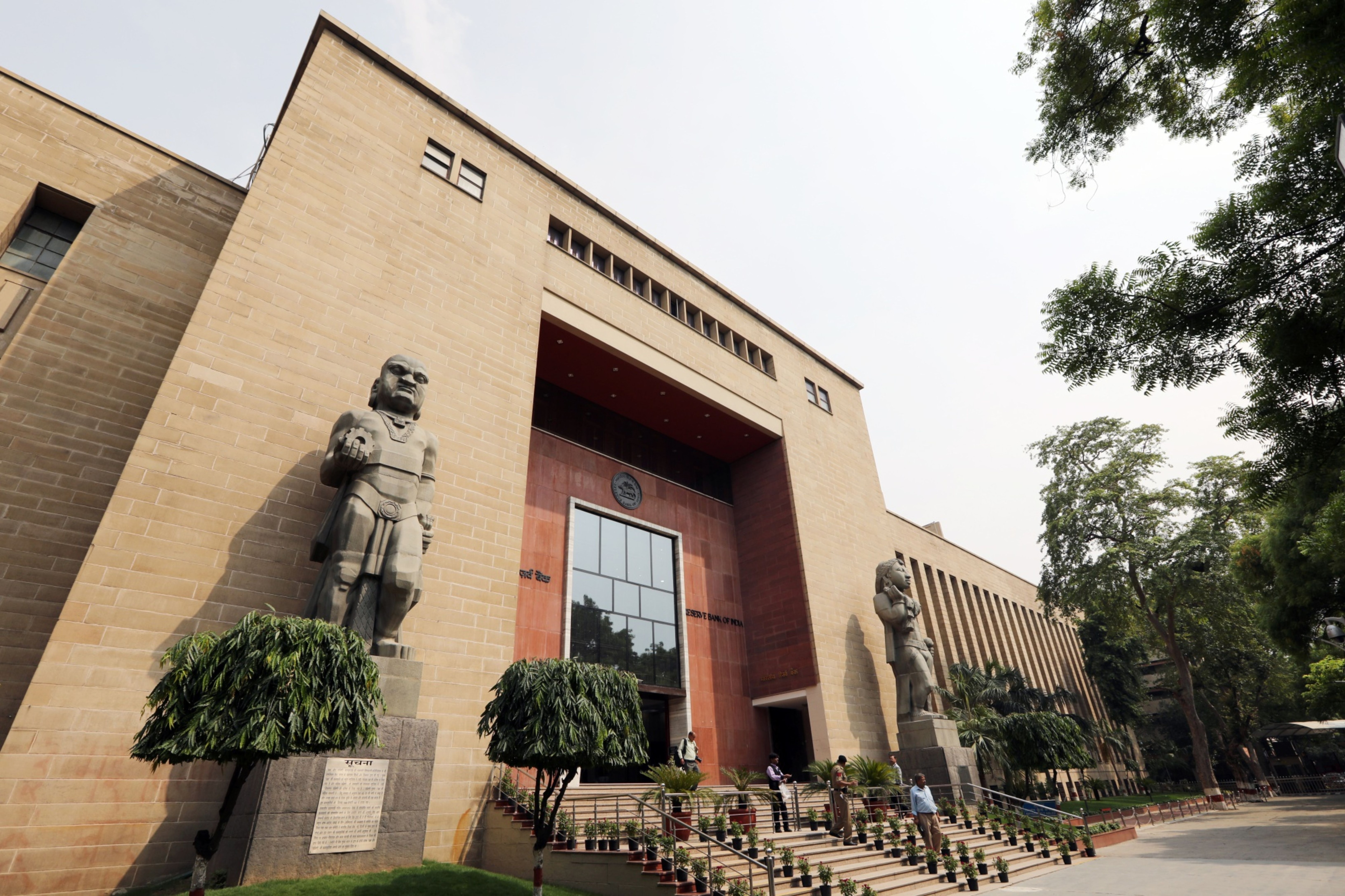
India's second Monetary Policy Committee may see a more diverse mix of views, with the three external appointees coming from specialisations such as macroeconomics, macroeconomic modelling, agricultural economics and financial markets.
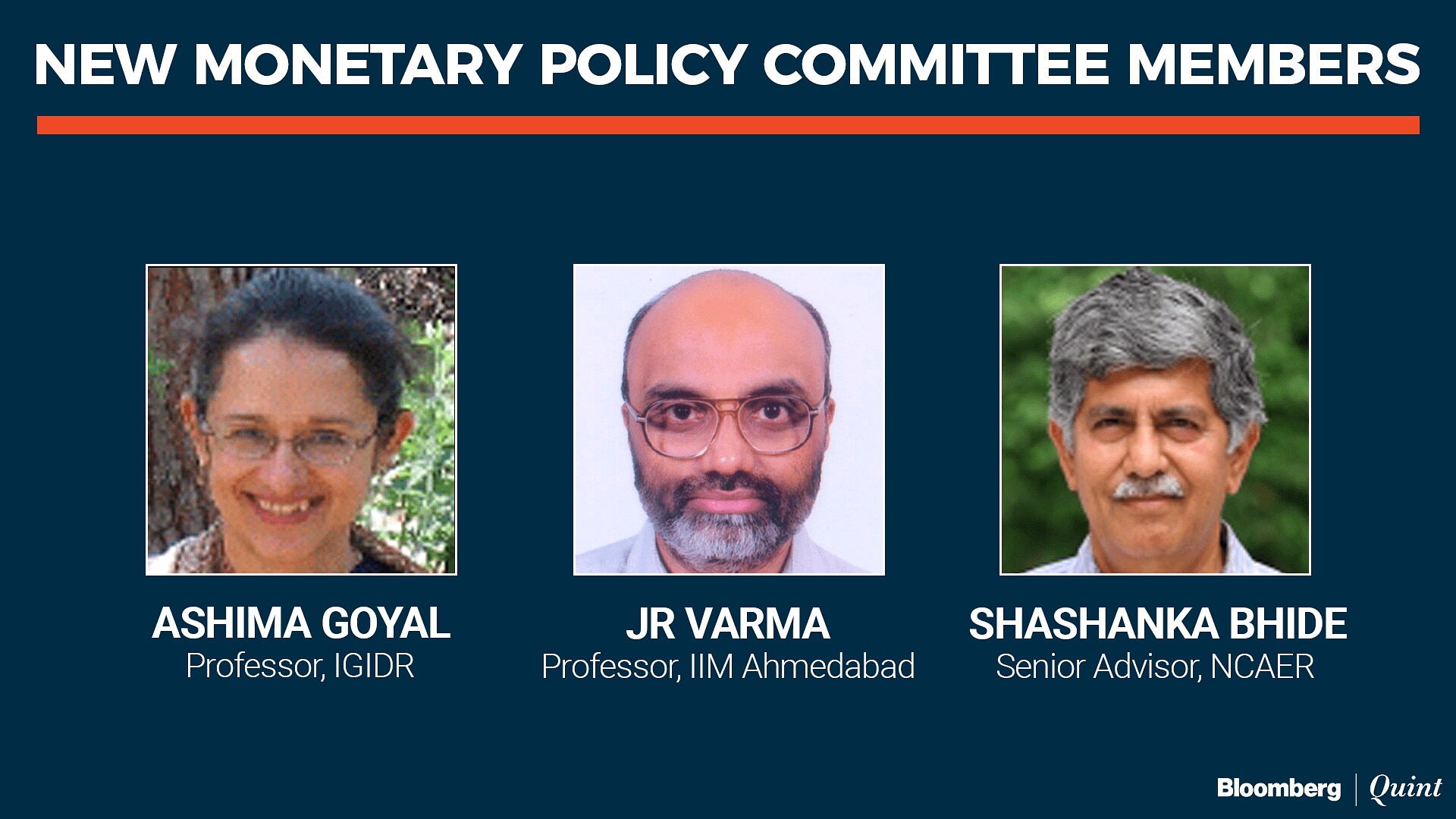
On Monday, the government said Ashima Goyal, Jayanth R Varma and Shashanka Bhide will join the six-member panel for a four-year period. They will replace Chetan Ghate, Pami Dua and Ravindra Dholakia, whose term ended after the August MPC meeting. The meet scheduled for October was deferred due to a delay in the appointment of the new external members.
“I do not see much change in the composition. In the previous group, you had a macroeconomist (Chetan Ghate), macro-modeller (Pami Dua) and regional economist/public finance expert (Ravindra Dholakia). Now you have Ashima Goyal (macroeconomist). Shashanka Bhide (macro-modeller) and JR Varma (financial expert),” said M Govinda Rao, a former member of Fourteenth Finance Commission.
According to Rahul Bajoria, chief India economist at Barclays, the government has once again selected all three external members from academia. “Looking at their past track record, the newly constituted members bring in expertise in macroeconomics, agriculture, development economics and financial markets to policy deliberations,” Bajoria said.
Also Read: Next MPC Meet Scheduled For Oct. 7-9
The Known
Of the three new members, the markets will be most familiar with Goyal and her views, which are often seen as ‘dovish'. Apart from having been a member of Prime Minister's Economic Advisory Council, Goyal is a frequent commentator on economic affairs.
In an article in Springer in August 2020, Goyal had argued that the Covid-19 crisis necessitates a large macroeconomic stimulus. In order not to overstrain government finances, it should be targeted, temporary and self-limiting, the article argued. It went on to say that large government assets can be monetised to help restructure towards more effective government spending.
In a paper written in June 2020 for the Journal of Economic Asymmetries, Goyal, along with co-author Deepak Kumar Agarwal, had highlighted the importance of liquidity in the Indian and emerging market environment. There is an “important asymmetry in monetary transmission for emerging markets in the special role of liquidity in comparison to rates,” Goyal and Agarwal had said.
Together, the two authors had argued against the Reserve Bank of India's view of using the call money rate as the guiding rate to judge liquidity conditions. Instead, they had supported a move towards a liquidity stance, which is “aligned to the cycle”, suggesting that liquidity should be surplus in an easing rate environment and deficit in a tightening interest rate environment.
The Known-Unknown
Varma is well known in financial market circles, having been formerly associated with India's capital market regulator. He is an active blogger on a wide array of subjects. Yet, his view on pure monetary policy and interest rates are not well known since he has rarely commented on those subjects.
In April 2020, Varma did call for the pre-emptive recapitalisation of the Indian financial sector.
“Under normal conditions, we want financial firms to have enough capital to assure their survival. In the aftermath of Covid-19, we would want much more. We would want financial firms that are ready to lend to companies that seek to rebuild their businesses, and to individuals trying to rebuild their lives,” Varma wrote. “We would not want financial firms that bunker down and try to conserve their capital because they are scared about their own survival,” he said.
The call matched the RBI's repeated reminders to lenders to build a capital base. While private sector banks have raised funds, many government-owned lenders and NBFCs have not done so.
At the peak of the Covid-19 crisis, when the RBI was forced to introduce a special liquidity window for mutual funds, Varma had argued that such a facility would not be enough. The mismatch being faced by mutual funds could only be solved by a combination of two things, he wrote. “The liquidity of the assets could be improved by a market maker of last resort, or redemption could be restricted.”
The Unknown
Bhide will be the relatively unknown entrant into the MPC. Much of his work has been in the area of agricultural economics and poverty. While Bhide is senior adviser of research programmes at the National Council of Applied Economic Research in Delhi, much of his published work is from many years ago.
Bhide is known for his macro-modelling work, although his Ph.D was in agricultural economics, Govinda Rao said.
“I think it is a good thing that the government continues to hold on to people with different backgrounds. For instance, it is unclear what impact the food and agriculture reforms and shake-up of the APMC system will have on inflation going forward. So it is good to have someone on the MPC team with experience on agricultural modelling,” said Hugo Erken, head of international economics at RaboResearch.
No Immediate Change In Policy View
Economists don't see an immediate change in policy directions with the new MPC appointments.
The new appointments will not dramatically change the near-term monetary policy outlook, said Bajoria. “Given our new inflation forecast trajectory, we believe that room to cut rates further will likely open up only in Q1 2021.”
The new choice of members lends a slightly more dovish bias to the MPC compared to the past external members, said Kaushik Das, chief India economist at Deutsche Bank.
While the mandate of the external MPC members is only limited to deciding on the repo rate movement and nothing beyond that, the external MPC members can nevertheless exert their influence on the central bank to push for more proactive support through OMO purchases, in the probable absence of room for rate cuts, in our view.Kaushik Das, Chief India Economist, Deutsche Bank
Priyanka Kishore, head of India and South East Asia Macro at Oxford Economics, shared that view. “In the short-term, I do not see it impacting the leanings of monetary policy in a significant manner. A temporary pause, followed by rate cuts, remains the central view given the strong concerns around recovery path.” Kishore said.

-
India's Troika Of Good Luck | Joining The Dots

A weaker Trump, a cooling AI trade and resilient earnings have put Indian markets back in favour. Rising inflation could spoil the party.
-
Talking Points This Week: Leadership Shock At Nvidia, Earnings Strength, And The Fog Over Hormuz
The Anthropic IPO pricing and first trading day, Nvidia's upcoming earnings, and any fresh signals from Iran will set the tone for the following week.
-
Signature Play: The Classic Cocktail Is Dead. Or Is It?
Classic cocktails are disappearing from India's cocktail menus. But they're still being ordered, taught to bartenders and borrowed from. So, who's really having the last drink?
-
A New Samvat Wishlist: Inclusive Prosperity And Human Development
India has strengthened its economic foundations through infrastructure, digital access and enterprise. Its next growth chapter must deepen productivity, create better livelihoods and widen participation in prosperity.
-
Love, Sex Aur Dhokha: The Audacious Plot To Spy On Jensen Huang
A Taipei dinner, a Singapore chip buyer and a suspected Chinese asset: inside the alleged spy operation that got close to NVIDIA's Jensen Huang.
-
Ten Things I Learnt This Samvat
Patience can be a trap. Cheap stocks can stay cheap. Leverage can wipe you out. What did Samvat 2082 teach us? Niraj Shah writes on 10 lessons from the year gone by.
-
Talking Points This Week: Tech Nerves, FII Buying, And A Faraway Banking Shock
The global markets are not shining this Diwali. The exception in the large markets is, India.
-
Midterm Rally Lasted A Day. The Hard Reality Of A Divided US May Last Two Years | Opinion
Between a contested AI boom, a debt ceiling that arrives in 2027 and a president with every incentive to act alone, the next two years may prove more volatile than the first day's rally suggests.
-
Blue Wave Will Derail the AI Trade but Won't Dismantle the AI Era | Unhedged Position
The Democrats' sweep of the US Congress will see politics collide with economic forces both over the long and short term.
-
It's Time To Take The GST Council's Bet On Trust Global
Payment records can prove India's services exports, and clear, proportionate rules can bring foreign digital sellers into the tax net.









