India’s Plan To Set Up A Gas Trading Hub Is Years Away
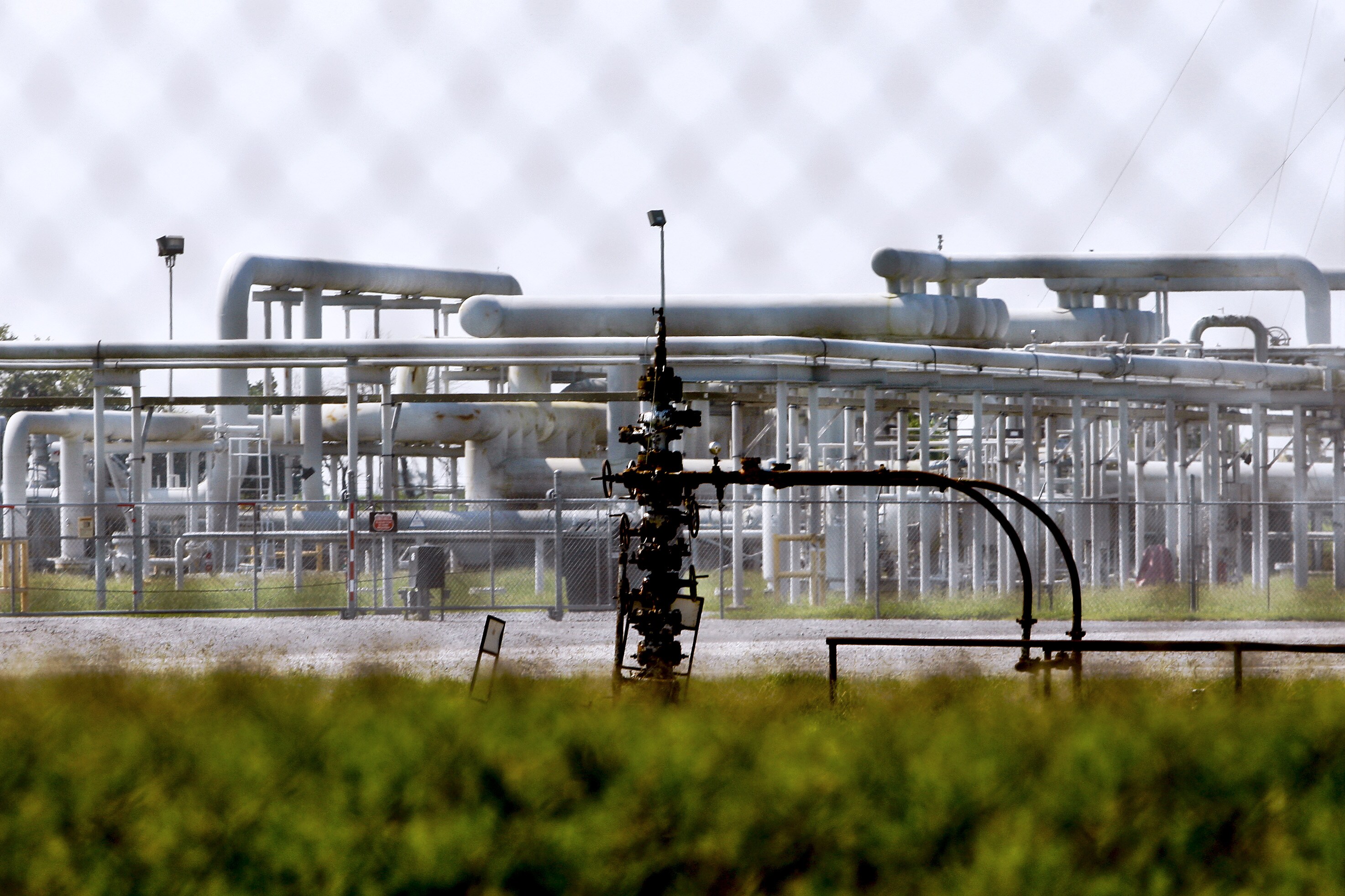
India plans to set up a gas trading hub to sell the fuel at market-determined prices as it looks to move away from dirtier alternatives. That still may take years.
The government, which announced its plan in 2017, itself admitted as much. A precise timeline couldn't be indicated for the project—which involves advanced infrastructure such as pipeline networks, regasification and storage capacities—due to administrative, operational and legal issues, Union minister for Petroleum and Natural Gas Dharmendra Pradhan said in a reply to Parliament in December.
The industry isn't ready as there's lack of pipeline connectivity, according to K Ravichandran, senior vice president at ICRA Ltd. “Although west and north India have pipeline infrastructure, it's inadequate in east and south India. An improvement in pipeline network to cover all regions is still three to four years away.”
Demand for the fuel is growing and Asia's third-largest economy plans to raise the share of natural gas in its primary energy basket to 15 percent from the current 6 percent in the next few years. With 14 of the world's 15 most polluted cities in India, according to a WHO study, natural gas is an alternative to dirtier kitchen and auto fuels that can curb pollution. Also, gas is cheaper than crude oil—the nation's primary import—and can help lower India's import bill.
India's use of natural gas, Bloomberg reported citing International Energy Agency estimates, would grow 4.9 percent annually through 2040 to 171 billion cubic meters, just behind China.
The Petroleum and Natural Gas Regulatory Board, Bloomberg reported in April last year, will hire a consultant to prepare a regulatory framework to develop and start gas trading hub or exchange in the country, according to a bid document on the regulator's website.
Petroleum Minister Pradhan, and Dinesh K Sarraf, chairman of Petroleum and Natural Gas Regulatory Board, declined to comment on BloombergQuint's queries.
Henry Hub, a network of pipelines in Louisiana, U.S., is the world's largest gas trading hub. Gas delivered here is the basis of some of the world's natural gas futures. Other leading hubs include the National Balancing Point in the U.K. and Title Transfer Facility in the Netherlands.
China, the world's third-largest importer of liquefied natural gas, plans to set up a trading platform in Chongqing. It has a similar exchange in Shanghai. But that works because these countries have a well-developed grid of gas pipelines.
“There should be pipeline connectivity; without it, a gas trading exchange isn't possible,” said ES Ranganathan, managing director, Indraprastha Gas Ltd. “Not all sources are connected to all consumption points. For example, suppose somebody wants to sell gas from Andhra Pradesh and somebody wants to buy from Uttar Pradesh, he can't do that as there's no connectivity.”
Ranganathan, however, expects the process to mature after launch. “As we've seen in the power sector, connectivity improves once customers start using an exchange.”
A gas exchange, according to Ranganathan, can result in efficient transactions. At present, if we need to buy gas from pipelines by companies such as GAIL(India) Ltd., we buy it via tenders, he said. “If an exchange is formed, those tenders won't be required.”
Pricing Hurdle
Pricing poses another challenge. While a gas trading hub offers advantages, establishing a single price is difficult considering significant gap in domestic and imported gas prices, Ravichandran said. The current landed domestic gas is priced at $5-5.5/mmBtu (including transmission tariffs and taxes), while imported gas (regasified liquefied natural gas) costs around $13-14/mmBtu.
Ravichandran also underscored a potential conflict of interest for free trade as a couple of large companies or groups are involved in both marketing and transmission of natural gas.
Prabhat Singh, managing director and chief executive officer of Petronet LNG, said the hub will make sense only if there are many suppliers and consumers. “If you create a hub, it will give you a regional segment of pricing discovery and some competition and a bit of demand enhancement.”

-
Signature Play: The Classic Cocktail Is Dead. Or Is It?

Classic cocktails are disappearing from India's cocktail menus. But they're still being ordered, taught to bartenders and borrowed from. So, who's really having the last drink?
-
A New Samvat Wishlist: Inclusive Prosperity And Human Development
India has strengthened its economic foundations through infrastructure, digital access and enterprise. Its next growth chapter must deepen productivity, create better livelihoods and widen participation in prosperity.
-
Love, Sex Aur Dhokha: The Audacious Plot To Spy On Jensen Huang
A Taipei dinner, a Singapore chip buyer and a suspected Chinese asset: inside the alleged spy operation that got close to NVIDIA's Jensen Huang.
-
Ten Things I Learnt This Samvat
Patience can be a trap. Cheap stocks can stay cheap. Leverage can wipe you out. What did Samvat 2082 teach us? Niraj Shah writes on 10 lessons from the year gone by.
-
Talking Points This Week: Tech Nerves, FII Buying, And A Faraway Banking Shock
The global markets are not shining this Diwali. The exception in the large markets is, India.
-
Midterm Rally Lasted A Day. The Hard Reality Of A Divided US May Last Two Years | Opinion
Between a contested AI boom, a debt ceiling that arrives in 2027 and a president with every incentive to act alone, the next two years may prove more volatile than the first day's rally suggests.
-
Blue Wave Will Derail the AI Trade but Won't Dismantle the AI Era | Unhedged Position
The Democrats' sweep of the US Congress will see politics collide with economic forces both over the long and short term.
-
It's Time To Take The GST Council's Bet On Trust Global
Payment records can prove India's services exports, and clear, proportionate rules can bring foreign digital sellers into the tax net.
-
Opinion | India at 38: From Innovation Overperformer to Innovation Powerhouse
India now has 453 VC-backed deep science startups, 18 of them late-stage, after 117 percent growth since 2020. Laurus Labs, at USD 9.3 billion, is the most valuable deep science company in any middle-income economy outside China.









