India’s Pharma Market Grows At Slowest Pace In Five Years
.jpg?downsize=1010:568 "India’s Pharma Market Grows At Slowest Pace In Five Years")
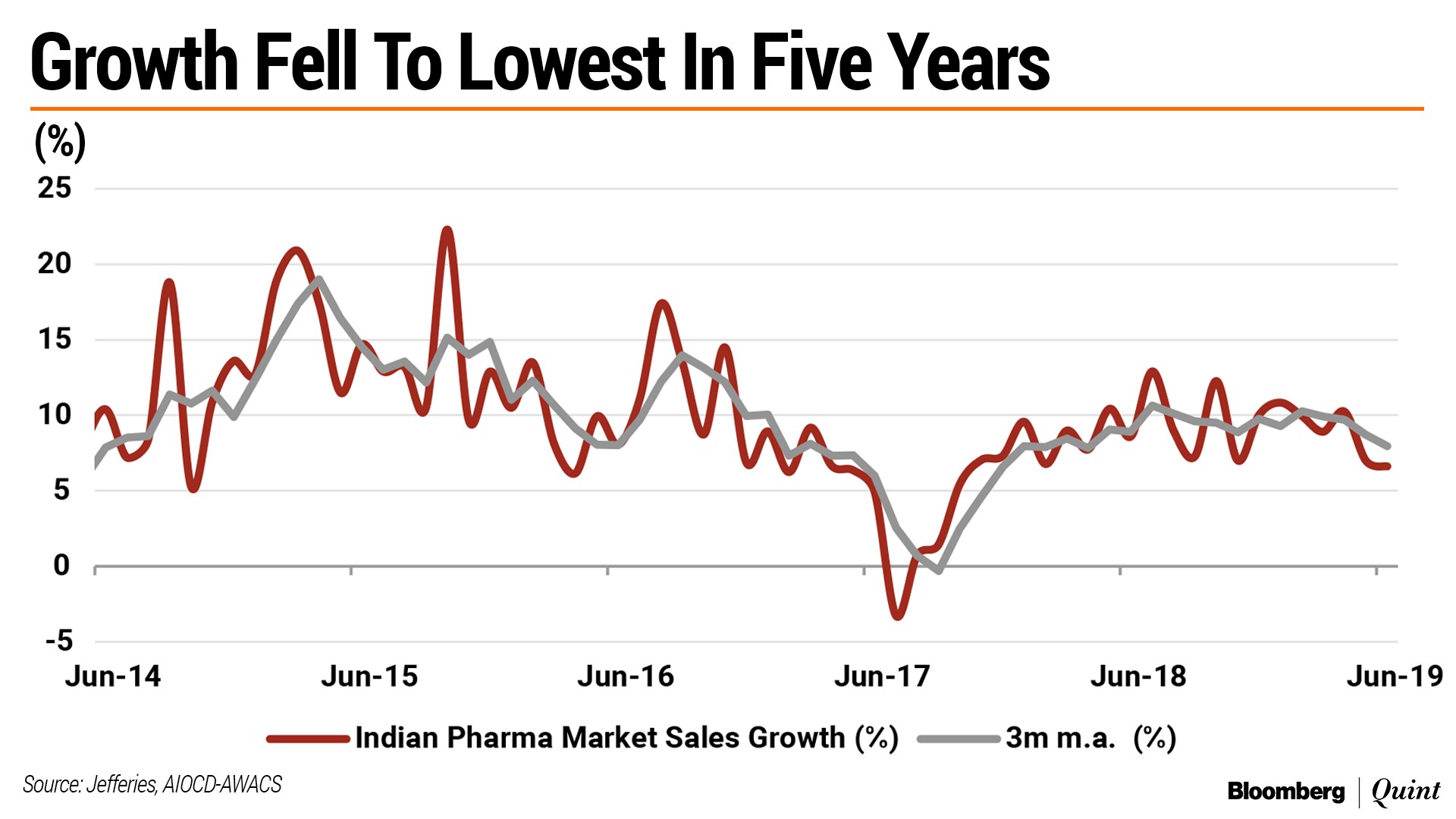
India's pharmaceutical market grew at its slowest pace in five years in the quarter ended June because of a fall in volumes even as prices remained stable.
The year-on-year growth stood at 7.9 percent in the three-month period, the lowest since the quarter ended June 2014, Jefferies said citing data released by AIOCD-AWACS—a pharmaceutical market research organisation. In June alone, the growth moderated to 6.6 percent—the slowest pace in two years.
That, according to Macquarie, compares with an annualised rate of 13-14 percent over the past 10 years.
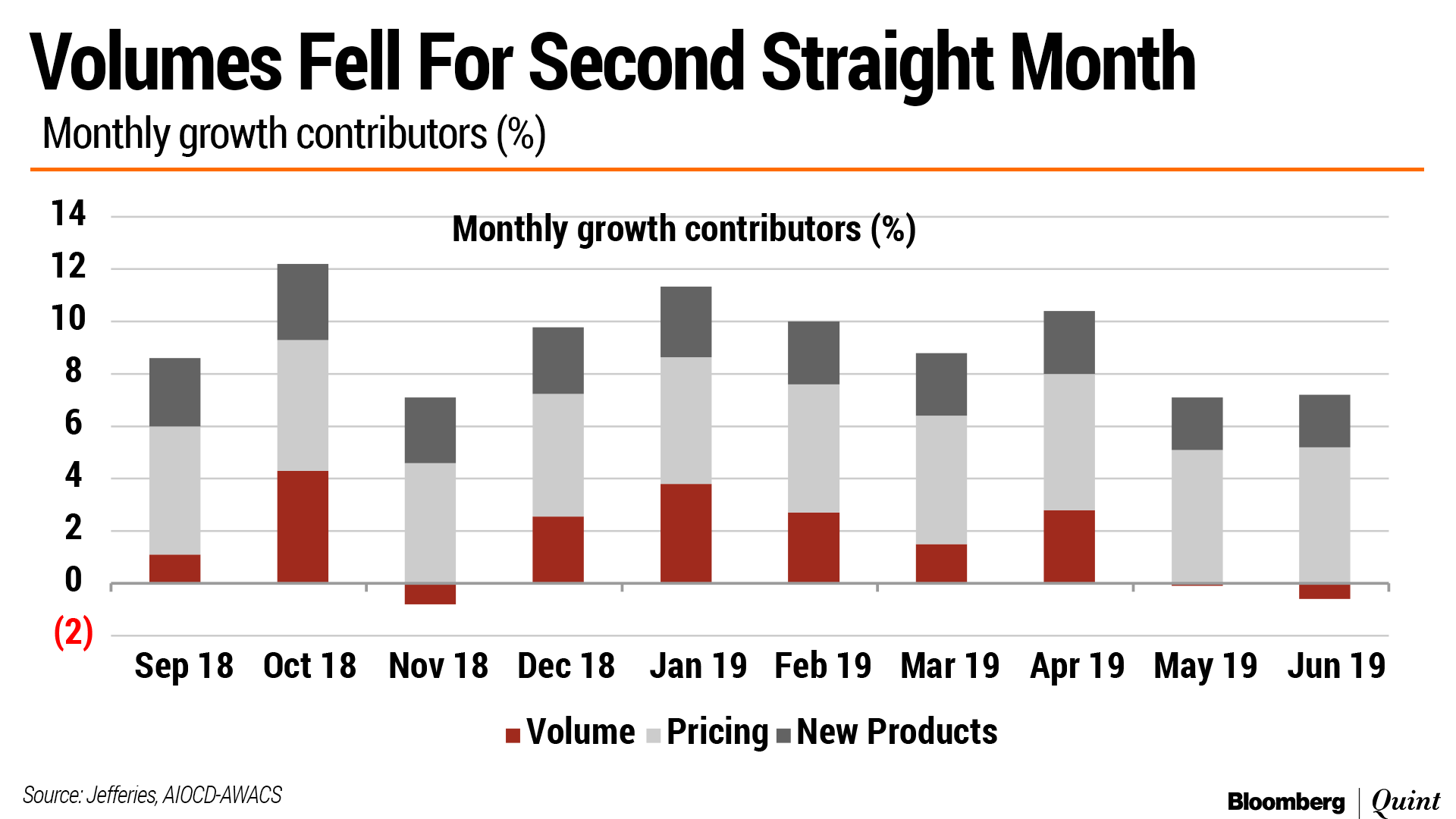
The slowdown, said Jefferies, was led by a second straight month of decline in volumes. Volume growth stood at 0.7 percent in the April-June period, the lowest in seven quarters, the report said. It contracted 0.1 percent in May and 0.6 percent in June. But it didn't mention any specific reason for the decline in volumes.
Param Desai, pharma analyst at Elara Capital, told BloombergQuint that fewer launches after the government banned fixed dose combination drugs—a mix of two or more active drugs packed in a single dose such as painkiller Saridon—and ramp up of trade generics, or low-cost version of branded generics, may have led to the slowdown.
The slowdown in domestic market comes at a time Indian drugmakers are facing intense competition and pricing pressure in the U.S.—one of the biggest contributors to sales of some of them—forcing the companies to cut prices and settle for lower margin. The U.S. and India, according to Fitch Ratings, are two key markets served by domestic drugmakers, which predominantly sell generics. The Indian pharma firms are now looking at specialty and novel drugs to reduce their dependence on highly competitive generics.
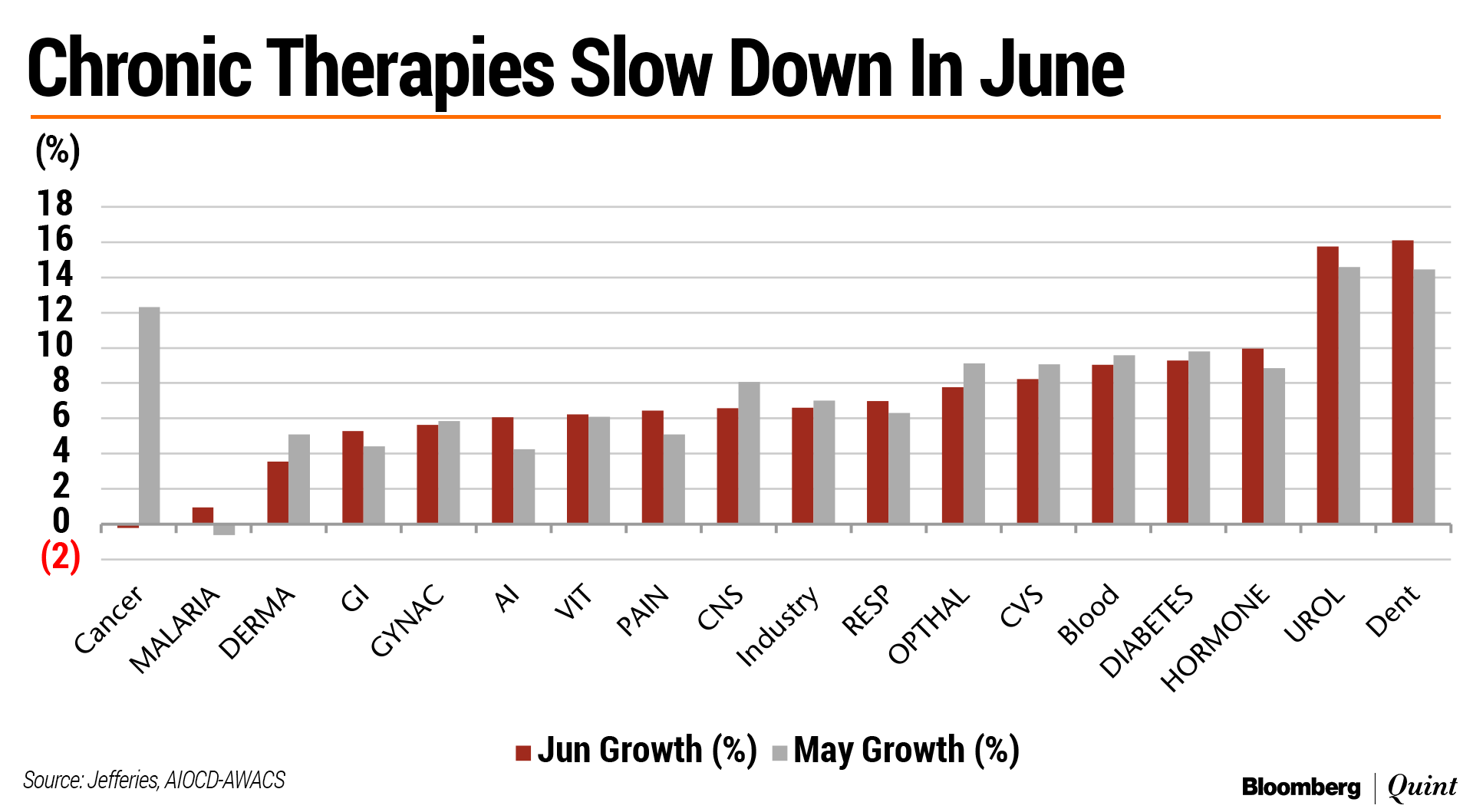
But the decline in volumes is not the only concern for Indian drugmakers. Most therapies, the data showed, grew in single digits in June. Chronic therapies such as cardiovascular and central nervous system—constituting 33 percent market share—slowed down during the month. Still, that's higher than the below-industry growth of acute—or severe but short-duration illness—therapies, which forms 47 percent of the market. Dental and urology, however, bucked the trend with an improvement in growth over the previous month.
Even though growth trends are not encouraging, analysts aren't too worried.
Robust Indian pharma market has been a reason for premium valuations and any slowdown here can hurt those, Anshuman Gupta, pharma and healthcare analyst at Investec Capital Services, said in an emailed response. Growth drivers are intact, he said, and the brokerage expects the growth to bounce back. “There is fear that generic medicines are slowing down IPM growth but our detailed analysis suggests that their impact may be limited in the near term.”
Nikhil Mathur, analyst at Ambit, also doesn't expect branded drugmakers to witness a structural slowdown.
Amey Chalke, pharma analyst at HDFC Securities, told BloombergQuint that the slowdown reflected in AIOCD numbers is largely driven by multiple distribution channels being created over the last two years, including low-cost generics, generic pharmacies and e-commerce entities. These unorganised trade channels mask the trend in official data. Chalke expects the India pharma market to continue to grow at 8-10 percent.
According to Jefferies, here's how various branded Indian drugmakers fared in June
- Sun Pharmaceutical Industries Ltd.'s domestic growth moderated in June, in line with the industry. Growth has been pulled down by smaller brands, which have seen slow growth.
- Growth for Lupin Ltd. recovered from its May lows and performed better than the industry. It continues to be led by the top-10 brands, which grew 25 percent.
- Cipla Ltd. saw a moderation in growth in June to below-industry level. Most therapies saw moderation in growth, barring pain and central nervous system.
- Growth of Dr. Reddy's Laboratories Ltd. saw a sharp acceleration in growth to 18 percent, well above the industry. It's gaining market share in acute and chronic therapies, while it lost in sub-chronic.
- Sales growth of Torrent Pharmaceuticals Ltd. remained at 7.6 percent, in line with the industry. That compares with 13 percent growth in April and 20 percent at start of the year. The growth was led by top 100 brands.
- Growth of Alkem Laboratories Ltd. remained stable at 10 percent, ahead of the industry. Brands excluding the top-25 are seeing faster growth. It gained market share in chronic and acute therapies.

-
Indians Are Travelling, But Not Every Journey Is A Holiday | The Week In Whys

Pilgrims, patients and working women are the real travellers, and the system hasn't quite caught up with them.
-
Getting To Work Costs Women More | The Reason Why
It is not just about women paying more than men. It is about women paying much more in cities than in villages.
-
AI Bias In Investing Cannot Be Eliminated, But It Can Be Governed
Framing is a particularly important example as identical financial information presented in terms of gains rather than losses can lead an LLM to reach a different assessment.
-
Joining The Dots | Dark Skies, Steady Diya: Why Hope Holds This Diwali
With war, a weak rupee and foreign outflows weighing on sentiment, policymakers at the NDTV World Summit and market veterans at NDTV Profit Ignite: Diwali Edition offered the same advice: stay invested and filter out the noise.
-
The Curious Case of Equitas Small Finance Bank And A CEO Who Quit For Stock
PN Vasudevan believes persistent investor concerns over a perceived conflict of interest had become a governance overhang on Equitas Small Finance Bank's stock, even as the lender improved profitability and asset quality.
-
Talking Points This Week: AI Cash Burn, A Tiger Comeback And An India That Still Finds Its Own Path
India is not immune to higher oil or tighter global liquidity, yet its earnings base is broader, its domestic policy levers are still available.
-
Foreign Investors Own Half Of HDFC Bank and ICICI Bank. An LTCG Cut Could Matter Most Here
Foreign portfolio investors have US$115 billion parked in HDFC Bank, ICICI Bank. If the government cuts long-term capital gains tax, Jefferies says returning foreign money could land here first.
-
'Never Seen This Level Of Negativity': Sandeep Tandon Says The Next Rally May Be Closer Than You Think
Veteran investor Sandeep Tandon says foreign selling is easing, large-caps are due a comeback and mid-caps are crowded, while he turns positive on gold, power and pharma this Diwali.
-
Indians Stay With Family, Not In Hotels | The Reason Why
India still lacks enough clean, reliable and affordable hotels for budget-conscious travellers.
-
The Economic Imperative: Analysing The Material Driving Force Behind India-Canada Strategic Reset
This economic complementarity is further reinforced by deep institutional investment ties and talent mobility, which form the bedrock of the bilateral framework.










