Rs 2,000 Note Withdrawal To Improve Liquidity, Ease Short-Term Rates: Experts
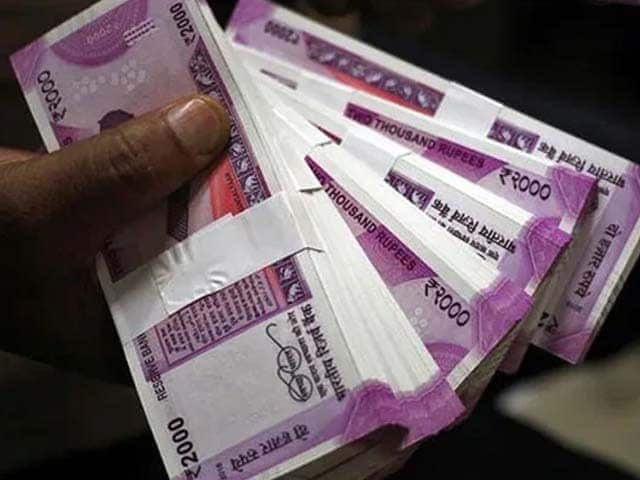
The Reserve Bank of India (RBI)'s decision to withdraw its highest denomination currency note from circulation is likely to improve banking system liquidity, bringing down recently elevated short term rates, analysts and bankers said.
The RBI on Friday said that it will start withdrawing 2,000-rupee notes from circulation, although they will remain legal tender. Customers holding these notes can deposit them or exchange them for smaller notes by Sept.30, 2023.
The value of such notes in circulation is 3.6 trillion rupees ($44.02 billion), but not all of this will remain in banks in the form of deposits.
Kotak Institutional Equities estimates that liquidity could improve by around 1 trillion rupees, depending on the behaviour of depositors, while QuantEco Research pegs the potential liquidity impact at 400 billion rupees to 1.1 trillion rupees.
ICICI Securities Primary Dealership estimates the liquidity surplus could increase to 1.5-2 trillion rupees.
India's banking system liquidity surplus has averaged above 600 billion rupees in May.
About 2.5-3 trillion rupees of banking sector liquidity leaks out as currency in circulation each year, wrote Pranjul Bhandari, chief India economist at HSBC. "As such, markets may anticipate some comfort on the liquidity front."
Most economists expects the note withdrawal to be less disruptive for the economy than the 2016 demonetisation.
Impact On Rates
If liquidity surplus improves sharply because of this move, "the weighted average call rate could sustain below the repo rate for the next few weeks," said Raju Sharma, chief investment officer- debt at IDBI Mutual Fund.
The overnight inter-bank rate has remained above the policy repo rate of 6.5%.
Short-term interest rates for government securities, bank bulk deposits and corporate borrowings will also likely ease.
Treasury bill auctions will see good demand in the coming weeks, said Rajeev Pawar, head of treasury at Ujjivan Small Finance Bank.
This would eventually spillover to three-year and five-year bonds and yields of such notes could fall by up to 10 basis points, he said.
"With the liquidity coming in, we do expect bullish bets on Indian government bonds to increase across the curve, especially when inflation has come off and rate cuts are getting priced in," Mr Sharma said.
(Except for the headline, this story has not been edited by NDTV staff and is published from a syndicated feed.)

-
Joining The Dots | Dark Skies, Steady Diya: Why Hope Holds This Diwali

With war, a weak rupee and foreign outflows weighing on sentiment, policymakers at the NDTV World Summit and market veterans at NDTV Profit Ignite: Diwali Edition offered the same advice: stay invested and filter out the noise.
-
The Curious Case of Equitas Small Finance Bank And A CEO Who Quit For Stock
PN Vasudevan believes persistent investor concerns over a perceived conflict of interest had become a governance overhang on Equitas Small Finance Bank's stock, even as the lender improved profitability and asset quality.
-
Talking Points This Week: AI Cash Burn, A Tiger Comeback And An India That Still Finds Its Own Path
India is not immune to higher oil or tighter global liquidity, yet its earnings base is broader, its domestic policy levers are still available.
-
Foreign Investors Own Half Of HDFC Bank and ICICI Bank. An LTCG Cut Could Matter Most Here
Foreign portfolio investors have US$115 billion parked in HDFC Bank, ICICI Bank. If the government cuts long-term capital gains tax, Jefferies says returning foreign money could land here first.
-
'Never Seen This Level Of Negativity': Sandeep Tandon Says The Next Rally May Be Closer Than You Think
Veteran investor Sandeep Tandon says foreign selling is easing, large-caps are due a comeback and mid-caps are crowded, while he turns positive on gold, power and pharma this Diwali.
-
Indians Stay With Family, Not In Hotels | The Reason Why
India still lacks enough clean, reliable and affordable hotels for budget-conscious travellers.
-
The Economic Imperative: Analysing The Material Driving Force Behind India-Canada Strategic Reset
This economic complementarity is further reinforced by deep institutional investment ties and talent mobility, which form the bedrock of the bilateral framework.
-
Medicine Pricing: Where Must Profit Stop?
India must confront excessive margins, hidden incentives and regulatory gaps that threaten the integrity of medicine.
-
Why Amazon And Flipkart Are Struggling To Beat Meesho In India's Smaller Cities
With 274 million users and lowest-cost logistics, Meesho is defending its value commerce crown against giants like Amazon and Flipkart.
-
High US Salaries, No Green Card Certainty: The Financial Calculation Facing Indian H-1B Families
The suspension of PERM processing at eight technology employers does not cancel existing H-1B visas. What it does is force a question many Indian families have been avoiding: is the US salary worth tying your career and family plans to one employer?










