India's gold jewellery demand falls 19% in first quarter: WGC
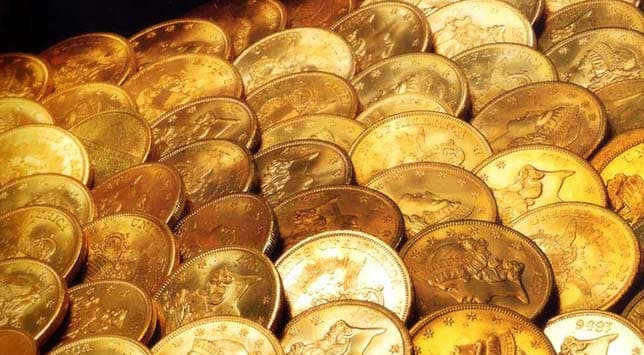
India's vast gold jewellery market suffered a 19 per cent drop in demand in the first quarter of the year, and investment demand tumbled 46 per cent, pressured by a weak and volatile rupee among other factors, the World Gold Council (WGC) said on Thursday.
A three-week nation-wide strike among jewellers after the government announced plans to double import tax to 4 percent on bullion and double the duty on non-standard gold and gold jewellery to 10 percent hit retail demand.
"It is likely that this impact will reverse to some extent in the second quarter, as the supply chain readjusts following the three-week shutdown," said the WGC.
The group said the sharp drop in investment demand is partly indicative of considerable stock depletion by bullion dealers, given the uncertainty surrounding the potential impact from hikes in the import tax and excise duty.
The excise duty on non-branded jewellery was later withdrawn by the government.
“Expectations are for Indian investment to recover during the current quarter as the market adjusts to the new legislation and tax structure, particularly if prices dip,' said the WGC.
(Also read: Platinum jewellery grows trendy in gold-loving India)
CHINA STILL AHEAD
China, on the other hand, remained the world's top gold consumer for the second quarter in a row, with its gold consumer demand up 10 percent to 255.2 tonnes, beating India's 207.6 tonnes, which was a 29 percent decline on the year.
China's gold demand hit a record high in the first quarter on investor worries over inflation and property market curbs, the WGC said, bucking a lower trend in global consumption driven by higher gold prices.
Global gold demand fell 5 per cent on the year to 1,097.6 tonnes in the first three months of 2012, as jewellery and technology sectors bought less gold with average prices up 22 per cent from a year earlier, but investment demand and central bank buying helped cushion the fall, the industry group said.
"Further growth is expected (in China): investors remain wary of high inflation rates; and property market restrictions continue to drive demand for gold among investors seeking access to real assets," said the WGC in its quarterly Gold Demand Trends report.
China's physical gold bars and coins demand rose 13 percent on the year to a quarterly record of 98.6 tonnes, while jewellery demand climbed 8 percent to 156.6 tonnes and accounted for 30 per cent of the world's gold jewellery market, the WGC data showed.
The WGC said investment demand in China going forward will depend on price expectations, and the performance of other assets such as property and the domestic stock market, but inflation will continue to be a concern to investors.
The country's gold jewellery demand is likely to remain on a more moderate growth path as the market matures and economic growth cools, it said.
Spot gold averaged $1,690 an ounce in the first quarter, up from $1,387 a year earlier. Prices have declined to below $1,550 this week.
CENTRAL BANKS KEEP BUYING; INVESTMENT JUMPS
The official sector remained a net gold purchaser in the first quarter, although the volume at 80.8 tonnes showed a 41 per cent decline from the first quarter of 2011 which witnessed an exceptional level of central bank buying, said the WGC.
Russia, Mexico, Kazakhstan, the Philippines, Belarus, Ukraine and Tajikstan all added to their official gold reserves in the quarter.
The WGC expected the trend of net central bank buying to continue this year as the main driving factors remain in place, as some countries seek to diversify their foreign reserves and others try to increase gold holdings to maintain the ratio of gold to their foreign reserves.
Global investment demand in gold grew 13 per cent on year to 389.3 tonnes, as exchange-traded products recorded a 51.4-tonne inflow while demand in bars and coins recorded a 17 per cent decrease from a year earlier.
Copyright @ Thomson Reuters 2012

-
Getting To Work Costs Women More | The Reason Why

It is not just about women paying more than men. It is about women paying much more in cities than in villages.
-
AI Bias In Investing Cannot Be Eliminated, But It Can Be Governed
Framing is a particularly important example as identical financial information presented in terms of gains rather than losses can lead an LLM to reach a different assessment.
-
Joining The Dots | Dark Skies, Steady Diya: Why Hope Holds This Diwali
With war, a weak rupee and foreign outflows weighing on sentiment, policymakers at the NDTV World Summit and market veterans at NDTV Profit Ignite: Diwali Edition offered the same advice: stay invested and filter out the noise.
-
The Curious Case of Equitas Small Finance Bank And A CEO Who Quit For Stock
PN Vasudevan believes persistent investor concerns over a perceived conflict of interest had become a governance overhang on Equitas Small Finance Bank's stock, even as the lender improved profitability and asset quality.
-
Talking Points This Week: AI Cash Burn, A Tiger Comeback And An India That Still Finds Its Own Path
India is not immune to higher oil or tighter global liquidity, yet its earnings base is broader, its domestic policy levers are still available.
-
Foreign Investors Own Half Of HDFC Bank and ICICI Bank. An LTCG Cut Could Matter Most Here
Foreign portfolio investors have US$115 billion parked in HDFC Bank, ICICI Bank. If the government cuts long-term capital gains tax, Jefferies says returning foreign money could land here first.
-
'Never Seen This Level Of Negativity': Sandeep Tandon Says The Next Rally May Be Closer Than You Think
Veteran investor Sandeep Tandon says foreign selling is easing, large-caps are due a comeback and mid-caps are crowded, while he turns positive on gold, power and pharma this Diwali.
-
Indians Stay With Family, Not In Hotels | The Reason Why
India still lacks enough clean, reliable and affordable hotels for budget-conscious travellers.
-
The Economic Imperative: Analysing The Material Driving Force Behind India-Canada Strategic Reset
This economic complementarity is further reinforced by deep institutional investment ties and talent mobility, which form the bedrock of the bilateral framework.
-
Medicine Pricing: Where Must Profit Stop?
India must confront excessive margins, hidden incentives and regulatory gaps that threaten the integrity of medicine.










