India’s Forced Marriages Have Nothing To Do With Love Or Jihad
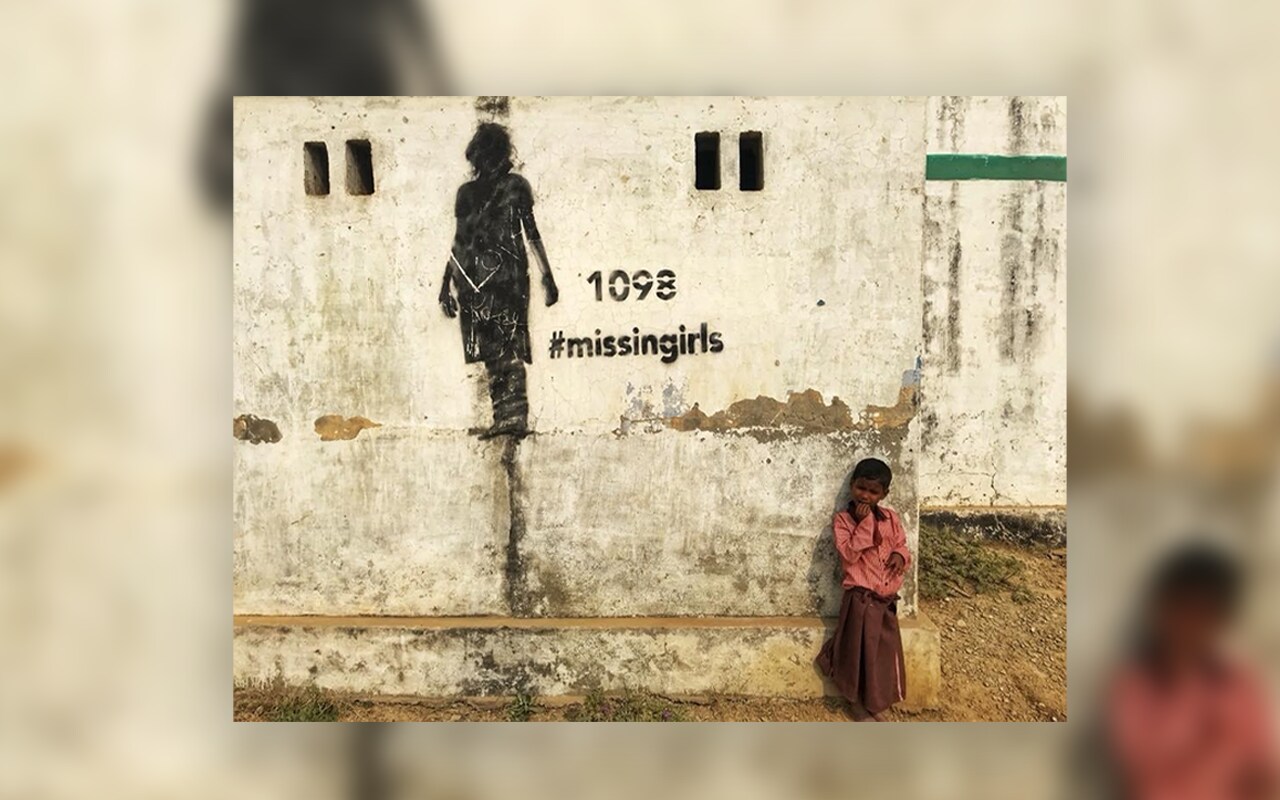
Thanks to Leena Kejriwal, thousands of black silhouettes of young girls have been spray-painted on our cities' walls for five years now. The four-foot-high stencilled images, downloaded from her website savemissinggirls.com, represent “sharp, black cut-outs of the sky – holes into which millions of girls disappear from the face of the earth…” The Missing Public Art project is a reminder of girls who are trafficked every day, lost forever. Next to the silhouette, you'll often spot the number 1098, the government's emergency helpline for children.
As Uttar Pradesh's chief protector of the chastity of Hindu women muscles through the Prohibition of Unlawful Religious Conversion Ordinance, 2020 and a handful of Bharatiya Janata Party-run states announce their intention to follow U.P.'s lead, it's time to remind these gentlemen about the real forced marriages and other serious human rights violations against Indian girls and women.

More than one international study has shown that Asia is one of the fastest-growing regions for human trafficking in the world. Bride trafficking too is big business here.
“Men and women operate as brokers, agents, or suppliers, to facilitate marriages with brides in other states. In many cases, young women are often tricked, manipulated, abducted or coerced into marrying “unmarriageable” men: those that are older, widowed, disabled, alcoholic, separated from their previous wife, or financially unstable,” Sreya Banerjea wrote recently in the Independent. “For such men, it is convenient to purchase a bride across the state for a cheaper price.”
Shafiqur Rahman Khan, the founder of Empower People, an organisation that has worked with singleminded focus on the issue of bride trafficking since 2006, rescuing 5,000 women during this time, says the biggest demand for brides comes from small landholders who cannot bear the cost of labourers.“They need bonded labour and for Rs 30,000 they can get a girl who will work in the field and a wife. Trafficking is just the process, the real game is marginalisation and slavery.” The gender imbalance and men looking for a caregiver/wage earner are other leading reasons brides are purchased.
Yet bride trafficking is a tricky issue. “Often, it's not sex trafficking, some women refuse to be “rescued” because they want to survive in their present situation, they don't want to be repatriated to their native home,” says Khan who distinguishes between bride trafficking “for the purpose of marriage” and “in the name of marriage”.
Many of these women are underage, some so young that they aren't able to tell rescuers their proper home address, Khan says, adding that many live in “pathetic conditions with no rights”. Widespread unemployment has only worsened the situation during the Covid-19 pandemic.

India holds the dubious distinction of being home to one-third of the world's child brides. Of our 223 million child brides, 102 million were married before turning 15, according to this Unicef report. Uttar Pradesh leads with 36 million child brides, the report adds. India is one of 193 countries that have committed to eliminating child, early, and forced marriage in the next decade.
Maybe the chief minister of India's most populous state could redirect his energy to ensure we edge closer to this target instead of envying families who celebrate Diwali and Eid with equal josh and joy?
Interfaith couples already struggle with a tricky provision in the Special Marriage Act that is often used to harass lovers. They must also contend with parents who misuse the legal system if they elope.
“Instead of safeguarding the rights of women, rape laws in India are often misused by parents of women to restrict their sexual autonomy by filing abduction and rape charges against male partners,” lawyer Neetika Vishwanath found during her ethnographic study of rape trials in Lucknow in 2015.

Similarly, with kidnapping data, it's impossible to sort out lovers whose parents may have filed fake cases from the actual victims.
At 38%, this was the leading cause of kidnapping. Half were under the age of 18.
I ask Khan what is the solution to all these messy issues and he replies immediately: “There is a word called consent. We need to understand that word.”
U.P.'s new law does emphasise a word that begins with ‘c' but it's not consent. Coercion is defined as “compelling an individual to act against his/her will by the use of psychological pressure or physical force causing bodily injury or threat there of”.
“By this vague definition love can also be interpreted as coercion,” says Kejriwal. That's the idea, I guess.
Even away from all these serious crimes against India's most vulnerable women, the daily family pressure exerted on the urban, educated woman to get married once she crosses a certain age is exhausting, debilitating. It's 2020 and we still don't have the right to love who we want, when we want. Stencil that on our city walls.
Priya Ramani is a Bengaluru-based journalist and is on the editorial board of Article-14.com.
The views expressed here are those of the authors, and do not necessarily represent the views of BloombergQuint or its editorial team.

-
Indians Are Travelling, But Not Every Journey Is A Holiday | The Week In Whys

Pilgrims, patients and working women are the real travellers, and the system hasn't quite caught up with them.
-
Getting To Work Costs Women More | The Reason Why
It is not just about women paying more than men. It is about women paying much more in cities than in villages.
-
AI Bias In Investing Cannot Be Eliminated, But It Can Be Governed
Framing is a particularly important example as identical financial information presented in terms of gains rather than losses can lead an LLM to reach a different assessment.
-
Joining The Dots | Dark Skies, Steady Diya: Why Hope Holds This Diwali
With war, a weak rupee and foreign outflows weighing on sentiment, policymakers at the NDTV World Summit and market veterans at NDTV Profit Ignite: Diwali Edition offered the same advice: stay invested and filter out the noise.
-
The Curious Case of Equitas Small Finance Bank And A CEO Who Quit For Stock
PN Vasudevan believes persistent investor concerns over a perceived conflict of interest had become a governance overhang on Equitas Small Finance Bank's stock, even as the lender improved profitability and asset quality.
-
Talking Points This Week: AI Cash Burn, A Tiger Comeback And An India That Still Finds Its Own Path
India is not immune to higher oil or tighter global liquidity, yet its earnings base is broader, its domestic policy levers are still available.
-
Foreign Investors Own Half Of HDFC Bank and ICICI Bank. An LTCG Cut Could Matter Most Here
Foreign portfolio investors have US$115 billion parked in HDFC Bank, ICICI Bank. If the government cuts long-term capital gains tax, Jefferies says returning foreign money could land here first.
-
'Never Seen This Level Of Negativity': Sandeep Tandon Says The Next Rally May Be Closer Than You Think
Veteran investor Sandeep Tandon says foreign selling is easing, large-caps are due a comeback and mid-caps are crowded, while he turns positive on gold, power and pharma this Diwali.
-
Indians Stay With Family, Not In Hotels | The Reason Why
India still lacks enough clean, reliable and affordable hotels for budget-conscious travellers.
-
The Economic Imperative: Analysing The Material Driving Force Behind India-Canada Strategic Reset
This economic complementarity is further reinforced by deep institutional investment ties and talent mobility, which form the bedrock of the bilateral framework.










