India's Food Safety Authority Refutes Claims Of Pesticide Overuse In Spices
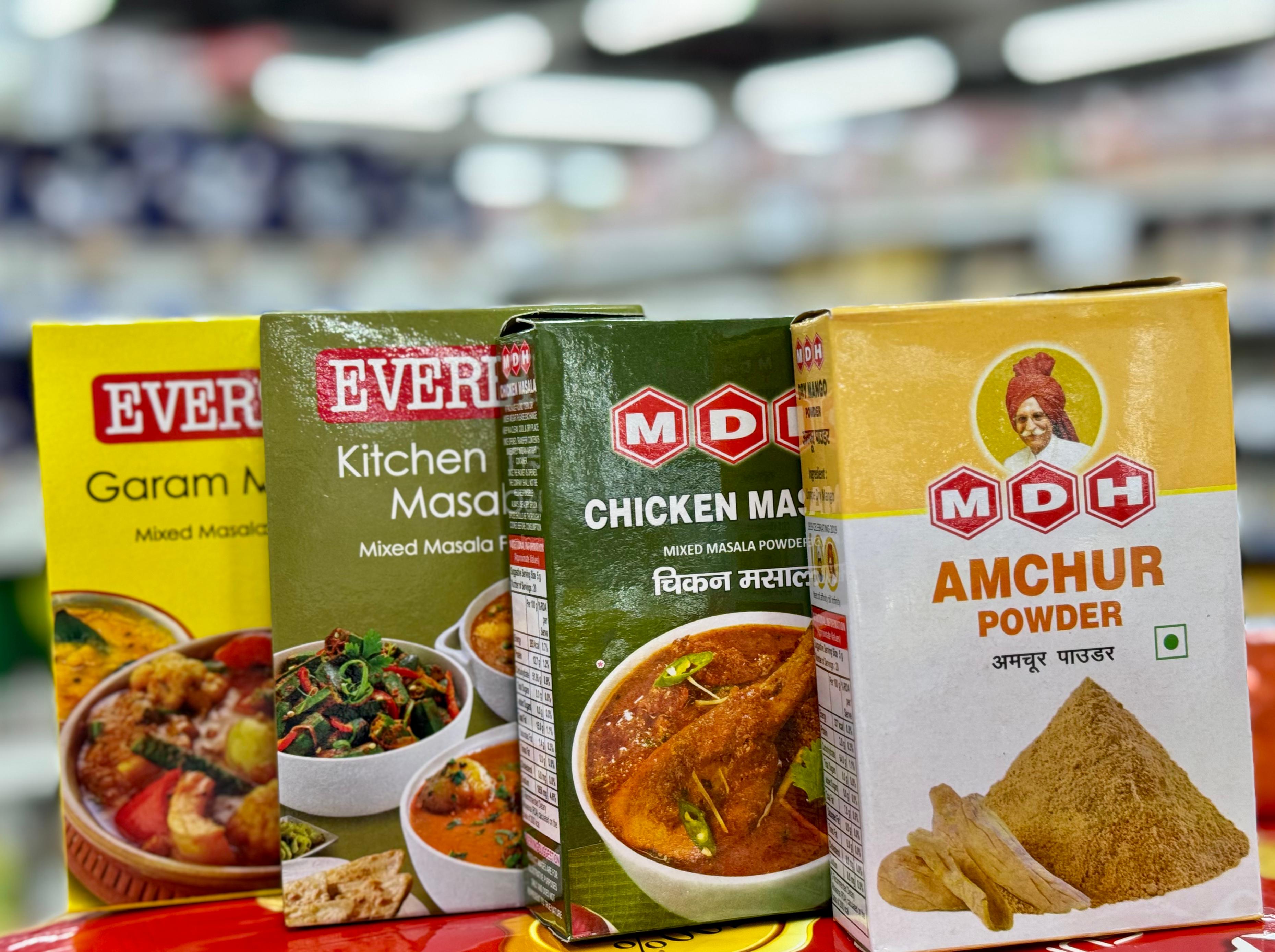
The Food Safety and Standards Authority of India has refuted media reports suggesting it permits higher levels of pesticide residue in herbs and spices.
The reports, claiming FSSAI allows 10 times more pesticide residue in herbs and spices, are "false and malicious", the apex regulatory body said.
It clarified that India actually has very stringent standards for maximum residue limits as compared with other countries, and these limits are determined based on the risk assessment of each food commodity. "FSSAI's standards are in line with global standards set by Codex," it said.
Codex is a set of international food standards published by the United Nations' Food and Agricultural Organisation.
Pesticides in India are regulated by the Ministry of Agriculture and Farmers Welfare, through the Central Insecticide Board and Registration Committee established under the Insecticide Act of 1968. The CIB and RC oversee the registration, import, transport, storage, and banning of pesticides in the country.
The FSSAI's scientific panel on pesticide residues examines data from the CIB and RC to recommend MRLs after conducting thorough risk assessments. "Different pesticides have varying MRLs depending on the food commodity they are used on, with specific limits set based on the dietary habits and health concerns of the Indian population," FSSAI said.
While Codex has adopted a list of registered pesticides globally, India has its own list of registered pesticides managed by the CIB and RC. Total pesticides registered by CIB and RC in India are more than 295, out of which 139 pesticides are registered for use in spices. Codex has adopted total 243 pesticides, out of which 75 pesticides are applicable for spices.
Any pesticides not registered by the CIB and RC are subject to a default MRL of 0.1 mg/kg, which is applicable only for spices. This decision was made after considering the Codex Alimentarius Commission's adoption of MRLs that ranges from 0.1 to 80 mg/kg for spices worldwide from 2021-23.
Different crops may have varying MRLs for the same pesticide, said FSSAI. For example, the use of monocrotophos is allowed on many crops with different MRLs, such as 0.03 mg/kg for rice, 0.2 mg/kg for citrus fruits, and 0.2mg/kg for chilli, showing the tailored approach to risk assessment.
The MRLs fixed by Codex for myclobutanil used for chilli is 20 mg/kg, whereas the limit set by FSSAI is 2mg/kg. Spiromesifen, which is utilised for chilli, has a codex limit of 5 mg/kg and an FSSAI limit of 1 mg/kg.
Similarly, the codex permits metalaxyl and metalaxyl-M, used for black pepper, at a limit of 2 mg/kg, while the limit set by FSSAI is 0.5 mg/kg.
"The MRLs are dynamic in nature and regularly revised based on the scientific data," according to FSSAI.
The Pesticide Action Network India, an environment and health advocacy group, had earlier urged the FSSAI to “rescind” its order, which increased the MRLs of certain pesticides in spices and culinary herbs from 0.01 mg per kg to 0.1 mg per kg, stating it as “shocking” and “unsubstantiated”.
"Higher MRLs will mean higher and faster impact on the health of individuals due to residues,” the NGO said, in a letter to the FSSAI on April 22.

-
We May Need Another Tukaram Mundhe To Fight Air Pollution | The Reason Why

Developers may install basic measures such as sprinklers and green nets, resume work, and continue violating rules when this equipment stops working.
-
Extracting Value From Battery Scrap Could Be Challenging For India | The Reason Why
A discarded lithium-ion battery still contains valuable materials such as lithium, nickel and cobalt. These can be recovered and reused. When such batteries are crushed and shredded, they produce a dark powder called black mass.
-
One El Nino, India Can Handle. Two Could Break The Granary
India's grain stocks can absorb one bad year, but a second El Nino could drain the buffer in two to three years, economists say.
-
India's Troika Of Good Luck | Joining The Dots
As Jensen Huang's exit drags Nvidia down, a cooling AI trade and resilient earnings have revived investor interest in India. A likely RBI rate hike looms.
-
Talking Points This Week: Leadership Shock At Nvidia, Earnings Strength, And The Fog Over Hormuz
The Anthropic IPO pricing and first trading day, Nvidia's upcoming earnings, and any fresh signals from Iran will set the tone for the following week.
-
Signature Play: The Classic Cocktail Is Dead. Or Is It?
Classic cocktails are disappearing from India's cocktail menus. But they're still being ordered, taught to bartenders and borrowed from. So, who's really having the last drink?
-
A New Samvat Wishlist: Inclusive Prosperity And Human Development
India has strengthened its economic foundations through infrastructure, digital access and enterprise. Its next growth chapter must deepen productivity, create better livelihoods and widen participation in prosperity.
-
Love, Sex Aur Dhokha: The Audacious Plot To Spy On Jensen Huang
A Taipei dinner, a Singapore chip buyer and a suspected Chinese asset: inside the alleged spy operation that got close to NVIDIA's Jensen Huang.
-
Ten Things I Learnt This Samvat
Patience can be a trap. Cheap stocks can stay cheap. Leverage can wipe you out. What did Samvat 2082 teach us? Niraj Shah writes on 10 lessons from the year gone by.
-
Talking Points This Week: Tech Nerves, FII Buying, And A Faraway Banking Shock
The global markets are not shining this Diwali. The exception in the large markets is, India.









