India’s Electric Car Charging Hiccup, And Half-A-Million Vehicle Opportunity
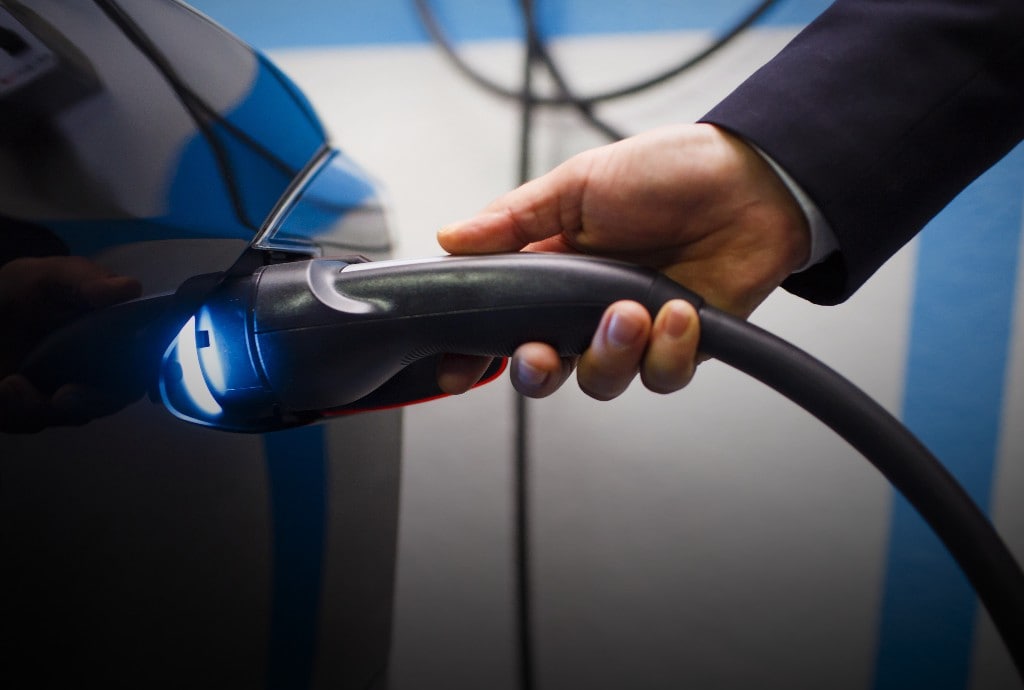
If Tesla, Inc. were to sell a car in India today, it wouldn't be allowed to set up charging stations. That's because only power distributors can offer electricity in the country.
The Electricity Act needs to be amended to allow private companies to get into public power storage, Saurabh Kumar, managing director of state-run Energy Efficiency Services Ltd., told BloombergQuint. Petrol pump-like charging infrastructure, managed by public-private partnership or the private sector, is required to promote e-mobility.
At the moment, that is not allowed. I understand that the forum of regulators and the Ministry of Power is working toward it.Saurabh Kumar, Managing Director, EESL
Amending the law will be a procedural change. Yet, it's symptomatic of any reform in India, where myriad rules need to be tweaked to push it through. The country stands at 130 on World Bank's Ease of Doing Business Index and Prime Minister Narendra Modi's government has been easing rules to improve the ranking.
Also Read: M&M Matches Tata Motors' Bid In Government Contract To Supply Electric Vehicles
The government has already placed the order for 500 electric sedans from Tata Motors Ltd. and Mahindra & Mahindra Ltd. as part of its ambitious target to end dependence on fossil-fuel driven passenger transport by 2030. It's also invited tenders for charging infrastructure. The Indian arm of Swiss power equipment and robotics company ABB Ltd. told BloombergQuint recently that it has bid for setting up 4,500 such stations.
Tata Power too started its first charging station in suburban Mumbai for battery-power vehicles like Mahindra e2o and Nissan Leaf, according to the company's website.
On its part, Tesla had said in April that it will launch its most affordable car—the Tesla 3—in India by the end of 2017. After India clarified that no mandatory local sourcing is required, Musk in June tweeted that the company is in talks with the government seeking relief from import penalties till its plant is set up.
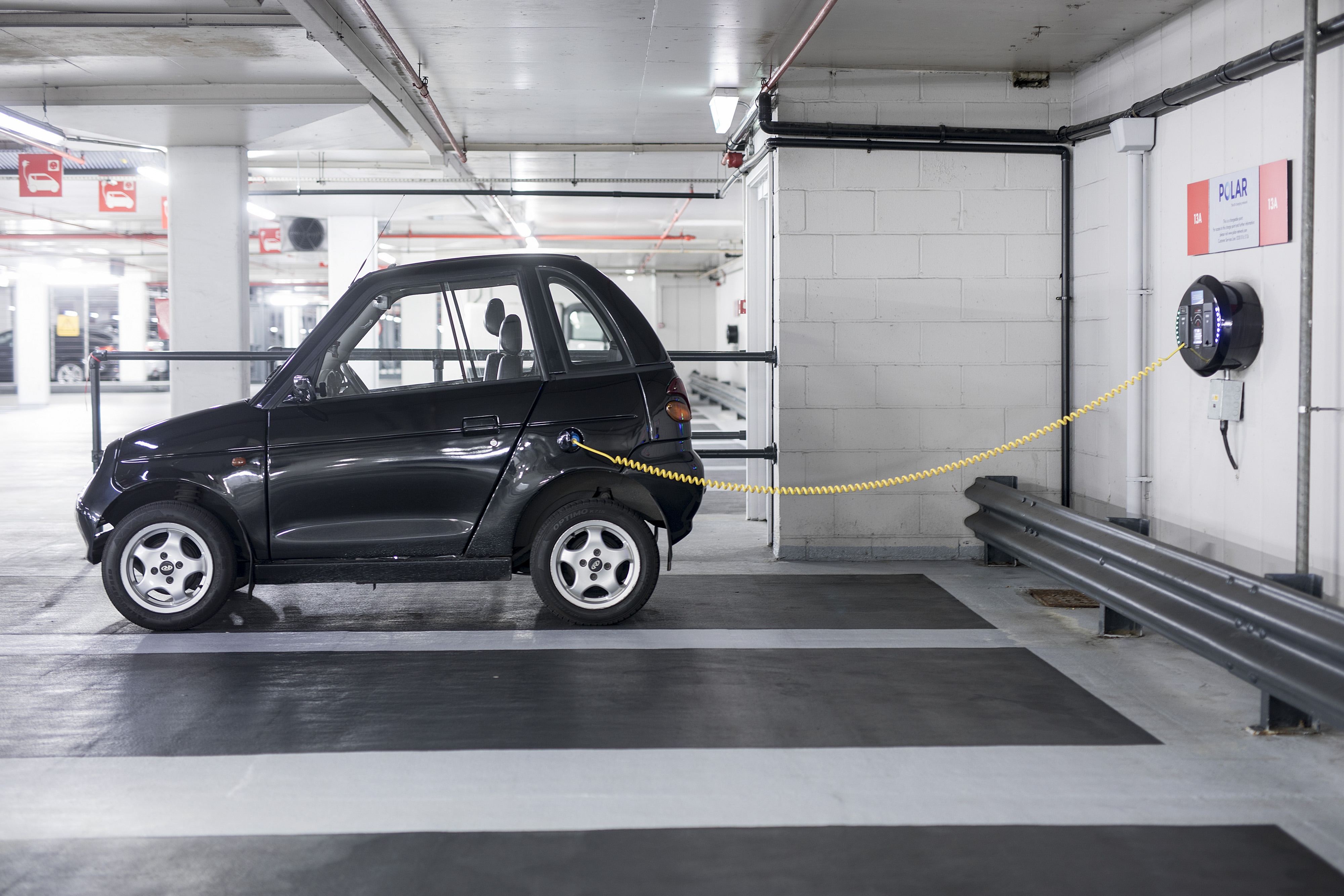
Government Cars: A Half-A-Million Electric Vehicle Opportunity
Energy Efficiency Services, that helps save on energy costs, is fronting the big push towards electric mobility.
“We have restricted ourselves to public sector which also has a very large number of vehicles. Half a million cars are used by the government departments alone,” Kumar said.
If there is a push to convert all the government-owned cars in a time-bound manner, Kumar is sure a lot of new car and battery makers will enter India. States like Delhi, Maharashtra and Andhra Pradesh have shown interest in the e-vehicle programme, he said.
Apart from Tata Motors and M&M, Maruti Suzuki India Ltd. has already announced its plans to manufacture electric vehicles in India. Nissan Motors India Ltd., Renault Motors India Pvt. Ltd. and Hyundai Motors India Ltd. are some of the players which have expressed interest and are expected to participate given the large order size, Kumar said.
Energy Efficiency Services—promoted by state-run NTPC Ltd., Power Grid Corporation of India Ltd., Rural Electrification Corporation Ltd. and Power Finance Corporation Ltd.— is looking to buy 10,000 electric vehicles by June-July, Kumar said. That includes the tender for 500 to be delivered by Tata Motors and M&M by November-end.
“The next tender to be opened in April will hopefully be bigger than 10,000 electric vehicles,” Kumar said.
Storage Infrastructure Push
Energy Efficiency Services has already forayed into Canada and the U.K. It will soon start work in Canada to stablise the Ontario electric grid, Kumar said. Ontario moved to source 40 percent of its power requirement from renewable sources. “This brought in grid instability. The company is partnering with Leclanche SA, Swiss maker of lithium-ion storage batteries, for on-grid stablisation. The project would cost $120 million and the company board is expected to approve it, he said.
The Indian company is looking to establish battery storage infrastructure manufacturing in North America. “These are frontline technologies and at some point in time, we would require this storage infrastructure in India as well,” Kumar said.
Watch the full interview with Saurabh Kumar, managing director of Energy Efficiency Services here.
Also Read: M&M Finds Tata Motors' Electric Vehicle Bid Price ‘Hard To Comprehend'

-
Getting To Work Costs Women More | The Reason Why

It is not just about women paying more than men. It is about women paying much more in cities than in villages.
-
AI Bias In Investing Cannot Be Eliminated, But It Can Be Governed
Framing is a particularly important example as identical financial information presented in terms of gains rather than losses can lead an LLM to reach a different assessment.
-
Joining The Dots | Dark Skies, Steady Diya: Why Hope Holds This Diwali
With war, a weak rupee and foreign outflows weighing on sentiment, policymakers at the NDTV World Summit and market veterans at NDTV Profit Ignite: Diwali Edition offered the same advice: stay invested and filter out the noise.
-
The Curious Case of Equitas Small Finance Bank And A CEO Who Quit For Stock
PN Vasudevan believes persistent investor concerns over a perceived conflict of interest had become a governance overhang on Equitas Small Finance Bank's stock, even as the lender improved profitability and asset quality.
-
Talking Points This Week: AI Cash Burn, A Tiger Comeback And An India That Still Finds Its Own Path
India is not immune to higher oil or tighter global liquidity, yet its earnings base is broader, its domestic policy levers are still available.
-
Foreign Investors Own Half Of HDFC Bank and ICICI Bank. An LTCG Cut Could Matter Most Here
Foreign portfolio investors have US$115 billion parked in HDFC Bank, ICICI Bank. If the government cuts long-term capital gains tax, Jefferies says returning foreign money could land here first.
-
'Never Seen This Level Of Negativity': Sandeep Tandon Says The Next Rally May Be Closer Than You Think
Veteran investor Sandeep Tandon says foreign selling is easing, large-caps are due a comeback and mid-caps are crowded, while he turns positive on gold, power and pharma this Diwali.
-
Indians Stay With Family, Not In Hotels | The Reason Why
India still lacks enough clean, reliable and affordable hotels for budget-conscious travellers.
-
The Economic Imperative: Analysing The Material Driving Force Behind India-Canada Strategic Reset
This economic complementarity is further reinforced by deep institutional investment ties and talent mobility, which form the bedrock of the bilateral framework.
-
Medicine Pricing: Where Must Profit Stop?
India must confront excessive margins, hidden incentives and regulatory gaps that threaten the integrity of medicine.










