India's Economy Lights Up This Diwali After Covid Dampener. Here's Why
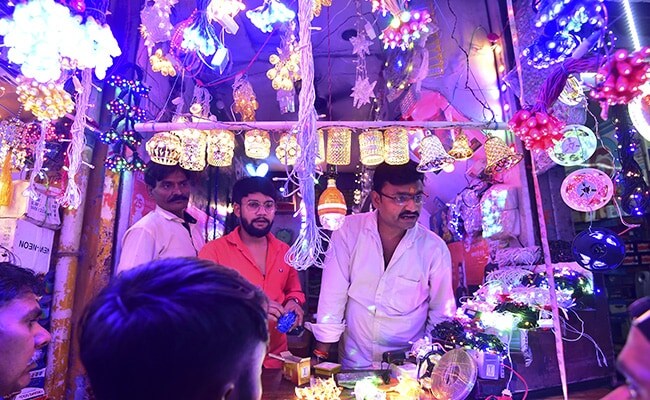
Indian shoppers are back in force online and in stores, splurging this festive season after the coronavirus pandemic damped celebrations and consumption in previous years.
Online marketplaces Amazon.com Inc., and Walmart Inc.-owned Flipkart saw sales jump 27 per cent from a year ago to $5.7 billion during the festival season's first sale between Sept. 22-30, consulting firm RedSeer estimated. Traders estimate spending of about 2.5 trillion rupees ($30.2 billion) at stores.
This year's Diwali, the festival of lights that falls on October 24 and the equivalent of Christmas in the West, will be India's first season of celebration since the pandemic began without virus-related restrictions. The return of shoppers will serve as a boost to consumption, the backbone of the economy.
Here are four charts that help explain the broader consumption trends:
New vehicle sales jumped 57 per cent from a year ago during the nine-day 'Navratri' period that precedes Diwali, data from the Federation of Automobile Dealers Associations show. Sales of two-wheelers in India, an indication of rural demand, grew 3.7 per cent from 2019 levels. Cars and sports utility vehicles sales soared 92 per cent in September from a year earlier, according to Society of Indian Automobile Manufacturers.
India's largest carmaker Maruti Suzuki India Ltd. saw demand for its cars rise 20 per cent year-on-year, led by its premium offering. "The growth numbers have been uniform in both urban and rural centers," said Maruti's Executive Director Shashank Srivastava, with higher interest rates doing little to suppress demand.
As demand for goods rose, businesses ramped up capacity. Total flow of financial resources from banks and non-banks to the commercial sector jumped nearly five-fold to 9.3 trillion rupees between the April-September period, from 1.7 trillion rupees a year ago, according to the Reserve Bank of India. "Non-oil non-gold imports remained resilient, indicating sustained revival in domestic demand."
Good monsoon rains and the withdrawal of pandemic restrictions accelerated economic activity in agriculture, the services sector, and in small- and medium-enterprises. That was accompanied by a drop in the jobless rate to the lowest in more than four years in September.
The recovery in rural areas is also helping consumer firms to normalize their pricing strategy. Haldiram's, one of India's top snack-makers, saw the category ratio between small packs and family packs return to 70:30, "which reflects that rural areas are also buying," said AK Tyagi, the company's executive director. "Gift packs are seeing tremendous demand."
With the economic recovery taking shape and normalizing income levels, Indian households expect to spend more, according to RBI surveys. Much of this spending is to buy essentials, which in recent months have turned costly due to supply side shocks. But overall consumer confidence also remains buoyant, indicating greater willingness for discretionary spending.
"For the first time in three years this festival season is seeing robust demand," said Gaurav Kapur, chief economist of IndusInd Bank. "Since the start of the year, people are spending on goods and services, mall footfalls are increasing, airline seat occupancy rates have jumped despite high ticket prices."
(Except for the headline, this story has not been edited by NDTV staff and is published from a syndicated feed.)

-
Gold Is Rs 22,000 Cheaper Than A Month Ago. Should You Buy Amid The Wedding Season?

Gold's potential slide to $3,500 could save around Rs 4,700 per 10 grams, but a soft inflation print could just as easily push prices back up. One way to split the risk is to buy in parts, some now and the rest after the Fed's Dec. 9 decision.
-
AI Agents Are Gaining Power. Who Governs Them?
Artificial intelligence agents promise to transform productivity by moving machines from assisting decisions to executing them. But as organisations delegate greater authority to these AI-agents, they must first establish who controls that authority and who remains accountable when things go wrong.
-
Why Swapping Your Old Gold Can Trigger A Rs 5 Lakh Tax Bill, And How You Can Avoid It Legally
Swapping old gold for new is taxed as a sale and a fresh purchase. Getting your own gold remade can cut most of that bill, though it has its own costs.
-
The AI Trade is Done. The Real Opportunity for Investors Starts in 2027 | Unhedged Position
As pureplay AI stocks plunge and circular, capex-led financing unwinds, 2027 is set to be a year of reckoning for AI companies. Yet the bust clears the way for a better opportunity for investors in 2027 -- shifting the spotlight from AI builders to the companies using AI.
-
Leadership As Mission: Why The Age Of AI Demands More Human Leadership
Debjani Ghosh examines how AI is changing leadership, arguing that its success must be measured by its impact on people and the accountability of those guiding its use.
-
We May Need Another Tukaram Mundhe To Fight Air Pollution | The Reason Why
Developers may install basic measures such as sprinklers and green nets, resume work, and continue violating rules when this equipment stops working.
-
Extracting Value From Battery Scrap Could Be Challenging For India | The Reason Why
A discarded lithium-ion battery still contains valuable materials such as lithium, nickel and cobalt. These can be recovered and reused. When such batteries are crushed and shredded, they produce a dark powder called black mass.
-
One El Nino, India Can Handle. Two Could Break The Granary
India's grain stocks can absorb one bad year, but a second El Nino could drain the buffer in two to three years, economists say.
-
India's Troika Of Good Luck | Joining The Dots
As Jensen Huang's exit drags Nvidia down, a cooling AI trade and resilient earnings have revived investor interest in India. A likely RBI rate hike looms.
-
Talking Points This Week: Leadership Shock At Nvidia, Earnings Strength, And The Fog Over Hormuz
The Anthropic IPO pricing and first trading day, Nvidia's upcoming earnings, and any fresh signals from Iran will set the tone for the following week.









