India’s Coal-Fired Power Units Will Spew Toxic Fumes For Longer
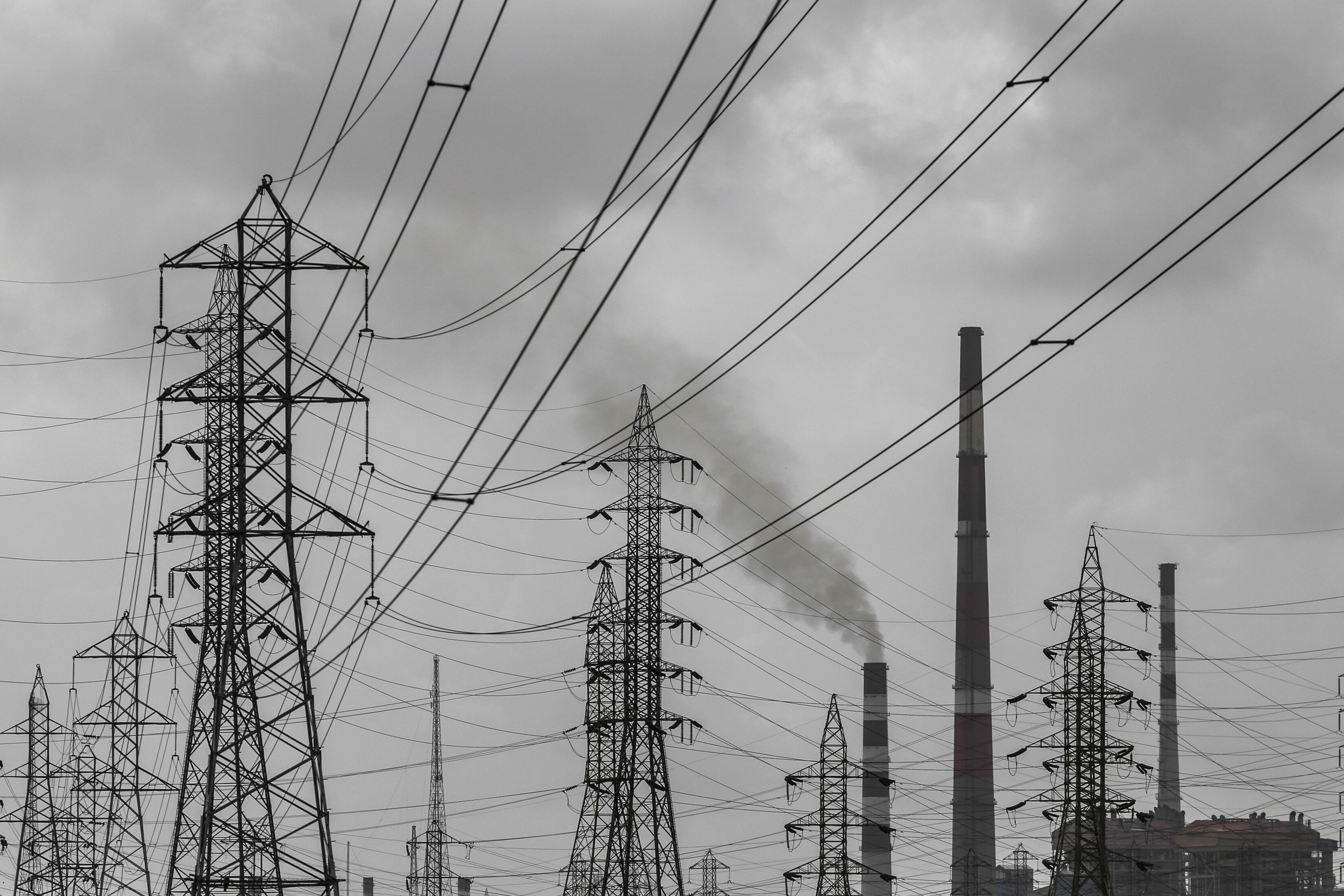
Coal-fired power plants in India, the nation with the world's deadliest air, are set to miss the deadline to curb toxic smoke.
The Ministry of Environment and Forests' 2015 standards gave thermal power units— that meet nearly three-quarters of India's electricity demand—time until December this year to curb emissions. “We expect that deadline to be extended,” Ajay Kumar Bhalla, secretary at the Ministry of Power, said on the sidelines of an event in New Delhi on Wednesday. “We want plants to adopt emission norms in phases.”
That was expected. The regulator, Central Electricity Authority, said four months ago that power producers had too little time to make the switch and needed at least five more years to start complying. The problem, according to the Centre for Science and Environment, is that the companies haven't even started planning yet.
That underscores Asia's third-largest economy's approach to environment concerns. Toxic smog blanketed the national capital New Delhi earlier this month that doctors said was equivalent to smoking at least 45 cigarettes a day. While the immediate trigger was crop-stubble burning, coal-fired units are among the chief polluters. Of the overall emissions, they belch 80 percent of the mercury, 60 percent of the particulate matter, 45 percent of the sulphur dioxide and 30 percent of the nitrogen oxide into the air, the CSE said. And that in a country—according to a Lancet report—where 25 lakh people died of pollution in 2015, the highest in the world. About three-fourths of the these were caused by toxic air.
“Another five years to meet these standards is unacceptable. Power plants have already wasted two years doing virtually nothing,” Chandra Bhushan, deputy director general at CSE, said in the statement. Instead of forcing companies to install the pollution control equipment, the think-tank said, the power ministry and the regulator have consistently tried to push the deadline.
Queries e-mailed to the environment ministry remain unanswered.
The biggest challenge is reducing sulphur dioxide emissions, said PK Mohapatra, executive director for technology at state-run National Thermal Power Corporation, the country's largest power producer. “In 30 years, there was no cap on SOx. Suddenly, a limit has been imposed. It requires a huge amount of capital and operational expenditure.”
Private lobby group Association of Power Producers estimated that burden at Rs 2.5 lakh crore.

Finding finance for this upgrade is quite challenging, especially for those under stress as there is no certainty that the regulator would allow the companies to pass on the costs under the pacts signed with buyers, said Yogesh Daruka, partner (power and utilities) at PwC. To provide funds, lenders will look at the cost-recovery principles for the capex, he said. More so when the power sector is among the largest contributors of bad loans for Indian banks.
The CSE disagrees. The power regulator's reports show that issues raised by the industry such as lack of technology suppliers, suitability of technology for Indian coal, high capital costs and tariff impact can be easily managed, and are not serious impediments, said Bhushan.
Moreover, Power Secretary Bhalla said there was no need to amend the law. Power producers, he said, can always go to the regulator to seek approval for increasing tariff to recover the costs.
‘Can't Plunge Country Into Darkness'
Even so, the change will be a logistical challenge. NTPC's Mohapatra said it won't possible to install 650 flue gas desulfurisation units in 161-gigawatt capacity plants in a limited time. “We cannot pull out all generators to fix FGD units and plunge the country into darkness,” he said. “Therefore, we have drawn out a programme which will be completed by 2022.”
That's the timeframe the Central Electricity Authority suggested. The industry is following that timeline, said Ashok Khurana, director general of Association of Power Producers. “It's practical.”
Larsen & Toubro Ltd., the country's largest infrastructure conglomerate, wants stricter implementation in phases. SN Roy, head of power development at the company, said a majority of plants should be made to gradually install boilers that produce superheated steam more efficiently and FDG units by 2020.
The CSE agrees. The environment ministry should tighten the deadlines for a staggered rollout by 2020, it said. “And the new schedule be backed by penalties.”

-
Signature Play: The Classic Cocktail Is Dead. Or Is It?

Classic cocktails are disappearing from India's cocktail menus. But they're still being ordered, taught to bartenders and borrowed from. So, who's really having the last drink?
-
A New Samvat Wishlist: Inclusive Prosperity And Human Development
India has strengthened its economic foundations through infrastructure, digital access and enterprise. Its next growth chapter must deepen productivity, create better livelihoods and widen participation in prosperity.
-
Love, Sex Aur Dhokha: The Audacious Plot To Spy On Jensen Huang
A Taipei dinner, a Singapore chip buyer and a suspected Chinese asset: inside the alleged spy operation that got close to NVIDIA's Jensen Huang.
-
Ten Things I Learnt This Samvat
Patience can be a trap. Cheap stocks can stay cheap. Leverage can wipe you out. What did Samvat 2082 teach us? Niraj Shah writes on 10 lessons from the year gone by.
-
Talking Points This Week: Tech Nerves, FII Buying, And A Faraway Banking Shock
The global markets are not shining this Diwali. The exception in the large markets is, India.
-
Midterm Rally Lasted A Day. The Hard Reality Of A Divided US May Last Two Years | Opinion
Between a contested AI boom, a debt ceiling that arrives in 2027 and a president with every incentive to act alone, the next two years may prove more volatile than the first day's rally suggests.
-
Blue Wave Will Derail the AI Trade but Won't Dismantle the AI Era | Unhedged Position
The Democrats' sweep of the US Congress will see politics collide with economic forces both over the long and short term.
-
It's Time To Take The GST Council's Bet On Trust Global
Payment records can prove India's services exports, and clear, proportionate rules can bring foreign digital sellers into the tax net.
-
Opinion | India at 38: From Innovation Overperformer to Innovation Powerhouse
India now has 453 VC-backed deep science startups, 18 of them late-stage, after 117 percent growth since 2020. Laurus Labs, at USD 9.3 billion, is the most valuable deep science company in any middle-income economy outside China.









