India's Biogas Sector Poised For Growth
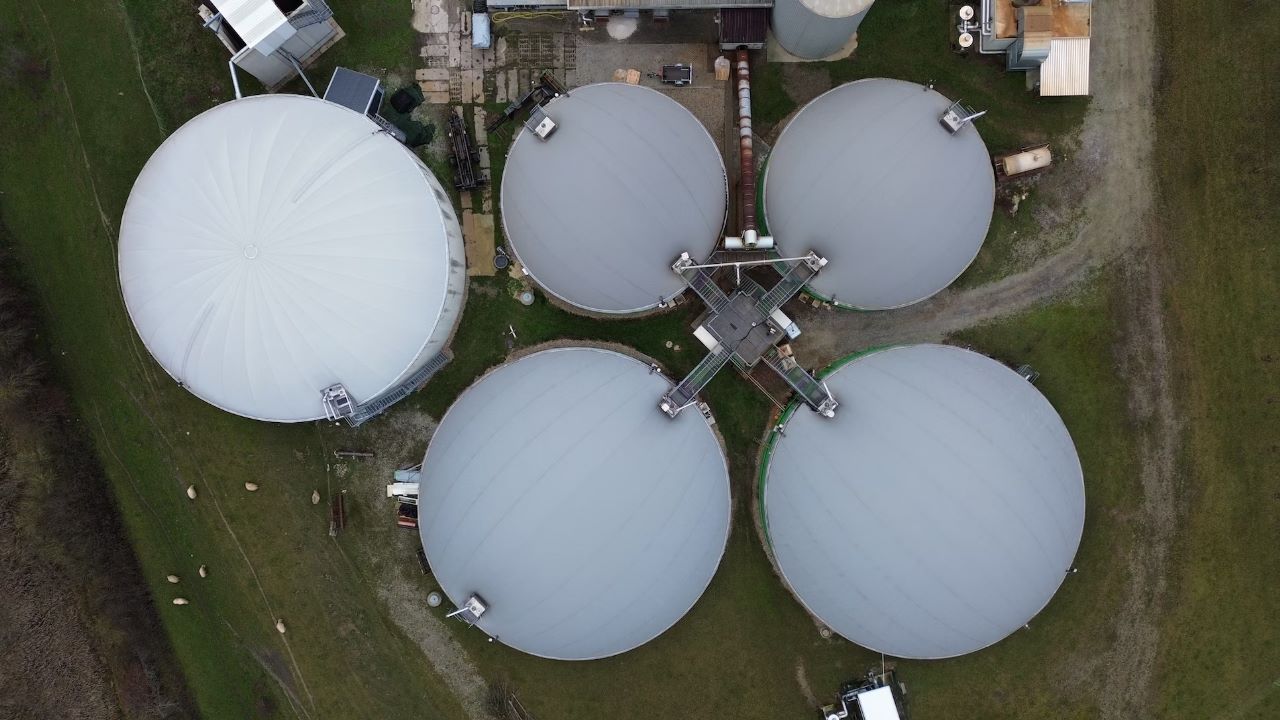
For decades, India has been harnessing the potential of biogas as a viable alternative to LPG and biomass burning, particularly in rural areas. However, the lack of technological advancements and high setup costs have impeded the widespread adoption of biogas.
But now, things are changing as the Indian government focuses on increasing the natural gas contribution to the total energy mix to 15% by 2030, from the current 6.9%.
Recent data from the Sustainable Alternative Towards Affordable Transportation portal and the Ministry of New and Renewable Energy shows that 58 compressed biogas plants with a total capacity of 271 tonnes per day were commissioned in India as of March 31. Also, during the same period, approximately 3,694 investors were issued letters of intent to set up biogas plants, and around 9,019 tonnes of compressed biogas was sold.
According to Gaurav Kedia, chairman of the Indian Biogas Association, India currently has 50 lakh small biogas plants, though a large number of them remain non-operational due to lack of social and technical support. Efforts are on to enhance the plants' performance by utilising “different feedstock mixes” and optimising their “upgradation systems and compressors to minimise methane slip”, Kedia said.
In contrast to other biomass projects, biogas initiatives—particularly compressed biogas—have been prioritised by project developers.
Over the past few years, the Indian Renewable Energy Development Agency has been approving and disbursing loans predominantly for biogas and waste-to-energy projects, Kedia said.
According to the most recent annual report of the Ministry of New and Renewable Energy, IREDA approved biogas and waste-to-energy projects worth Rs 773 crore and paid out Rs 345 crore.
“Because of market demand, local resource availability, governmental policies, and environmental advantages, we can consider biogas or CBG projects as the prioritised projects by the developers,” Kedia said.
The ministry reported that in 2022, approximately 1,36,828 kg per day of CBG capacity was added mainly in states such as Haryana, Gujarat, Uttar Pradesh, Madhya Pradesh, Maharashtra, Tamil Nadu, Punjab, Telangana, and West Bengal.
Numerous new companies—both national and international—are entering the field and covering the entire value chain. "Financial institutions are quite positive about the sector and are trying to figure out ways to have smooth funding possibilities," Kedia said.
According to him, it is important to use a different approach in modelling the plants as compared with the past. The focus should be on a structured supply chain that prevents any sudden rise in feedstock prices once the plants become reliant on suppliers. In previous instances, plants struggled to maintain sustainability when suppliers hiked the feedstock prices, he said. “This should not happen again."
It is also important to develop India and region-specific biogas plant technology that takes into account the regionwise requirements of farmers as well as commercial specifications, Kedia said. "Instead of importing one-size-fits-all type of digesters, we should have region-specific digesters."
A small biogas plant with a one cubic metre capacity can meet the energy needs of a family of two adults and two children, producing 400 grams of LPG-equivalent gas from two to three cows. A five-tonne plant, on the other hand, can generate energy equivalent to 1 MW of power, he said.
Under the Sustainable Alternative Towards Affordable Transportation initiative, the government has promised that all compressed biogas produced will be purchased by public sector oil marketing companies at a floor price set by the government.
CBG can be utilised alongside compressed natural gas at fuel retail outlets, and producers can also sell it at their own retail outlets along with CNG.
Financial Assistance
To support the development of biogas projects, the government will provide financial assistance at both the central and state levels. The support ranges from Rs 17,000 for small 1 cubic metre plants to Rs 70,400 for medium 25 cubic metre plants.
Sistema.bio—a global biogas company—has installed around 50,000 prefabricated geomembrane-based digesters across 21 states in India. This has subsequently benefited 50,000 small farms and dairy producers, as the farmers receive the government subsidy directly on installation of these digesters.
The company recently launched the world's largest biogas plant manufacturing facility in Chakan, Pune, with a capacity to build 1,00,000 plants annually. In FY24, Sistema.bio plans to set up an additional 40,000 plants, benefiting from their mobile plants which are 20% cheaper and technologically advanced, enabling faster setup times as compared with conventional plants.
Various startups are also exploring alternative methods of biogas production. Some are focusing on converting food waste into biogas, while others are utilising polythene bags to produce polyfuel with low sulphur content. This polyfuel can replace kerosene as a hazardous liquid fuel and simultaneously capture carbon dioxide while separating methane as raw biogas.
As India aims for net-zero emissions by 2070, biogas is expected to play a crucial role in achieving this target and transitioning to a greener and more sustainable future.

-
The Economic Imperative: Analysing The Material Driving Force Behind India-Canada Strategic Reset

This economic complementarity is further reinforced by deep institutional investment ties and talent mobility, which form the bedrock of the bilateral framework.
-
Medicine Pricing: Where Must Profit Stop?
India must confront excessive margins, hidden incentives and regulatory gaps that threaten the integrity of medicine.
-
Why Amazon And Flipkart Are Struggling To Beat Meesho In India's Smaller Cities
With 274 million users and lowest-cost logistics, Meesho is defending its value commerce crown against giants like Amazon and Flipkart.
-
High US Salaries, No Green Card Certainty: The Financial Calculation Facing Indian H-1B Families
The suspension of PERM processing at eight technology employers does not cancel existing H-1B visas. What it does is force a question many Indian families have been avoiding: is the US salary worth tying your career and family plans to one employer?
-
Swiggy vs Eternal: Food Delivery's Two Rivals Are No Longer In The Same Race
Eternal is building a private AI assistant, dark.ai. Swiggy is still working out how to make Instamart pay, with an operating loss of Rs 895 crore in the July-September quarter while Blinkit stayed profitable.
-
Where You Live Shapes How You Get To Work | The Reason Why
Two-wheelers are the most popular way to get to work in India, accounting for nearly 43% of workplace commutes.
-
Unhedged Position: Can India See An Indonesia-Style Time Correction?
The Nifty is trading below levels it first clocked in 2024. Is there, then, as I have suggested in the headline, potential that the current time correction drags on painfully for the next three-five, even ten years?
-
Navigating Friction And Energy Realities: An Analysis Of Marco Rubio's October Visit To India
Occurring at a critical juncture marked by stalled trade negotiations and escalating geopolitical pressures over global energy supplies, the visit offers a profound window into modern US-India relations.
-
India Exports Capital. Why Not Export Trusteeship?
The big question, then, is whether India can build an institution that global borrowers, investors, banks, and lawyers can trust, even without an Indian connection.
-
France's Economy & Politics Are In Crisis | The Reason Why
Let's look at how the French economy and politics evolved under Nicolas Sarkozy, Franois Hollande and Emmanuel Macron.










