India's Ambitious COP26 Pledge Will Run Into Funding Hurdle, Says ICRA
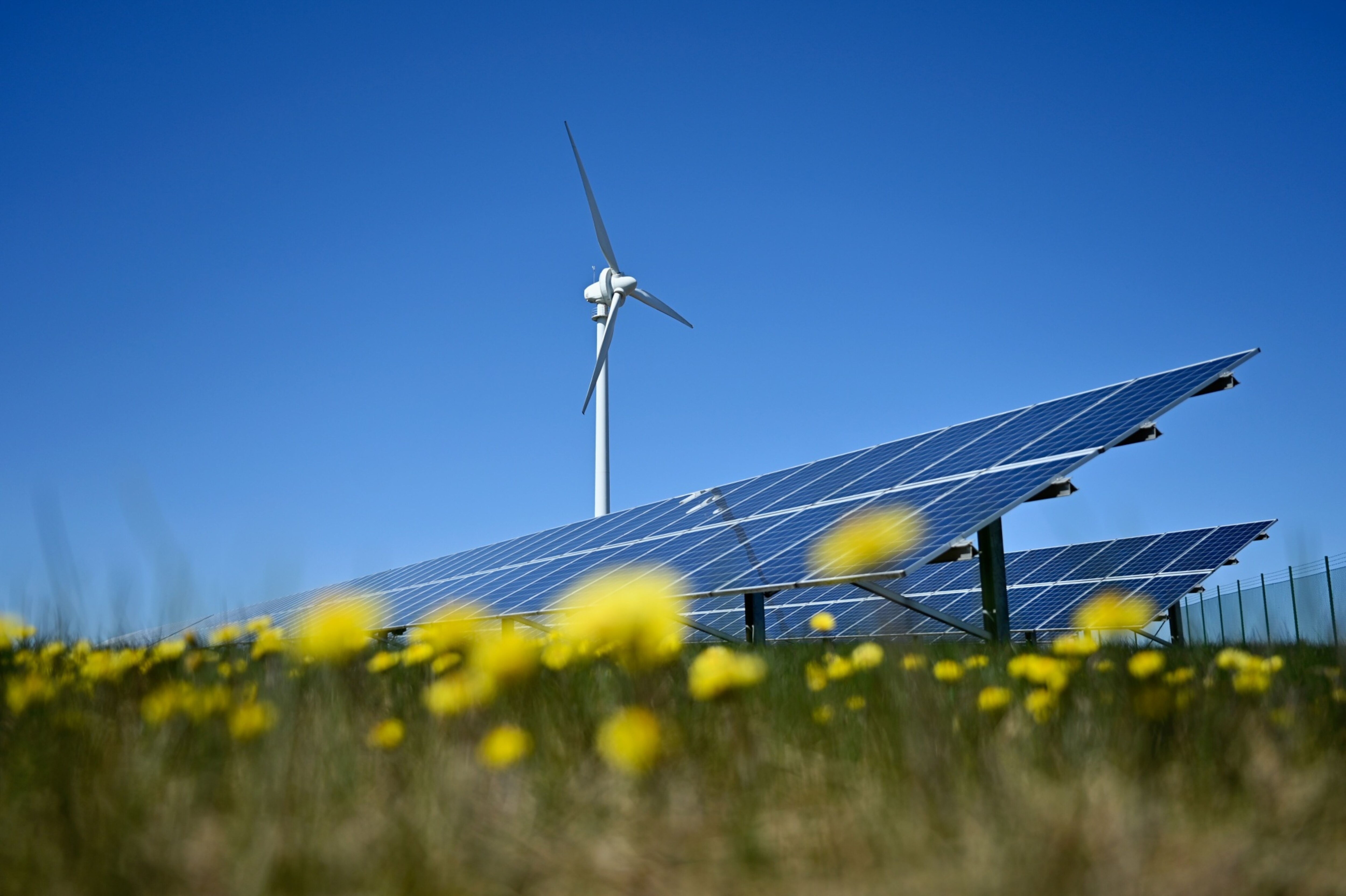
Prime Minister Narendra Modi's pledge to add 500 gigawatts of non-fossil fuel energy sources by 2030 is likely to face a funding hurdle as massive investments will be required to boost capacity, according to ICRA Ltd.
India will require up to Rs 45 lakh crore worth of investments by 2030 to meet that pledge, analysts Rohit Ahuja and Madhura Nejjur said in the rating agency's first-ever climate series report. "Availability of adequate funding avenues remains critical to achieve capacity targets."
India made ambitious commitments at the COP26 climate summit in Glasgow last year. The country announced a two-phased plan—increasing non-fossil fuel capacity by 2030 and then targeting net-zero emissions by 2070. While net zero is a distant target, the 2030 commitments will require urgent interventions on the policy and investment front.
Till FY30, ICRA said, the country will need to spend Rs 20-25 lakh crore for adding more capacity. Another Rs 10-15 lakh crore will be required for the supporting transmission infrastructure and storage capabilities.
Raising that kind of money will be a challenge for various reasons, ICRA said. First, developed countries have not delivered on their promised funding for supporting the energy transition of developing countries.
Other sources of funding remain limited as most Indian renewable projects rely on equity from global funds, and debt from domestic financial institutions. A lot of the global insurance and pension funds have minimum rating requirements which lead to fewer projects getting adequately funded. Developers, according to ICRA, prefer shorter-tenure debt by investors which further leads to refinancing risks.
With the challenges at hand, the rating agency expects India to have 300 GW of renewable energy capacity by FY30—around 40% short of the target.
Net Zero By 2070 A 'Distant Dream'
If the 2030 target is challenging, the transition to net zero by 2070 would be even more daunting, ICRA said.
That's because by then India's per capita energy consumption would have surged multifold from the current levels. ICRA estimates that India's energy consumption would grow at a compounded annual rate of 2-5% between 2030 and 2070—assuming an economic expansion of 4-6% a year.
That means to ensure over 90% of its power comes from non-polluting sources, India will require over 100 GW of renewable capacity addition every year. That would require about Rs 6 lakh crore worth of annual investments. "The investment ranges from Rs 4–7 crore per MW, currently depending on solar, wind or hydro projects," it said.
Yet, the scale of the challenge also means multiple investment opportunities will emerge, ICRA said.
"Manufacturers of solar panels, inverters, batteries in solar energy sector, wind turbine and gearbox manufacturers in wind energy sectors will be the immediate ones who will benefit from renewable growth," ICRA said.
"There, however, will be indirect benefits also like job creation in and around the sector, investment and funding opportunities. Banks, financial institutions, mutual funds and bonds will benefit with government focus on the sector."
Other areas where avenues will open up include electric vehicles, ethanol blending, and carbon capture technologies, it said.

-
India's Troika Of Good Luck | Joining The Dots

A weaker Trump, a cooling AI trade and resilient earnings have put Indian markets back in favour. Rising inflation could spoil the party.
-
Talking Points This Week: Leadership Shock At Nvidia, Earnings Strength, And The Fog Over Hormuz
The Anthropic IPO pricing and first trading day, Nvidia's upcoming earnings, and any fresh signals from Iran will set the tone for the following week.
-
Signature Play: The Classic Cocktail Is Dead. Or Is It?
Classic cocktails are disappearing from India's cocktail menus. But they're still being ordered, taught to bartenders and borrowed from. So, who's really having the last drink?
-
A New Samvat Wishlist: Inclusive Prosperity And Human Development
India has strengthened its economic foundations through infrastructure, digital access and enterprise. Its next growth chapter must deepen productivity, create better livelihoods and widen participation in prosperity.
-
Love, Sex Aur Dhokha: The Audacious Plot To Spy On Jensen Huang
A Taipei dinner, a Singapore chip buyer and a suspected Chinese asset: inside the alleged spy operation that got close to NVIDIA's Jensen Huang.
-
Ten Things I Learnt This Samvat
Patience can be a trap. Cheap stocks can stay cheap. Leverage can wipe you out. What did Samvat 2082 teach us? Niraj Shah writes on 10 lessons from the year gone by.
-
Talking Points This Week: Tech Nerves, FII Buying, And A Faraway Banking Shock
The global markets are not shining this Diwali. The exception in the large markets is, India.
-
Midterm Rally Lasted A Day. The Hard Reality Of A Divided US May Last Two Years | Opinion
Between a contested AI boom, a debt ceiling that arrives in 2027 and a president with every incentive to act alone, the next two years may prove more volatile than the first day's rally suggests.
-
Blue Wave Will Derail the AI Trade but Won't Dismantle the AI Era | Unhedged Position
The Democrats' sweep of the US Congress will see politics collide with economic forces both over the long and short term.
-
It's Time To Take The GST Council's Bet On Trust Global
Payment records can prove India's services exports, and clear, proportionate rules can bring foreign digital sellers into the tax net.









