Indians Tighten Belts As Ukraine War Inflates Fried Food, Vegetables Rates
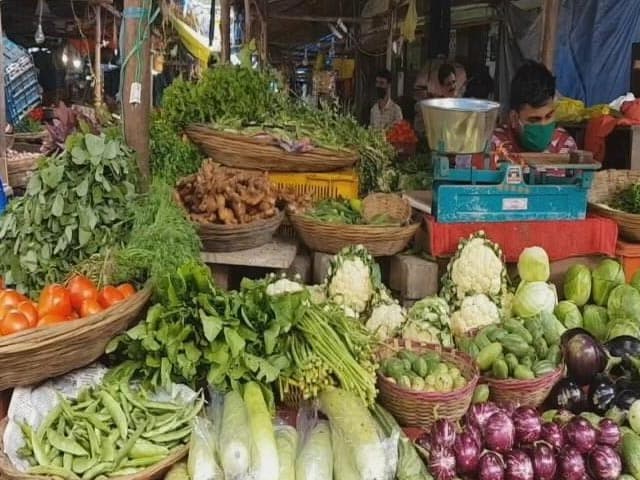
Many Indians are cutting down on fried food and even vegetables as the Ukraine war inflates the prices of items from edible oils to fuel, threatening a sputtering recovery in the consumption-based economy after two years battling Covid-19.
Consumers in Asia's third-largest economy are feeling the bite as companies pass on a surge in costs since the invasion, battling the first hikes in five months this week in the prices of diesel and petrol, as well as more expensive vegetable oils.
"God only knows how we will manage this level of price rise," said Indrani Majumder, the sole earner in a family of four in the eastern city of Kolkata, adding that the past two years of the pandemic had brought a halving in salaries.
These days her family eats more boiled food to save on the cost of edible oil, she said. It is just one of almost a dozen homes were people said they were taking similar steps.
India's economy expanded at a pace slower than expected in the quarter from October to December, and economists forecast a further dent to growth in the current one, as high fuel prices bring a jump in inflation.
Private consumption contributes the largest share of gross domestic output, at nearly 60%.
But since the invasion late in February, which Russia calls a special operation, Indian firms have raised prices of milk, instant noodles, chicken and other key items by about 5% to 20%.
About 800 million of a population of nearly 1.4 billion received free government supplies of staple foods during the pandemic, and even small price rises now can mean a knock for their budgets.
Families' finances could stay anaemic for the third year in a row, warned Pronab Sen, formerly India's chief statistician.
"The process of rebuilding savings was only beginning post the pandemic," he added. "Because of this latest shock, they will have to cut back on consumption."
Darkening Picture
Surging global prices of crude have prompted companies in the import-dependent nation to raise retail prices of petrol and diesel twice this week. India imports 85% of its crude oil, which has seen prices rise nearly 50% this year.
The South Asian nation is also the world's biggest importer of edible oil, shipping in nearly 60% of its needs.
But the price of palm, the country's most widely consumed edible oil, has jumped 45% this year. And supplies of sunflower oil, which Ukraine and Russia produce in large quantities, have been disrupted.
Some wholesalers said their sales of edible oil had fallen by a quarter in the past month as prices rose.
These factors helped keep India's retail inflation in February above the central bank's comfort level of 6% for the second month in a row, while the wholesale rate was more than 13%.
"The timing of input price inflation could not have been worse in the context of a slowing consumption trend," financial services firm Jefferies said in a note.
The central bank has said it is monitoring crude and commodity prices ahead of its next monetary policy meeting in early April. But markets do not expect the Reserve Bank of India to change key rates, as it looks to prioritise growth.
This stance compares with global central banks, which have either raised rates or are weighing whether to do so to curb inflation. For instance, policymakers of the U.S. Federal Reserve called this week for big rate hikes in May.
For consumers, there is little relief in sight.
The Confederation of All India Traders estimates input costs for makers of consumer durables and fast moving consumer goods (FMCG) to rise another 10% to 15% this month as fuel prices rise, an expense destined to be passed on to the final consumer.
In Kolkata, vegetable vendor Debashis Dhara said higher transport costs would bump up vegetable prices by a further 5% this week. His sales have already halved since February.
India's Mother Dairy and Amul raised milk prices by nearly 5% this month, while FMCG companies such as Hindustan Unilever and Nestle are charging more for items such as instant noodles, tea and coffee.
Broiler chicken prices have jumped nearly 45% in six months to a record 145 rupees ($1.90) a kg this week, as key feed ingredients corn and soymeal have become costlier after supplies from the Black Sea region were affected.
Fertiliser prices have shot up to a record $150 a tonne since Russia, one of the biggest producers, rolled tanks and soldiers into Ukraine.
"It has become very difficult to manage our monthly budget," said Archana Pawar, a housewife in the financial capital of Mumbai. "This kind of price rise is forcing us to cut down consumption."

-
We May Need Another Tukaram Mundhe To Fight Air Pollution | The Reason Why

Developers may install basic measures such as sprinklers and green nets, resume work, and continue violating rules when this equipment stops working.
-
Extracting Value From Battery Scrap Could Be Challenging For India | The Reason Why
A discarded lithium-ion battery still contains valuable materials such as lithium, nickel and cobalt. These can be recovered and reused. When such batteries are crushed and shredded, they produce a dark powder called black mass.
-
One El Nino, India Can Handle. Two Could Break The Granary
India's grain stocks can absorb one bad year, but a second El Nino could drain the buffer in two to three years, economists say.
-
India's Troika Of Good Luck | Joining The Dots
As Jensen Huang's exit drags Nvidia down, a cooling AI trade and resilient earnings have revived investor interest in India. A likely RBI rate hike looms.
-
Talking Points This Week: Leadership Shock At Nvidia, Earnings Strength, And The Fog Over Hormuz
The Anthropic IPO pricing and first trading day, Nvidia's upcoming earnings, and any fresh signals from Iran will set the tone for the following week.
-
Signature Play: The Classic Cocktail Is Dead. Or Is It?
Classic cocktails are disappearing from India's cocktail menus. But they're still being ordered, taught to bartenders and borrowed from. So, who's really having the last drink?
-
A New Samvat Wishlist: Inclusive Prosperity And Human Development
India has strengthened its economic foundations through infrastructure, digital access and enterprise. Its next growth chapter must deepen productivity, create better livelihoods and widen participation in prosperity.
-
Love, Sex Aur Dhokha: The Audacious Plot To Spy On Jensen Huang
A Taipei dinner, a Singapore chip buyer and a suspected Chinese asset: inside the alleged spy operation that got close to NVIDIA's Jensen Huang.
-
Ten Things I Learnt This Samvat
Patience can be a trap. Cheap stocks can stay cheap. Leverage can wipe you out. What did Samvat 2082 teach us? Niraj Shah writes on 10 lessons from the year gone by.
-
Talking Points This Week: Tech Nerves, FII Buying, And A Faraway Banking Shock
The global markets are not shining this Diwali. The exception in the large markets is, India.









