Indians Are Complaining More About Banking Services. Are Banks Responding?
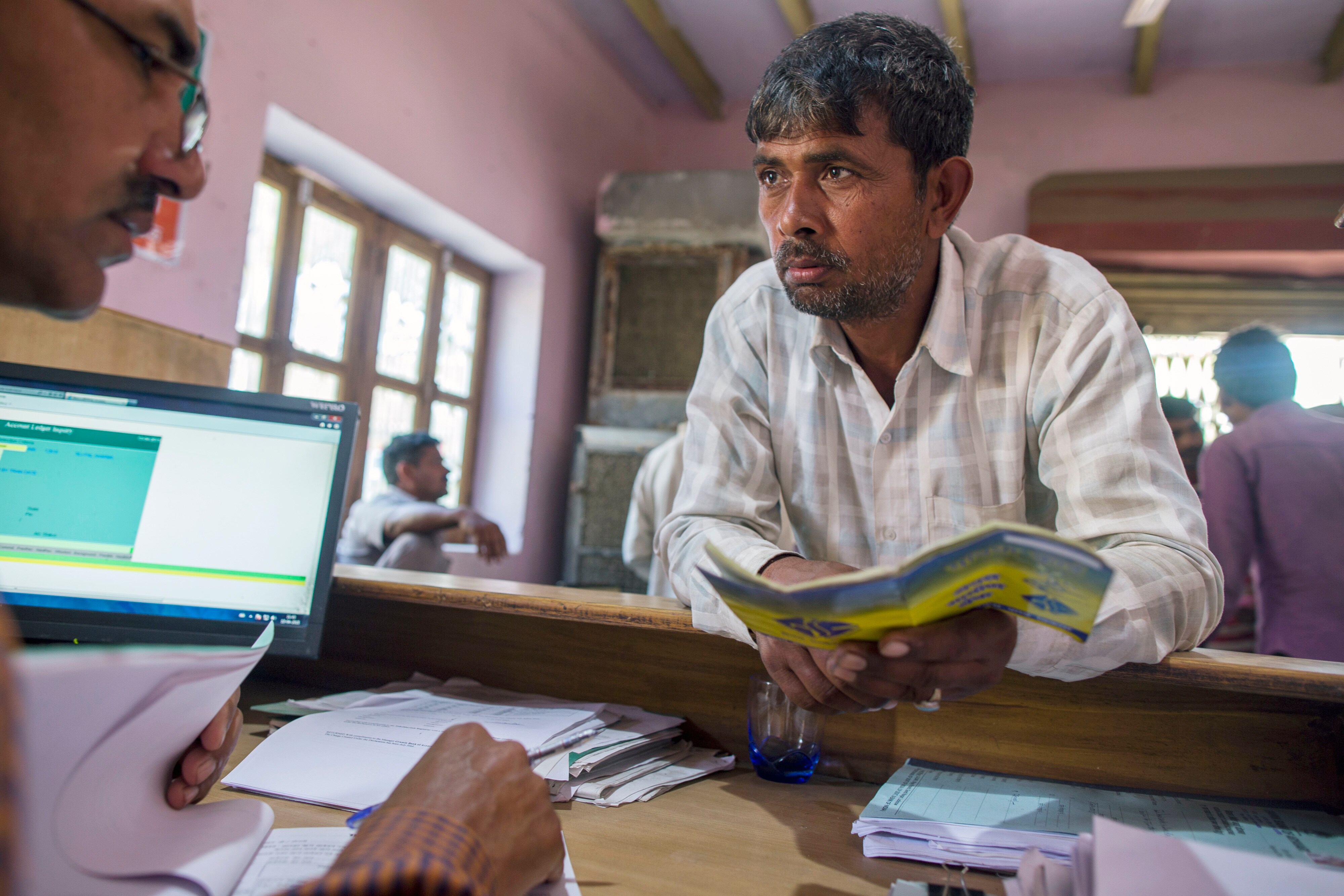
If you scroll through a social media platform like Twitter, chances are that you will stumble upon a complaint or two from a disgruntled bank customer. Ask about banking services in a group of friends and it is likely that at least a few will have tales of poor banking services to tell.
To provide banking customers with a formal avenue to register and resolve their complaints, the Reserve Bank of India had put in an ombudsman scheme way back in 1995. The ombudsman has been filing annual reports since 2003-04 with data available since 1999-2000. A study of these annual reports, the most recent of which was released on Wednesday, gives a picture of sector where filed complaints are rising but so are resolutions. The nature of complaints has also changed over time with troubles linked to credit and debit cards rising as their use grows.
Rising Complaints; Improving Redressal?
In the year 1999-2000, the first year for which data is available, the Ombudsman office received 6800 complaints. These complaints have steadily risen over the last two decades to hit 1.63 lakh in 2017-18. The RBI's financial year runs from July-June.
When combined with grievances brought forward from the previous year, the Ombudsman dealt with 1.75 lakh complaints in the twelve months till June 2018.
To be sure, over this period of time, the reach of banking services has also expanded. More than 80 percent of Indian adults now have a bank account, according to the World Bank's 2017 Global Findex Report.
Over the last three years, customer complaints have risen by about 25 percent each year, said the latest annual report.
While complaints are rising, the track record of the ombudsman in dealing with these complaints has improved.
In 1999-2000, the Ombudsman disposed 60 percent of the complaints considered maintainable in the same year. This rose to 96 percent in 2017-18.
“There was a marked increase in the number of complaints resolved by agreement i.e. through mediation, which rose from 42.43 percent during the previous year to 65.82 percent in 2017-18,” said the latest annual report. Fifty percent of the complaints came from urban areas, the report added.
The report also noted that there has been an eight-fold increase in the number of appeals (125) received in 2017-18, as compared to 2016-17 (15). This is because ground of appeal have been expanded by the RBI.
What Are The Complaints About?
As the nature of banking activity as changed, so have the type of complaints being put in by customers.
In the early years, most complaints were linked to deposit accounts, loans and delays in cheque clearances. Now, customers are more likely to complain about banks not adhering to fair practices, troubles with credit and debit cards and, most recently, issues that crop up during use of digital banking.
In 2017-18, complaints about ATM/Credit/Debit Cards, taken together, made by 22.8 percent of all complaints. Complaints on violation of the fair practices code made up 22.1 percent of all grievances.
Of the 7.7 percent of the credit card related complaints received during the year, 30 percent pertained to wrong billing / debits, 8 percent to wrong / delayed reporting / non-updating credit status with credit information to Credit Information Bureau and 5 percent to threatening calls /inappropriate approach of recovery agents.Ombudsman Annual Report 2017-18
Mobile and electronic banking, a category which had not existed until the previous year, accounted for 5.2 percent of all complaints, said the annual report.
Complaints about loan and deposit accounts, which dominated in the earlier years, only make up 8 percent of grievances now, shows the Ombudsman report.
Who Are The Complaints Against?
With public sector banks still accounting for close to 70 percent of all banking activity, it is no surprise that the largest number of complaints continues to be against these state-owned lenders.
In 2017-18, of the total number of complaints received by the Ombudsman, public banks together accounted for 63 percent of them. These were 1.02 lakh complaints against these lenders. Complaints against private banks made up 26 percent of the total.
“There was an increase of 31 percent in complaints received against SBI during the year, one of the major reasons being the merger of associate banks with SBI,” the report said.
This mix has changed as private banks have expanded their reach. In 1999-2000, about 6 percent of all complaints were against private lenders, while 85 percent were against state-owned banks.
However, when seen as a proportion of outstanding accounts, complaints are higher across some of the private sector banks. Complaints, other than those linked to credit and debit cards, were highest at Dhanlakshmi Bank followed by Kotak Mahindra Bank and Yes Bank.

-
Opinion | India at 38: From Innovation Overperformer to Innovation Powerhouse

India now has 453 VC-backed deep science startups, 18 of them late-stage, after 117 percent growth since 2020. Laurus Labs, at USD 9.3 billion, is the most valuable deep science company in any middle-income economy outside China.
-
Indians Are Travelling, But Not Every Journey Is A Holiday | The Week In Whys
Pilgrims, patients and working women are the real travellers, and the system hasn't quite caught up with them.
-
Getting To Work Costs Women More | The Reason Why
It is not just about women paying more than men. It is about women paying much more in cities than in villages.
-
AI Bias In Investing Cannot Be Eliminated, But It Can Be Governed
Framing is a particularly important example as identical financial information presented in terms of gains rather than losses can lead an LLM to reach a different assessment.
-
Joining The Dots | Dark Skies, Steady Diya: Why Hope Holds This Diwali
With war, a weak rupee and foreign outflows weighing on sentiment, policymakers at the NDTV World Summit and market veterans at NDTV Profit Ignite: Diwali Edition offered the same advice: stay invested and filter out the noise.
-
The Curious Case of Equitas Small Finance Bank And A CEO Who Quit For Stock
PN Vasudevan believes persistent investor concerns over a perceived conflict of interest had become a governance overhang on Equitas Small Finance Bank's stock, even as the lender improved profitability and asset quality.
-
Talking Points This Week: AI Cash Burn, A Tiger Comeback And An India That Still Finds Its Own Path
India is not immune to higher oil or tighter global liquidity, yet its earnings base is broader, its domestic policy levers are still available.
-
Foreign Investors Own Half Of HDFC Bank and ICICI Bank. An LTCG Cut Could Matter Most Here
Foreign portfolio investors have US$115 billion parked in HDFC Bank, ICICI Bank. If the government cuts long-term capital gains tax, Jefferies says returning foreign money could land here first.
-
'Never Seen This Level Of Negativity': Sandeep Tandon Says The Next Rally May Be Closer Than You Think
Veteran investor Sandeep Tandon says foreign selling is easing, large-caps are due a comeback and mid-caps are crowded, while he turns positive on gold, power and pharma this Diwali.










