Sensex Falls Nearly Over Points Driven By Russia's Plan To Cut Gas Supply To Eastern Europe
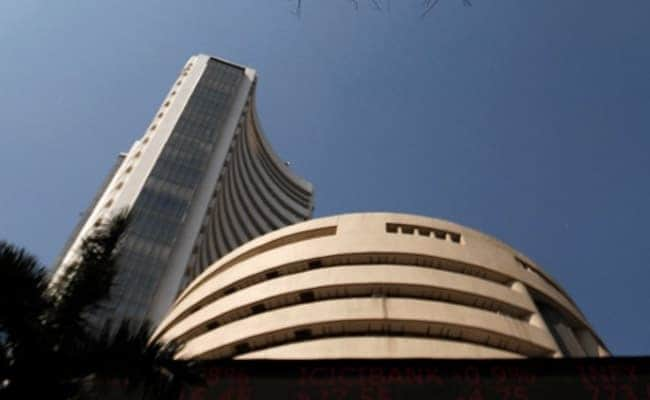
Indian benchmark indices fell on Tuesday as global economic growth fears pushed flight-to-safety trades, and a rout in US stocks from news of a cut in Russian gas supplies to Eastern Europe had added to the sombre mood.
The 30-share BSE Sensex 30-share index fell nearly 400 points to about 56,960, and the broader NSE Nifty slipped nearly 1 per cent to below 17,100 in early trade exchanges.
In the previous session, the Sensex index had jumped nearly 800 points to around 57,356, while the Nifty rose almost 1.5 per cent to about 17,200, after both the indexes had declined over 1 per cent on Monday.
Stocks across sectors lost ground, with all major Nifty sub-indexes in negative territory. Just three of the 50 stocks on the Nifty 50 index were marginally higher.
Nifty component Hindustan Unilever was down 0.4 per cent ahead of March-quarter results.
Bajaj Finance was the top percentage loser on the Nifty 50, down nearly 4 per cent a day after it reported results.
Broadly that is driven by Russia's latest move, which is viewed as a significant escalation in the Ukraine crisis.
Russia said it would halt supplies to Poland and Bulgaria from Wednesday. Russia has demanded payments for its gas exports in roubles in response to Western sanctions.
"Markets reverted to outright pessimism on Tuesday following some sombre reflection on Monday. US stocks were sharply down. The S&P 500 fell 2.81 per cent, and the NASDAQ fell just under 4 per cent to take it below 20% year-to-date. The US and Asian equity futures are sending an unambiguously negative message..." noted Robert Carnell, Regional Head of Research - Asia-Pacific at ING.
"The catalysts for these moves were yet more bellicose words from Russia over Ukraine, and the announcement that Bulgaria and Poland would see their gas supplies from Russia shut off from today," he added.
That move sent oil and gas prices higher. Brent crude futures rose to near $106 a barrel. Crude prices rose about 3 per cent in the previous session in volatile trade.
Financial markets have already been reeling from the Russia-Ukraine war and the supply disruptions which have pushed up commodities prices.
That has led global inflation to multi-year highs, and in response, the expected aggressive monetary policy path, especially from the US Federal Reserve, has increased fears about world economic growth.
China's stringent restrictions have also weighed on investor sentiment, although the central bank there announced stimulus measures.
Still, the broader outlook shows that the Federal Reserve's expected streak of rate increases could hurt growth just when many economies have started to recover from the pandemic-driven slumps.
Investors have also been fretting about volatile commodity prices because of the Ukraine war, with the International Monetary Fund warning this week about stagflationary risks in Asia.
The overnight sell-off on Wall Street underlined investor anxiety about the hit to earnings, with the Nasdaq down 4 per cent, its lowest since late 2020. Aftermarket close,
Google's parent, Alphabet Inc, reported its first quarterly revenue miss of the pandemic and was down about 3 per cent. Microsoft Corp fell 4 per cent ahead of its results but recovered once it forecasted double-digit revenue growth next year.
"I think with where the market is right now, in this indiscriminate selling and fear phase, I think you've got more potential for downside risk than you have for an upside surprise," said Ross Mayfield, an investment strategist at Baird in Louisville, Kentucky, told Reuters.

-
Indians Are Travelling, But Not Every Journey Is A Holiday | The Week In Whys

Pilgrims, patients and working women are the real travellers, and the system hasn't quite caught up with them.
-
Getting To Work Costs Women More | The Reason Why
It is not just about women paying more than men. It is about women paying much more in cities than in villages.
-
AI Bias In Investing Cannot Be Eliminated, But It Can Be Governed
Framing is a particularly important example as identical financial information presented in terms of gains rather than losses can lead an LLM to reach a different assessment.
-
Joining The Dots | Dark Skies, Steady Diya: Why Hope Holds This Diwali
With war, a weak rupee and foreign outflows weighing on sentiment, policymakers at the NDTV World Summit and market veterans at NDTV Profit Ignite: Diwali Edition offered the same advice: stay invested and filter out the noise.
-
The Curious Case of Equitas Small Finance Bank And A CEO Who Quit For Stock
PN Vasudevan believes persistent investor concerns over a perceived conflict of interest had become a governance overhang on Equitas Small Finance Bank's stock, even as the lender improved profitability and asset quality.
-
Talking Points This Week: AI Cash Burn, A Tiger Comeback And An India That Still Finds Its Own Path
India is not immune to higher oil or tighter global liquidity, yet its earnings base is broader, its domestic policy levers are still available.
-
Foreign Investors Own Half Of HDFC Bank and ICICI Bank. An LTCG Cut Could Matter Most Here
Foreign portfolio investors have US$115 billion parked in HDFC Bank, ICICI Bank. If the government cuts long-term capital gains tax, Jefferies says returning foreign money could land here first.
-
'Never Seen This Level Of Negativity': Sandeep Tandon Says The Next Rally May Be Closer Than You Think
Veteran investor Sandeep Tandon says foreign selling is easing, large-caps are due a comeback and mid-caps are crowded, while he turns positive on gold, power and pharma this Diwali.
-
Indians Stay With Family, Not In Hotels | The Reason Why
India still lacks enough clean, reliable and affordable hotels for budget-conscious travellers.
-
The Economic Imperative: Analysing The Material Driving Force Behind India-Canada Strategic Reset
This economic complementarity is further reinforced by deep institutional investment ties and talent mobility, which form the bedrock of the bilateral framework.










