Indian Companies Dramatically Reduce H-1B Visa Filing
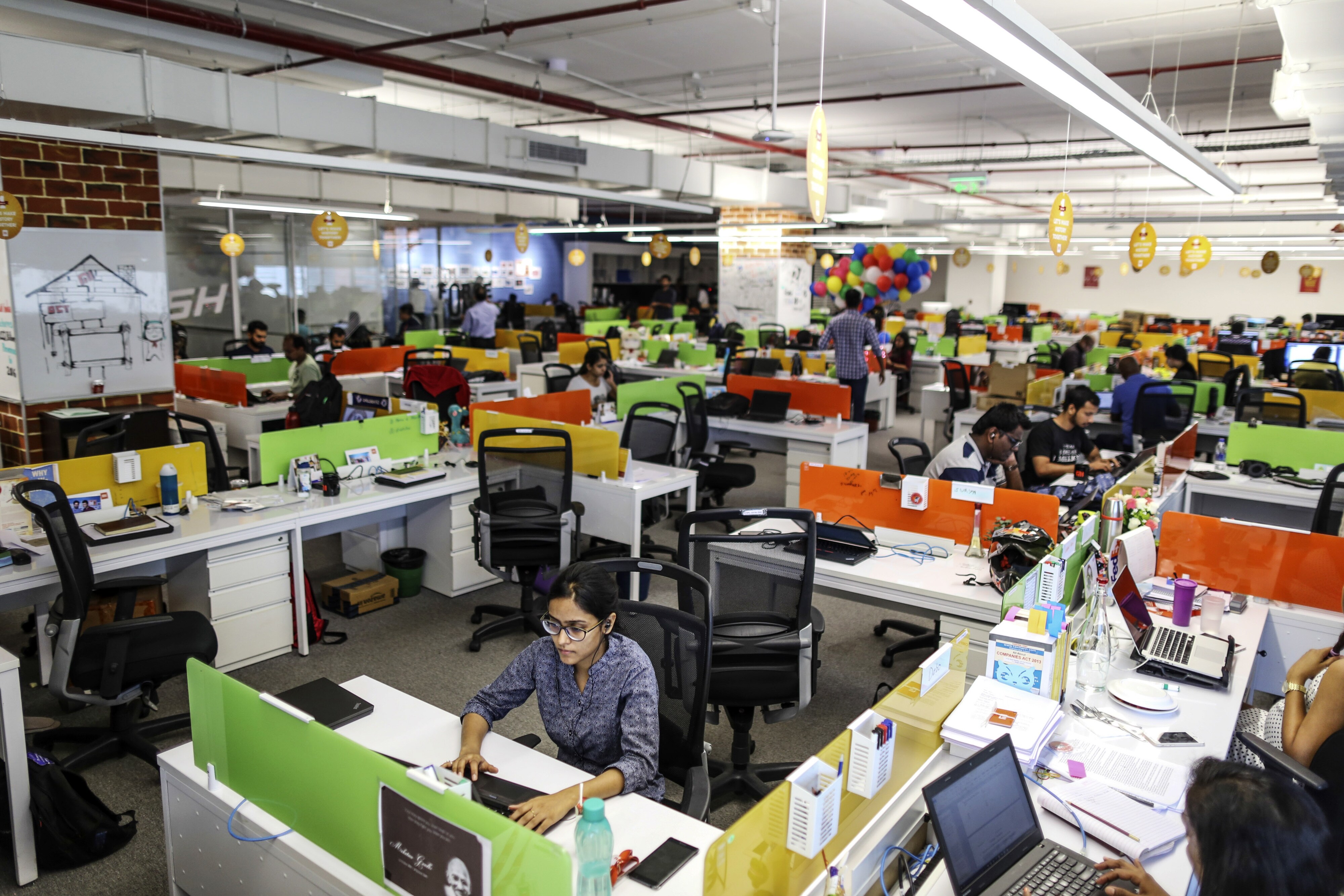
Indian technology firms have dramatically reduced their H-1B visa filings, and foreign nationals are exhibiting reluctance to make the jump to a U.S. company due to the Trump administration's hardline anti-immigration stance, a top Silicon Valley newspaper has said.
San Francisco Chronicle's editorial board has said applicants for the H-1B visa programme are anticipating the hardest process in many years. “That's affected both the applicants and the companies that employ them,” it said.
“Indian consulting firms, which have been accused of flooding the system with applications, have dramatically reduced their filings. Foreign nationals are exhibiting new reluctance to make the jump to a U.S. company,” the paper said as the process for filing H-1B visa application for the 2019 fiscal beginning Oct. 1, kicked off.
The H1-B visa is a non-immigrant visa that allows U.S. companies to employ foreign workers in speciality occupations that require theoretical or technical expertise. The technology companies depend on it to hire tens of thousands of employees each year from countries like India and China.
The Trump administration's hard-line anti-immigration stance is taking its toll, the daily said.
Also Read: Toughest Ever H-1B Visa Process Begins Today
Envoy Global, a technology-oriented immigration services provider, reports that 26 percent of employers it surveyed have had to delay projects, and 22 percent of them have relocated work overseas as a result of the current uncertainties in the US immigration system, San Francisco Chronicle said.
The daily argued that study after study has shown that foreign-born workers are good for the U.S. economy and good for U.S.-born workers.
“When companies are allowed to hire the workers with the best skills for the job — regardless of where those workers happen to have been born — their increased competitiveness boosts all the industries around them,” it said.
According to The Wall Street Journal, evidence suggests market demand for H-1B visas is ebbing.
Daniel Culbertson, the economist at Indeed Hiring Lab, said, “searches related to the H-1B visa, as a share of all searches on Indeed.com, have consistently declined through 2017 and into 2018. In February 2018, searches for H-1B as a share of all searches on our site are down nine percent from 2017.” “This also marks the thirteenth consecutive month of year-over-year declines. The decreased interest in H-1B related work from job seekers is a trend, not a temporary shift in preferences,” he added.
The Wall Street Journal said corporations continue to struggle with a paradoxical labour market where 5.48 lakh tech jobs remain open while unemployment in the technology sector hovers below full employment levels.
“There are lots of jobs, but not enough workers to fill them,” it said.

-
The Economic Imperative: Analysing The Material Driving Force Behind India-Canada Strategic Reset

This economic complementarity is further reinforced by deep institutional investment ties and talent mobility, which form the bedrock of the bilateral framework.
-
Medicine Pricing: Where Must Profit Stop?
India must confront excessive margins, hidden incentives and regulatory gaps that threaten the integrity of medicine.
-
Why Amazon And Flipkart Are Struggling To Beat Meesho In India's Smaller Cities
With 274 million users and lowest-cost logistics, Meesho is defending its value commerce crown against giants like Amazon and Flipkart.
-
High US Salaries, No Green Card Certainty: The Financial Calculation Facing Indian H-1B Families
The suspension of PERM processing at eight technology employers does not cancel existing H-1B visas. What it does is force a question many Indian families have been avoiding: is the US salary worth tying your career and family plans to one employer?
-
Swiggy vs Eternal: Food Delivery's Two Rivals Are No Longer In The Same Race
Eternal is building a private AI assistant, dark.ai. Swiggy is still working out how to make Instamart pay, with an operating loss of Rs 895 crore in the July-September quarter while Blinkit stayed profitable.
-
Where You Live Shapes How You Get To Work | The Reason Why
Two-wheelers are the most popular way to get to work in India, accounting for nearly 43% of workplace commutes.
-
Unhedged Position: Can India See An Indonesia-Style Time Correction?
The Nifty is trading below levels it first clocked in 2024. Is there, then, as I have suggested in the headline, potential that the current time correction drags on painfully for the next three-five, even ten years?
-
Navigating Friction And Energy Realities: An Analysis Of Marco Rubio's October Visit To India
Occurring at a critical juncture marked by stalled trade negotiations and escalating geopolitical pressures over global energy supplies, the visit offers a profound window into modern US-India relations.
-
India Exports Capital. Why Not Export Trusteeship?
The big question, then, is whether India can build an institution that global borrowers, investors, banks, and lawyers can trust, even without an Indian connection.
-
France's Economy & Politics Are In Crisis | The Reason Why
Let's look at how the French economy and politics evolved under Nicolas Sarkozy, Franois Hollande and Emmanuel Macron.










