India Unveils Budget to Lift Economic Growth
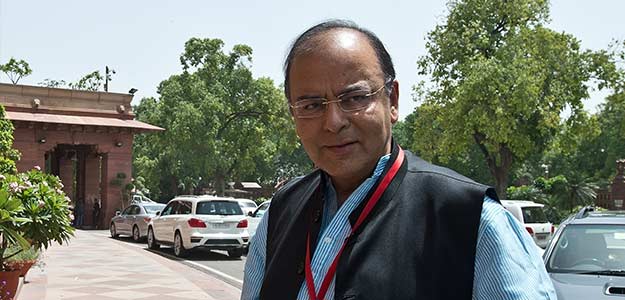
Burdened with extraordinary expectations after a campaign that promised "good days are coming," Prime Minister Narendra Modi's center-right government presented a budget Thursday aimed at increasing investment, improving infrastructure and reviving manufacturing, though it fell short of the drastic overhauls necessary to rein in spending.
In a speech, Finance Minister Arun Jaitley vowed to lift economic growth to 7 or 8 percent within three years and to limit the budget deficit to 4.1 percent of gross domestic product, a goal some analysts have called unrealistic.
Among the changes, foreign investors will be allowed to hold a 49 percent stake in defense and insurance companies, up from 26 percent. The columnist Ashok Malik described the budget as somewhat conservative, constrained by the fact that it covers only seven months and by public finances that offer little wiggle room.
"It's not a budget which the stock markets will call a 'dream budget,' nor is it a budget that Congress can easily criticize," he said, referring to the opposition Indian National Congress party. "To be fair, bold, structural changes have not usually come in the budget speeches," Malik said. He added that by awarding a large number of projects to individual states, the budget would provide the government "political cover to take bolder, reformist decisions in the coming weeks and months."
In his election campaign, Modi blamed the economic policies of the Congress party, which was leading the incumbent government, for India's slowing growth rate. In a speech last month, he asked Indians to brace themselves for several years of "bitter medicine" that he said was necessary to "resuscitate the patient."
But Modi's Bharatiya Janata Party is also preparing for state elections in crucial districts like Haryana, Maharashtra and Delhi, which could install friendly chief ministers. This has led to hesitation on steps expected to be unpopular, like an increase in gas prices.
Jaitley set a somber tone at the speech's opening, warning that the global slowdown had created a difficult environment for growth.
He pledged to adhere to the previous government's budget deficit target of 4.1 percent of gross domestic product in the current fiscal year, acknowledging that the goal was "indeed daunting."
"I have decided to accept this target as a challenge," Jaitley said. "One fails only when one stops trying."
Jaitley's budget promised "an investment-friendly taxation system" but did not lay out many concrete changes.
Retrospective taxation - taxing transactions after the fact - has served as a deterrent to many domestic and foreign investors in India. Jaitley said that a committee would examine all pending cases of retrospective tax, but that there would be no amendment made to the current rules.
Jaitley also promised to review India's sizable subsidy bill - which amounts to about 2 percent of GDP - but offered few specifics, saying only that an expenditure reform commission would deliver a report this year. The budget placed much emphasis on encouraging and incubating small business, establishing a $1.6 billion fund to provide equity, soft loans and risk capital to startups. Jaitley also promised a review of the central bank's monetary policy, presumably creating a target for inflation.
Opposition politicians said the budget fell far short of expectations. Manish Tewari, a former information minister in the Congress-led government, said it offered little sense of how revenues would be raised, noting that the rollout of new projects was likely to raise the budget deficit substantially.
"There is no grand vision that the budget articulates, or even a road map that sets the direction," he said. "The only thing that was striking was the number of commissions the budget seeks to set up."
India's benchmark Sensex index for the Bombay Stock Exchange fell during the speech, but rose 1.6 percent in the hour after. The index closed down 0.3 percent.
Samiran Chakraborty, regional head of research at Standard Chartered Bank, called it "a moderately positive budget overall," but said that its tax revenue projections seemed overly optimistic.
Chakraborty said the budget had "delivered on a lot of expectations in the market" by raising the foreign direct investment caps, easing tax treatment for foreign investors and sticking to the fiscal deficit target.
© 2014, The New York Times News Service

-
Indians Are Travelling, But Not Every Journey Is A Holiday | The Week In Whys

Pilgrims, patients and working women are the real travellers, and the system hasn't quite caught up with them.
-
Getting To Work Costs Women More | The Reason Why
It is not just about women paying more than men. It is about women paying much more in cities than in villages.
-
AI Bias In Investing Cannot Be Eliminated, But It Can Be Governed
Framing is a particularly important example as identical financial information presented in terms of gains rather than losses can lead an LLM to reach a different assessment.
-
Joining The Dots | Dark Skies, Steady Diya: Why Hope Holds This Diwali
With war, a weak rupee and foreign outflows weighing on sentiment, policymakers at the NDTV World Summit and market veterans at NDTV Profit Ignite: Diwali Edition offered the same advice: stay invested and filter out the noise.
-
The Curious Case of Equitas Small Finance Bank And A CEO Who Quit For Stock
PN Vasudevan believes persistent investor concerns over a perceived conflict of interest had become a governance overhang on Equitas Small Finance Bank's stock, even as the lender improved profitability and asset quality.
-
Talking Points This Week: AI Cash Burn, A Tiger Comeback And An India That Still Finds Its Own Path
India is not immune to higher oil or tighter global liquidity, yet its earnings base is broader, its domestic policy levers are still available.
-
Foreign Investors Own Half Of HDFC Bank and ICICI Bank. An LTCG Cut Could Matter Most Here
Foreign portfolio investors have US$115 billion parked in HDFC Bank, ICICI Bank. If the government cuts long-term capital gains tax, Jefferies says returning foreign money could land here first.
-
'Never Seen This Level Of Negativity': Sandeep Tandon Says The Next Rally May Be Closer Than You Think
Veteran investor Sandeep Tandon says foreign selling is easing, large-caps are due a comeback and mid-caps are crowded, while he turns positive on gold, power and pharma this Diwali.
-
Indians Stay With Family, Not In Hotels | The Reason Why
India still lacks enough clean, reliable and affordable hotels for budget-conscious travellers.
-
The Economic Imperative: Analysing The Material Driving Force Behind India-Canada Strategic Reset
This economic complementarity is further reinforced by deep institutional investment ties and talent mobility, which form the bedrock of the bilateral framework.










