Indian Roads A $100-Billion Opportunity Over Next Three Years: Nomura
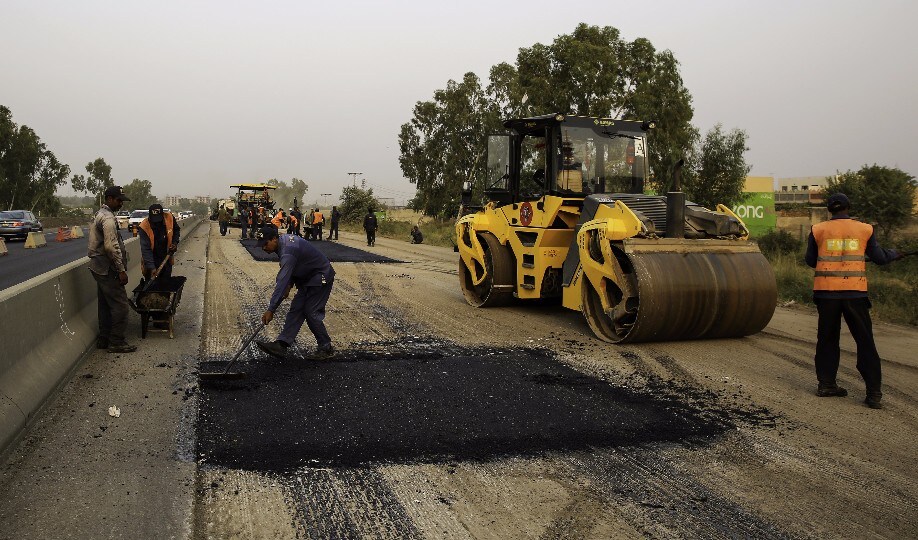
Road developers stand to gain as India's spending on highways is expected to double to Rs 6.8 lakh crore ($100 billion) over the next three years on government's infrastructure push, a report by Nomura said.
Poor quality of roads and growing traffic would drive the demand for more highways, it said. National and state highways comprise less than 5 percent of the roads but account for 80 percent of traffic. Most of these are either single of double-laned, leaving room for a “significant improvement in India's highways network”, the report said.

The National Highways Authority of India managed to construct 8,100 kilometres of roads in the year ended March, a little over half the target. It's still the highest ever and Nomura expects the construction to exceed 10,000 km in the near term, driven by the fact that work is in progress at 33,000 km of highways which were ordered in the past two years. Stalled projects revived through a recent round of reforms will add to growth.
Nomura called the central government's estimate of Rs 5 lakh crore investments in the three years ended March 2020 as optimistic. It would be spending close to Rs 3.2 lakh crore while nearly Rs 3.6 lakh crore could come from various state governments, it said.

After a stagnant phase between 2010-11 and 2014-15, growth has picked up in highway sector contracts. The opportunity is widely driven by states likes of Uttar Pradesh, Madhya Pradesh and Maharashtra, which will account for 60 percent of the entire states' capex.
A pipeline of state orders such as Purvanchal Expressway (Rs 26,000 crore) in Uttar Pradesh, Mumbai-Nagpur Expressway (Rs 46,000 crore) and several other projects in the south support the revenue streamline and growth in order books, Nomura said.
Getting Past Debt Worries
The biggest concern for the infrastructure companies remains debt. The sector is among the biggest contributors to Indian banks' stressed assets, which at Rs 10 lakh crore are among the highest in the world.
“Developers have to get their finances sorted but they are getting there,” said Manish Agarwal, leader, capital projects and infrastructure at PwC India. There are some concerns among bankers to lend to infrastructure projects but many companies are in the process of securing financial closures, he said.
Agarwal said restructuring of debt and the revived interest of private investment in public-private partnership has helped orderbooks expand.
The government also eased rules for infrastructure investment trusts to help infrastructure companies help raise funds. Road builder IRB Infrastructure Developers Ltd. and Sterlite Power Grid Ventures Ltd. have already listed their InvITs. Their other peers have also sought approvals from the market regulator.
Given the interest in InvITs, companies have been trying to free some of their assets to raise capital, said Teena Virmani, vice-president, research at Kotak Securities. “We are positive on the sector and companies will be able to implement and execute even if there are temporary hiccups,” Virmani said.
Metro Opportunity On Track
Another pool of opportunity lies in metro rail corridor expansion in 15-20 cities. The overall cost of expansion of approved projects is over Rs 2.5 lakh crore, supporting the order books of contractors, according to ICRA Ratings.
The order book is expected to rise by Rs 75,000-90,000 crore over the next three to five years, thanks to metro rail expansion, it said.
“Roads and urban infrastructure are two key segments which have witnessed robust order inflows for construction companies,” said K Ravichandran, senior vice-president and group-head, corporate ratings, ICRA.

-
The Curious Case of Equitas Small Finance Bank And A CEO Who Quit For Stock

PN Vasudevan believes persistent investor concerns over a perceived conflict of interest had become a governance overhang on Equitas Small Finance Bank's stock, even as the lender improved profitability and asset quality.
-
Talking Points This Week: AI Cash Burn, A Tiger Comeback And An India That Still Finds Its Own Path
India is not immune to higher oil or tighter global liquidity, yet its earnings base is broader, its domestic policy levers are still available.
-
Foreign Investors Own Half Of HDFC Bank and ICICI Bank. An LTCG Cut Could Matter Most Here
Foreign portfolio investors have US$115 billion parked in HDFC Bank, ICICI Bank. If the government cuts long-term capital gains tax, Jefferies says returning foreign money could land here first.
-
'Never Seen This Level Of Negativity': Sandeep Tandon Says The Next Rally May Be Closer Than You Think
Veteran investor Sandeep Tandon says foreign selling is easing, large-caps are due a comeback and mid-caps are crowded, while he turns positive on gold, power and pharma this Diwali.
-
Indians Stay With Family, Not In Hotels | The Reason Why
India still lacks enough clean, reliable and affordable hotels for budget-conscious travellers.
-
The Economic Imperative: Analysing The Material Driving Force Behind India-Canada Strategic Reset
This economic complementarity is further reinforced by deep institutional investment ties and talent mobility, which form the bedrock of the bilateral framework.
-
Medicine Pricing: Where Must Profit Stop?
India must confront excessive margins, hidden incentives and regulatory gaps that threaten the integrity of medicine.
-
Why Amazon And Flipkart Are Struggling To Beat Meesho In India's Smaller Cities
With 274 million users and lowest-cost logistics, Meesho is defending its value commerce crown against giants like Amazon and Flipkart.
-
High US Salaries, No Green Card Certainty: The Financial Calculation Facing Indian H-1B Families
The suspension of PERM processing at eight technology employers does not cancel existing H-1B visas. What it does is force a question many Indian families have been avoiding: is the US salary worth tying your career and family plans to one employer?
-
Swiggy vs Eternal: Food Delivery's Two Rivals Are No Longer In The Same Race
Eternal is building a private AI assistant, dark.ai. Swiggy is still working out how to make Instamart pay, with an operating loss of Rs 895 crore in the July-September quarter while Blinkit stayed profitable.










