''Expect Over 7% Growth For India This Decade'': K V Subramanian
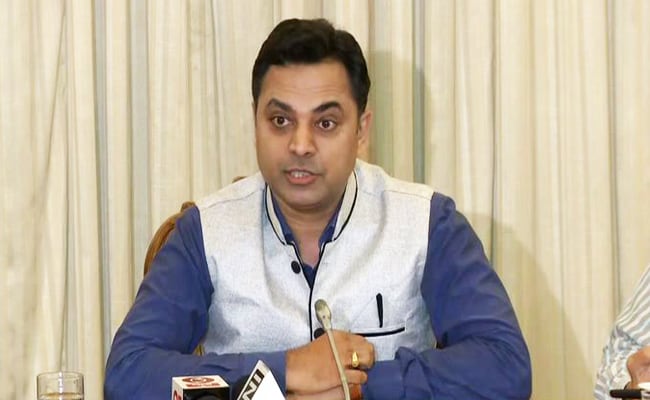
This decade will be India's decade of inclusive growth during which it will clock over 7 per cent annual growth on the back of strong economic fundamentals, Chief Economic Adviser K V Subramanian has said, highlighting the country's reform process and its ability to convert the crisis into an opportunity that helped it to stand out from the rest of the world.
Exuding confidence over India's economic potential, Subramanian told an American audience from the corporate sector that "the fundamentals of the economy were strong, even before the pandemic. There were only financial problems."
“Mark my words, this decade will be India's decade of inclusive growth. In FY'23, we expect growth to be between 6.5 to 7 per cent and then accelerating further as the impact of these reforms is seen," he said while addressing a virtual event organised by the US-India Strategic Partnership Forum (USISPF) on Wednesday.
"On average, I expect growth to be greater than seven per cent in this decade for India," Subramanian said. During the current fiscal, he said, growth would be in double-digits and it could moderate to 6.5 - 7 per cent in the next financial year.
The Economic Survey 2020-21, released in January this year, had projected GDP growth of 11 per cent during the current financial year ending March 2022. The Survey had said growth will be supported by supply-side push from reforms and easing of regulations, infrastructural investments, boost to manufacturing sector through the Production-Linked Incentive (PLI) schemes, recovery of pent-up demand, increase in discretionary consumption subsequent to the rollout of vaccines and pick up in credit.
“When you look at the data itself, the V-shaped recovery and the quarterly growth patterns actually establish the fundamentals of the economy are strong. Looking forward, the kind of reforms that we've done and the supply side measures that we've taken will enable actually strong growth not only this year going forward as well,” said the top Indian economist.
Growth will be aided by various structural reforms, including labour and farm laws, undertaken by the government, he said. Subramanian said from the long-run perspective, India is the only country that for the last 18 to 20 months has done so many structural reforms.
“India actually in its economic thinking has stood out from the rest of the world, not only in terms of the reforms that have been done but by converting the crisis into an opportunity,” he said. Observing that every other large economy that has only done demand side measures, Subramanian said in contrast, India is the only country that has done supply side as well as and demand side measures.
The post-COVID-19 economy in India actually will be very different from the pre-COVID-19 economy, he said. In the last seven years, the current Indian government has demonstrated the ability to be able to administer welfare programmes very well, cutting out the inclusion and exclusion errors and targeting them well, he said.
“So that having already been achieved, now we need to basically have a macro-economic objective being growth and growth alone, and not sort of conflicted with your inequality in equity, because these welfare programmes doing it well, will enable in reducing inequality in the process.
"… they will put money in the bottom half of the income pyramid and thereby, also generate enormous demand, aggregate demand and reduce inequalities,” Subramanian said.

-
Getting To Work Costs Women More | The Reason Why

It is not just about women paying more than men. It is about women paying much more in cities than in villages.
-
AI Bias In Investing Cannot Be Eliminated, But It Can Be Governed
Framing is a particularly important example as identical financial information presented in terms of gains rather than losses can lead an LLM to reach a different assessment.
-
Joining The Dots | Dark Skies, Steady Diya: Why Hope Holds This Diwali
With war, a weak rupee and foreign outflows weighing on sentiment, policymakers at the NDTV World Summit and market veterans at NDTV Profit Ignite: Diwali Edition offered the same advice: stay invested and filter out the noise.
-
The Curious Case of Equitas Small Finance Bank And A CEO Who Quit For Stock
PN Vasudevan believes persistent investor concerns over a perceived conflict of interest had become a governance overhang on Equitas Small Finance Bank's stock, even as the lender improved profitability and asset quality.
-
Talking Points This Week: AI Cash Burn, A Tiger Comeback And An India That Still Finds Its Own Path
India is not immune to higher oil or tighter global liquidity, yet its earnings base is broader, its domestic policy levers are still available.
-
Foreign Investors Own Half Of HDFC Bank and ICICI Bank. An LTCG Cut Could Matter Most Here
Foreign portfolio investors have US$115 billion parked in HDFC Bank, ICICI Bank. If the government cuts long-term capital gains tax, Jefferies says returning foreign money could land here first.
-
'Never Seen This Level Of Negativity': Sandeep Tandon Says The Next Rally May Be Closer Than You Think
Veteran investor Sandeep Tandon says foreign selling is easing, large-caps are due a comeback and mid-caps are crowded, while he turns positive on gold, power and pharma this Diwali.
-
Indians Stay With Family, Not In Hotels | The Reason Why
India still lacks enough clean, reliable and affordable hotels for budget-conscious travellers.
-
The Economic Imperative: Analysing The Material Driving Force Behind India-Canada Strategic Reset
This economic complementarity is further reinforced by deep institutional investment ties and talent mobility, which form the bedrock of the bilateral framework.
-
Medicine Pricing: Where Must Profit Stop?
India must confront excessive margins, hidden incentives and regulatory gaps that threaten the integrity of medicine.










