India Exploring Crude Oil Imports From Russia; What Is At Stake
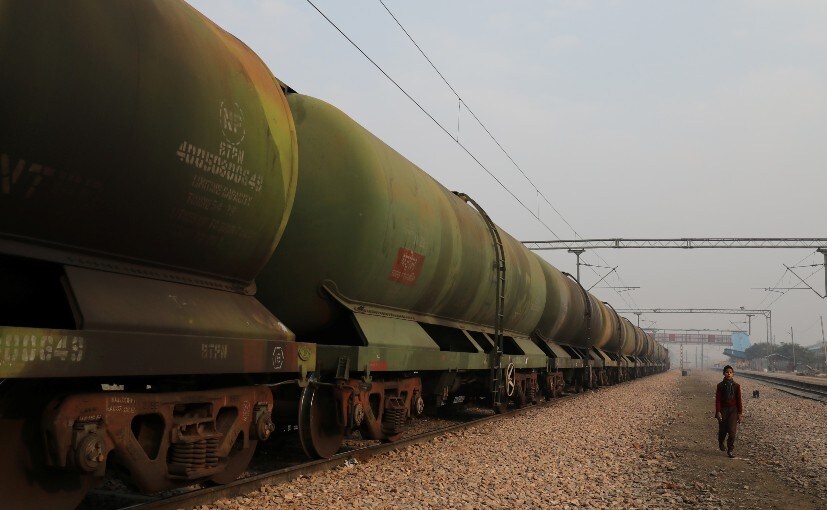
To shield the economy from the negative impact of the recent surge in crude oil prices, India is exploring the possibility of importing additional oil at discounted rates from Russia, which is facing sanctions and global backlash due to the Ukraine conflict.
According to commodities data and analytics firm Kpler, India's import of crude oil from Russia in March this year is nearly four times higher when compared with the corresponding period of last year.
India's import of crude oil from Russia stood at around an average of nearly 360,000 barrels a day in the first half of this month. As per the current shipment schedules, the average oil trade between the two countries is around 203,000 barrels per day.
"Already committed oil cargoes from Russia that can't find buyers in Europe are being bought by India," Financial Times quoted Alex Booth, head of research at Kpler, saying.
"Exports to India surged in March before any official announcement by New Delhi," Booth said.
There is no government-to-government (G2G) arrangement for oil trade between India and Russia. Indian Oil Corporation has made most of the crude oil purchase from Russia for India.
Although the United States has acknowledged that crude oil purchases by India would not violate US sanctions, it has warned that it would put India on the wrong side of history.
The US has been putting increasing pressure on India to distance itself from Russia.
White House Press Secretary Jen Psaki said on Friday in Washington that the United States is in touch with the Indian leaders at various levels over the issue of India's decision to buy oil from Russia at discounted rates.
"We will project and convey to any leader around the world is that the rest of the world is watching, where you are going to stand, as it relates to this conflict, (and) whether it is support for Russia, in any form as they are illegally invading Ukraine," Psaki said.
India has so far adopted a neutral approach in the Russia-Ukraine conflict. It is among the few countries that have not condemned Russia's invasion of Ukraine. India also abstained from voting on a US-sponsored UN Security Council resolution deploring Russia's aggression against Ukraine.
India's decision to increase crude oil trade and economic engagements with Russia would have substantial diplomatic and economic ramifications.
It is important to note that India is heavily dependent on imports to meet its oil requirements. Nearly 85 per cent of the country's average daily crude oil requirement of around 5 million barrels is met through imports.
The rise in crude oil prices put massive pressure on the Indian economy. High crude oil prices pose inflationary, fiscal, and external sector risks. India's budget calculations for the financial year 2022-23 have been made with an assumption of crude oil prices of $70 to $75 per barrel.
Crude oil prices have surged due to the Russia-Ukraine conflict. It soared to near $140 a barrel earlier this month.
India, being a major importer, has to keep exploring competitive prices. A heavy discount offered by Russia is an opportunity. It is essential from the perspective of the Indian economy.
Commenting on the India-Russia oil trade, spokesperson for the Ministry of External Affairs Arindam Bagchi said being a major importer of oil, India looks at all options at all points of time. "India does import most of its oil requirements, it's met by imports. So we are always exploring all possibilities in global energy markets because of this situation that we face importing our oil requirements," Mr Bagchi said.
Russia is the second-largest exporter of crude oil behind Saudi Arabia. Nearly three-fourths of Russia's crude oil exports go to OECD member countries.
Central European countries like Germany, France and Italy, also members of the North Atlantic Treaty Organization (NATO), are heavily dependent on the Russian oil supply. If the NATO member countries continue to import Russian oil due to economic reasons, India must also prioritise its economic interest.
One major challenge in the India-Russia oil trade is the payment system. According to sources, the two countries have been exploring setting up a rupee-rouble trade mechanism for paying for oil and other goods.
Several other issues need to be worked out, apart from the payment mechanism. It includes insurance and freight.
In the time of military conflict, the insurance cost goes up substantially. India's import of oil from Russia has traditionally been low due to high freight costs.
Union Minister for Petroleum and Natural Gas Hardeep Singh Puri said recently that the Indian government was evaluating the Russian offer of crude oil import at discounted rates in the Rajya Sabha.
"Discussions are currently underway. Several issues are required to be gone into, like how much oil is available either in Russia or in new markets or with new suppliers that may be coming into the market. Also, there are issues relating to insurance, freight, and a host of other issues, including the payment arrangements," the minister had said.
Russia has been among the closest and most reliable allies of India. It is by far its biggest arms supplier to India. According to data available with the Ministry of External Affairs, Russian Investments in India stand at $18 billion while the Indian investments in Russia stand at $13 billion.
The trade balance is in favour of Russia. India's imports from Russia stood at $7.75 billion, while India's exports to Russia stood at $3.22 billion in 2018.
Despite the threats of US sanctions, Prime Minister Narendra Modi's government in 2018 entered into a $5.43 billion deal with Russia to buy the S-400 defence system. The delivery of the missile system began in 2021.
However, India needs to make a prudent move. The United States and other western allies are also crucially important.

-
Getting To Work Costs Women More | The Reason Why

It is not just about women paying more than men. It is about women paying much more in cities than in villages.
-
AI Bias In Investing Cannot Be Eliminated, But It Can Be Governed
Framing is a particularly important example as identical financial information presented in terms of gains rather than losses can lead an LLM to reach a different assessment.
-
Joining The Dots | Dark Skies, Steady Diya: Why Hope Holds This Diwali
With war, a weak rupee and foreign outflows weighing on sentiment, policymakers at the NDTV World Summit and market veterans at NDTV Profit Ignite: Diwali Edition offered the same advice: stay invested and filter out the noise.
-
The Curious Case of Equitas Small Finance Bank And A CEO Who Quit For Stock
PN Vasudevan believes persistent investor concerns over a perceived conflict of interest had become a governance overhang on Equitas Small Finance Bank's stock, even as the lender improved profitability and asset quality.
-
Talking Points This Week: AI Cash Burn, A Tiger Comeback And An India That Still Finds Its Own Path
India is not immune to higher oil or tighter global liquidity, yet its earnings base is broader, its domestic policy levers are still available.
-
Foreign Investors Own Half Of HDFC Bank and ICICI Bank. An LTCG Cut Could Matter Most Here
Foreign portfolio investors have US$115 billion parked in HDFC Bank, ICICI Bank. If the government cuts long-term capital gains tax, Jefferies says returning foreign money could land here first.
-
'Never Seen This Level Of Negativity': Sandeep Tandon Says The Next Rally May Be Closer Than You Think
Veteran investor Sandeep Tandon says foreign selling is easing, large-caps are due a comeback and mid-caps are crowded, while he turns positive on gold, power and pharma this Diwali.
-
Indians Stay With Family, Not In Hotels | The Reason Why
India still lacks enough clean, reliable and affordable hotels for budget-conscious travellers.
-
The Economic Imperative: Analysing The Material Driving Force Behind India-Canada Strategic Reset
This economic complementarity is further reinforced by deep institutional investment ties and talent mobility, which form the bedrock of the bilateral framework.
-
Medicine Pricing: Where Must Profit Stop?
India must confront excessive margins, hidden incentives and regulatory gaps that threaten the integrity of medicine.










