India Rate Hike Is a Touch-and-Go Affair Thursday, Swaps Show

(Bloomberg) -- India's rates traders are on the fence about a quarter-point rate hike on Thursday, even though a majority of economists are predicting one.
Policy decisions this week from some of the Reserve Bank of India's global peers offer a good reason for the split. While Australia's central bank bolstered the case for global doves by calling a halt to its tightening cycle, its New Zealand counterpart emboldened hawks by opting for a larger-than-expected hike.
The RBI decision comes amid still-elevated inflation and economic growth that's relatively stable but forecast to slow. Concern over a potential global banking crisis has eased but not gone away, while a rally in oil prices suggests further price pressures.
Here are three charts showing how markets are positioned into the RBI decision:
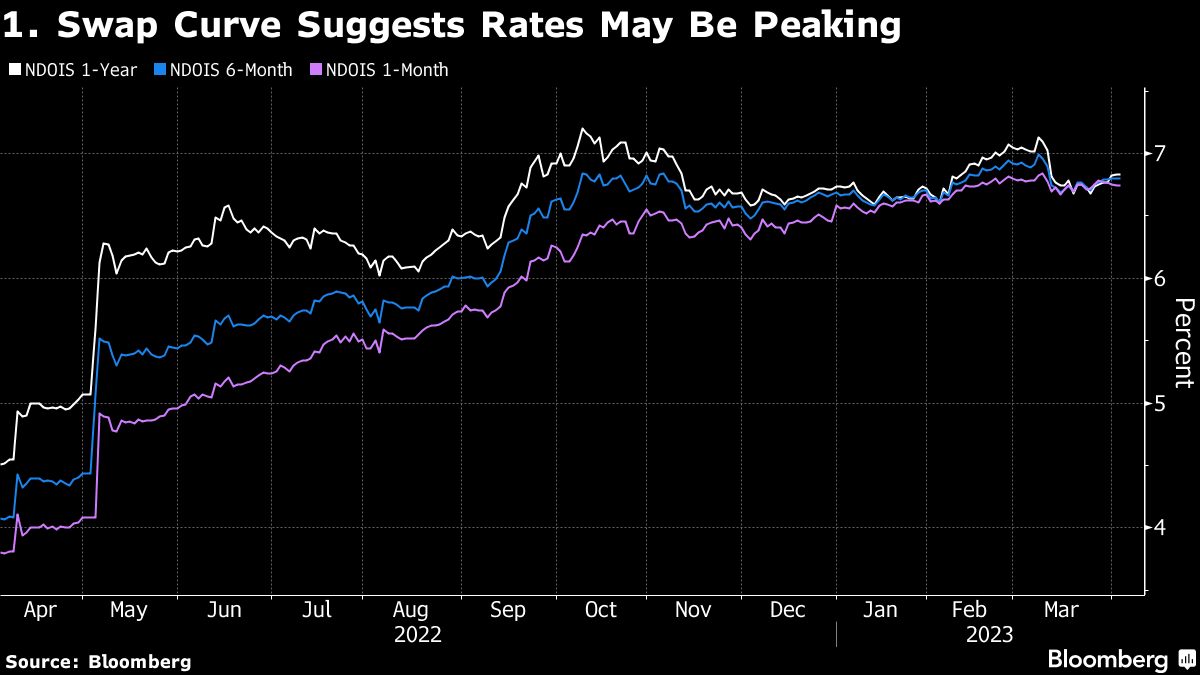
India's offshore swap curve beyond April and up to the nine-month segment is very flat, which points to market expectations for peaking of the policy rate after a hike in April, said Jennifer Kusuma, a senior Asia rates strategist at Australia & New Zealand Banking Group Ltd. in Singapore. Any rate-cut expectations beyond this point appear to be minimal, she said.
ANZ says overnight-indexed swaps are pricing in about 20 basis points of tightening for Thursday's policy decision, based on its own calculations, while Nomura Holdings Inc. sees about 15 basis points. Barclays Plc says shorter-maturity swaps signal about a 60% chance of a 25 basis-point hike.
“Considering that a hike hasn't been fully priced in, one-year OIS could rise five-to-10 basis points in the event of a hike,” Duncan Tan, a strategist at DBS Bank Ltd. in Singapore, wrote in a research note.
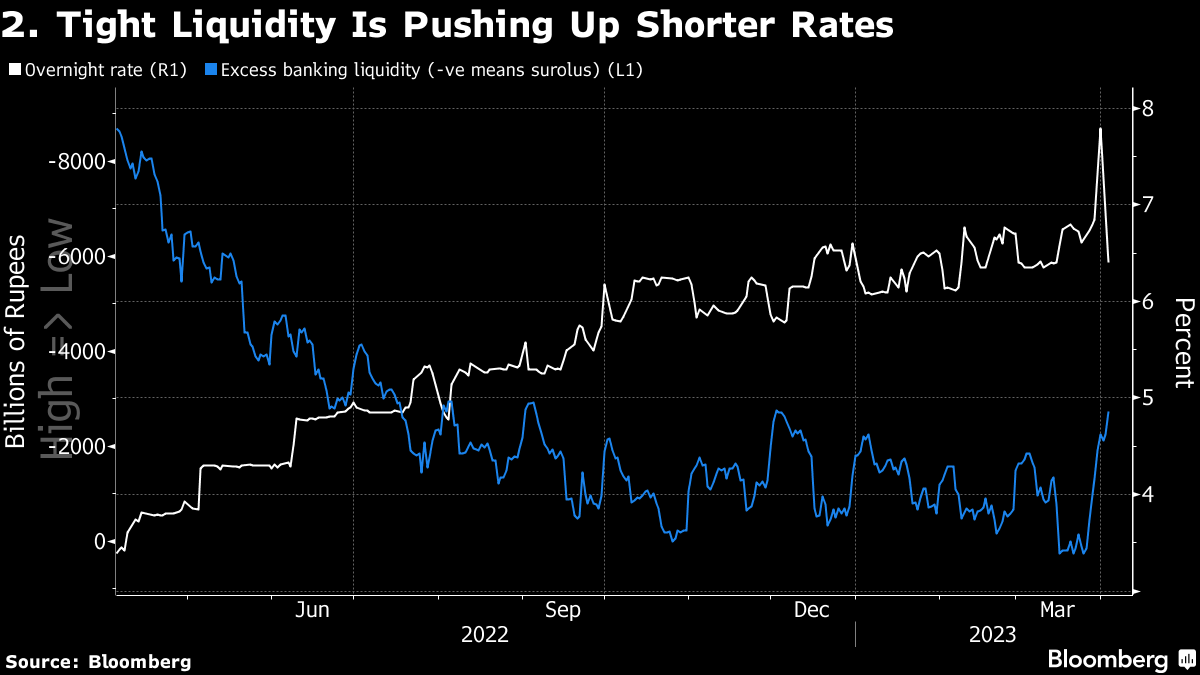
The RBI's liquidity management has become more important going into the last phase of its rate-hike cycle, according to IDFC First Bank Ltd.
“The banking system liquidity deficit is likely to increase during the April-to-June period,” said Pankaj Pathak, a fund manager at Quantum Asset Management Ltd. in Mumbai. “In the absence of liquidity support from the RBI, the short-term rate can move meaningfully higher.”
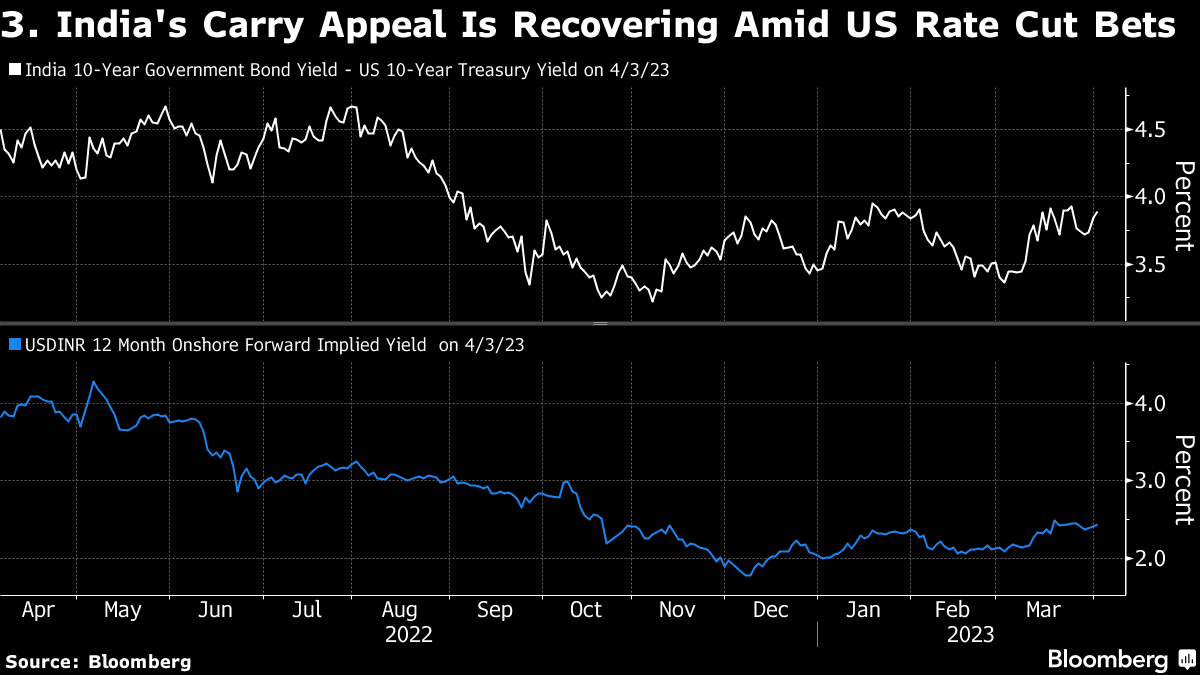
Treasury yields dropped last month as traders started to bet the Federal Reserve will cut rates this year as growth slows. This has widened India's bond yield premium over the US, making the rupee more attractive as a carry target. A rate hike this week by the RBI would further burnish its appeal.
India's currency will appreciate to 79 per dollar by the end of the fiscal year in March 2024, stronger than the earlier prediction of 82, UBS Group AG said this week in a research note.
(Updates to add comment from analyst in seventh paragraph)
More stories like this are available on bloomberg.com
©2023 Bloomberg L.P.

-
Gold Is Rs 22,000 Cheaper Than A Month Ago. Should You Buy Amid The Wedding Season?

Gold's potential slide to $3,500 could save around Rs 4,700 per 10 grams, but a soft inflation print could just as easily push prices back up. One way to split the risk is to buy in parts, some now and the rest after the Fed's Dec. 9 decision.
-
AI Agents Are Gaining Power. Who Governs Them?
Artificial intelligence agents promise to transform productivity by moving machines from assisting decisions to executing them. But as organisations delegate greater authority to these AI-agents, they must first establish who controls that authority and who remains accountable when things go wrong.
-
Why Swapping Your Old Gold Can Trigger A Rs 5 Lakh Tax Bill, And How You Can Avoid It Legally
Swapping old gold for new is taxed as a sale and a fresh purchase. Getting your own gold remade can cut most of that bill, though it has its own costs.
-
The AI Trade is Done. The Real Opportunity for Investors Starts in 2027 | Unhedged Position
As pureplay AI stocks plunge and circular, capex-led financing unwinds, 2027 is set to be a year of reckoning for AI companies. Yet the bust clears the way for a better opportunity for investors in 2027 -- shifting the spotlight from AI builders to the companies using AI.
-
Leadership As Mission: Why The Age Of AI Demands More Human Leadership
Debjani Ghosh examines how AI is changing leadership, arguing that its success must be measured by its impact on people and the accountability of those guiding its use.
-
We May Need Another Tukaram Mundhe To Fight Air Pollution | The Reason Why
Developers may install basic measures such as sprinklers and green nets, resume work, and continue violating rules when this equipment stops working.
-
Extracting Value From Battery Scrap Could Be Challenging For India | The Reason Why
A discarded lithium-ion battery still contains valuable materials such as lithium, nickel and cobalt. These can be recovered and reused. When such batteries are crushed and shredded, they produce a dark powder called black mass.
-
One El Nino, India Can Handle. Two Could Break The Granary
India's grain stocks can absorb one bad year, but a second El Nino could drain the buffer in two to three years, economists say.
-
India's Troika Of Good Luck | Joining The Dots
As Jensen Huang's exit drags Nvidia down, a cooling AI trade and resilient earnings have revived investor interest in India. A likely RBI rate hike looms.
-
Talking Points This Week: Leadership Shock At Nvidia, Earnings Strength, And The Fog Over Hormuz
The Anthropic IPO pricing and first trading day, Nvidia's upcoming earnings, and any fresh signals from Iran will set the tone for the following week.









