India One Of The Fastest Growing Economies Despite Global Slowdown: Report
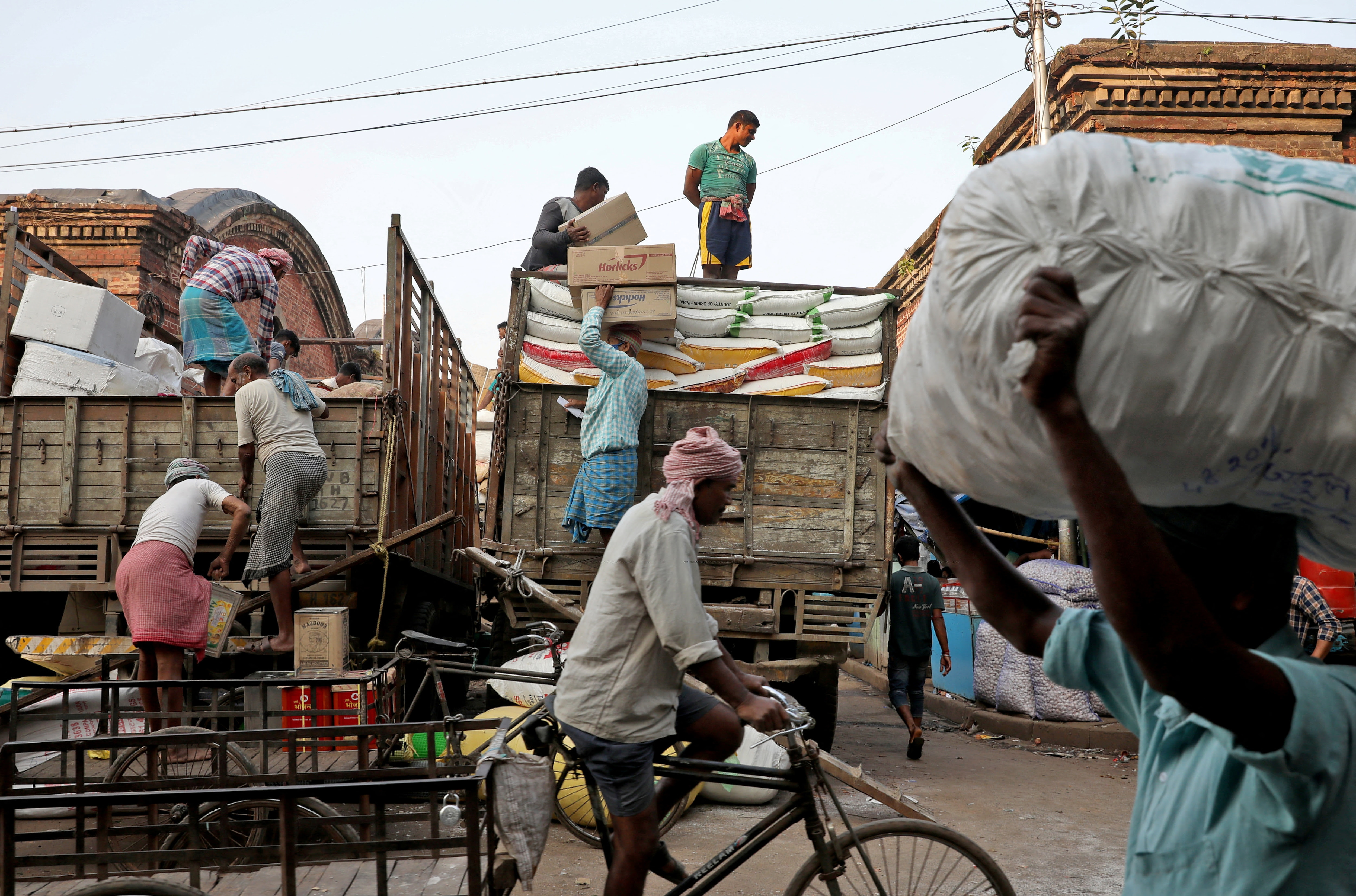
India, with a growth rate of 6.6 per cent in this financial year, is among the fastest growing economies in Asia amid a global slowdown triggered by a massive energy shock due to the ongoing Russia-Ukraine conflict, the OECD said on Tuesday.
The Organisation for Economic Cooperation and Development (OECD), the Paris-based intergovernmental body that focuses on economic policy reports in its latest ‘Economic Outlook' that India is set to be the second-fastest growing economy in the G20 in FY 2022-23 behind Saudi Arabia, despite decelerating global demand and the tightening of monetary policy to manage inflationary pressures.
The GDP growth in the country will slow to 5.7 per cent in FY 2023-24 as exports and domestic demand growth moderate, but it would mean it would still be growing more than many other G20 economies including China and Saudi Arabia.
“After hitting 6.6 per cent in FY 2022-23, GDP growth is expected to slow in coming quarters, to 5.7 per cent in FY 2023-24, before reverting to around 7 per cent in FY 2024-25,” the report said.
Growth in 2023 is strongly dependent on the major Asian emerging market economies, who will account for close to three-quarters of global GDP growth next year, with the United States and Europe decelerating sharply, it said.
“CPI inflation will remain above the central bank's upper limit target of 6 per cent at least until early 2023 and then gradually recede as higher interest rates take effect. Offsetting these forces, at least partially, some improvements can be expected as more contact-intensive services sectors normalise, including international tourism once borders are fully open and restrictions lifted,” it noted.
The OECD highlights India's “impressive progress” in recent years in extending access to financial services to a larger portion of the population, including disadvantaged socio-economic groups by leveraging the country's “competitive strength in ICT, the Unified Payments Interface (UPI) and other tools”, which are easing the transition towards a cashless economy.
“There still remain considerable margins to improve efficiency, accountability, and transparency of public spending, devoting more resources to health and education and building fiscal space to enhance resilience,” it said.
At a global level, the OECD projects that if the global economy avoids a recession, it would be thanks to some of Asia's biggest economies such as India.
Global GDP is projected to grow by 3.1 per cent this year, and by just 2.2 per cent in 2023.
The UK is projected to be among the worst hit of all G20 nations, with only war-hit Russia registering a worse outcome.
“We are currently facing a very difficult economic outlook. Our central scenario is not a global recession, but a significant growth slowdown for the world economy in 2023, as well as still high, albeit declining, inflation in many countries,” said Álvaro Santos Pereira, OECD Chief Economist, in his analysis.
“Risks remain significant. In these difficult and uncertain times, the policy has once again a crucial role to play: further tightening of monetary policy is essential to fight inflation, and fiscal policy support should become more targeted and temporary. Accelerating investment in the adoption and development of clean energy sources and technologies will be crucial to diversifying energy supplies and ensuring energy security,” he said.
The OECD believes a renewed focus on structural policies is the need of the hour to allow policymakers to foster employment and productivity.

-
AI Bias In Investing Cannot Be Eliminated, But It Can Be Governed

Framing is a particularly important example as identical financial information presented in terms of gains rather than losses can lead an LLM to reach a different assessment.
-
Joining The Dots | Dark Skies, Steady Diya: Why Hope Holds This Diwali
With war, a weak rupee and foreign outflows weighing on sentiment, policymakers at the NDTV World Summit and market veterans at NDTV Profit Ignite: Diwali Edition offered the same advice: stay invested and filter out the noise.
-
The Curious Case of Equitas Small Finance Bank And A CEO Who Quit For Stock
PN Vasudevan believes persistent investor concerns over a perceived conflict of interest had become a governance overhang on Equitas Small Finance Bank's stock, even as the lender improved profitability and asset quality.
-
Talking Points This Week: AI Cash Burn, A Tiger Comeback And An India That Still Finds Its Own Path
India is not immune to higher oil or tighter global liquidity, yet its earnings base is broader, its domestic policy levers are still available.
-
Foreign Investors Own Half Of HDFC Bank and ICICI Bank. An LTCG Cut Could Matter Most Here
Foreign portfolio investors have US$115 billion parked in HDFC Bank, ICICI Bank. If the government cuts long-term capital gains tax, Jefferies says returning foreign money could land here first.
-
'Never Seen This Level Of Negativity': Sandeep Tandon Says The Next Rally May Be Closer Than You Think
Veteran investor Sandeep Tandon says foreign selling is easing, large-caps are due a comeback and mid-caps are crowded, while he turns positive on gold, power and pharma this Diwali.
-
Indians Stay With Family, Not In Hotels | The Reason Why
India still lacks enough clean, reliable and affordable hotels for budget-conscious travellers.
-
The Economic Imperative: Analysing The Material Driving Force Behind India-Canada Strategic Reset
This economic complementarity is further reinforced by deep institutional investment ties and talent mobility, which form the bedrock of the bilateral framework.
-
Medicine Pricing: Where Must Profit Stop?
India must confront excessive margins, hidden incentives and regulatory gaps that threaten the integrity of medicine.
-
Why Amazon And Flipkart Are Struggling To Beat Meesho In India's Smaller Cities
With 274 million users and lowest-cost logistics, Meesho is defending its value commerce crown against giants like Amazon and Flipkart.










