India Never Been In Stronger Position Than Today: HDFC's Deepak Parekh
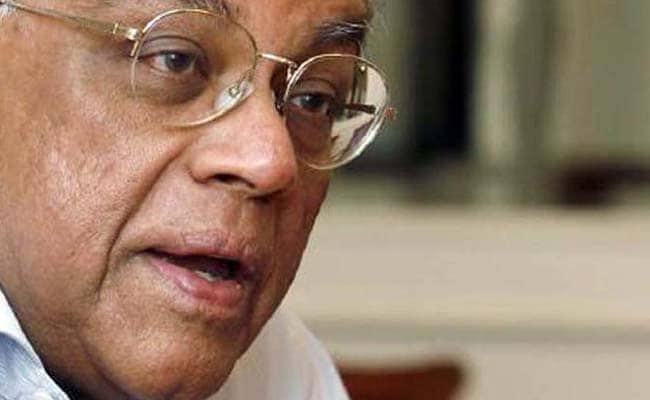
Mumbai: HDFC chairman Deepak Parekh on Monday said India's economy is in a "stronger position" and demonstrating an immense growth potential with a strong leadership at the helm bringing in key reforms.
"India has never been in a stronger position than today from a macro-economic perspective. The country is demonstrating an immense growth potential helped by a strong leadership at the helm, driving key policy changes," Mr Parekh said at a risk summit organised by CII.
He noted that with the present government, large scale corruption has been weeded out.
He said India, with an expected GDP of above 7.5 per cent, stands out well in comparison to its global peers.
"We in India hold a key advantage by being a major economy with tremendous growth potential," he said.
The veteran banker said the country has benefited tremendously from lower crude oil prices.
He said the private sector capex has continued to be slow, so support has been boosted from public sector spending on infrastructure.
"Often when infrastructure projects are a work-in-progress, there tends to be a feeling that nothing is happening on the ground. But this is certainly not the case in India," he said.
Mr Parekh said there is a flurry of activities taking place in the areas of ports and water ways, airports and smart cities.
Increased installed capacities in renewable energy have been put in place and a number of initiatives in the railways to improve service are underway.
He said the e-auctions of government tenders and bidding process are the biggest mark of credibility which the country has today.
"What the country needs at this juncture is to focus on attracting much more long-term investors looking for higher yields in their investments," Mr Parekh said.
Talking about risk management, he said it cannot be the sole responsibility of a company's board of directors.
"Risk management in an organisation cannot belong to an individual or a particular department or deemed to be the job of a compliance officer simply because it has to fit somewhere in an organisation," he said.
The concept of risk management has to be driven across the entire organisation and it has to percolate to all levels. There has to be an orientation and culture of risk mitigation in every action of all employees.
"Risk management is always a collective responsibility, it cannot be an isolated activity," he said.
Mr Parekh said an often asked question is whether India can decouple itself from global markets, and the answer is no. "One can prepare and insulate oneself from the known risks, yet it is the unknown risks that remains a challenge," he said.
Mr Parekh further said risk management systems will have to undergo unprecedented change as more organisation embrace digitisation.
Effective risk management is based on the foundation of good corporate governance and rigorous internal controls, he concluded.
He said one has to be cautious of the mixed signals coming global markets. On one hand, there is a tepid growth, continued problems with European banks, massive over-capacities in China, but on the other hand, key global stock markets have touched or are nearing all-time highs, the eminent banker added.
Mr Parekh said in this present cycle, investors are chasing emerging markets predominately for yield. At the beginning of this year, investors had turned risk averse, causing havoc in emerging markets in January and February.
"In January and February, India saw an outflow of about $3-4 billion and the rupee came under pressure," he said, adding, however, sentiments have reserved again.
In the last week itself, equity funds have pumped in $5 billion in emerging markets, while over $20 billion has been invested in emerging market bonds.
He said emerging markets will be vulnerable, depending on how markets read the Fed Reserve expected course of action on interest rates.
"Any hint of raising interest rates in the US will result in massive capital outflows, once again resulting in unprecedented swings in currencies and stocks," he added.

-
Getting To Work Costs Women More | The Reason Why

It is not just about women paying more than men. It is about women paying much more in cities than in villages.
-
AI Bias In Investing Cannot Be Eliminated, But It Can Be Governed
Framing is a particularly important example as identical financial information presented in terms of gains rather than losses can lead an LLM to reach a different assessment.
-
Joining The Dots | Dark Skies, Steady Diya: Why Hope Holds This Diwali
With war, a weak rupee and foreign outflows weighing on sentiment, policymakers at the NDTV World Summit and market veterans at NDTV Profit Ignite: Diwali Edition offered the same advice: stay invested and filter out the noise.
-
The Curious Case of Equitas Small Finance Bank And A CEO Who Quit For Stock
PN Vasudevan believes persistent investor concerns over a perceived conflict of interest had become a governance overhang on Equitas Small Finance Bank's stock, even as the lender improved profitability and asset quality.
-
Talking Points This Week: AI Cash Burn, A Tiger Comeback And An India That Still Finds Its Own Path
India is not immune to higher oil or tighter global liquidity, yet its earnings base is broader, its domestic policy levers are still available.
-
Foreign Investors Own Half Of HDFC Bank and ICICI Bank. An LTCG Cut Could Matter Most Here
Foreign portfolio investors have US$115 billion parked in HDFC Bank, ICICI Bank. If the government cuts long-term capital gains tax, Jefferies says returning foreign money could land here first.
-
'Never Seen This Level Of Negativity': Sandeep Tandon Says The Next Rally May Be Closer Than You Think
Veteran investor Sandeep Tandon says foreign selling is easing, large-caps are due a comeback and mid-caps are crowded, while he turns positive on gold, power and pharma this Diwali.
-
Indians Stay With Family, Not In Hotels | The Reason Why
India still lacks enough clean, reliable and affordable hotels for budget-conscious travellers.
-
The Economic Imperative: Analysing The Material Driving Force Behind India-Canada Strategic Reset
This economic complementarity is further reinforced by deep institutional investment ties and talent mobility, which form the bedrock of the bilateral framework.
-
Medicine Pricing: Where Must Profit Stop?
India must confront excessive margins, hidden incentives and regulatory gaps that threaten the integrity of medicine.










