India Needs Better Cooperation Between Its Government and Central Bank

If India is going to reach its manifest destiny, its economy must grow at a rapid pace for the next few decades. Without that growth spurt, a sizable part of its large population will be left behind. Both economically and politically, that is an unacceptable outcome.
In the context of a slow-growth global economy, creating a supportive environment for that growth spurt is a hard-enough job. The current power struggle between the central government and the Reserve Bank of India is making that task immensely harder.
What is needed is close coordination between policymakers of all stripes – fiscal, monetary, and legal. Instead, what is unfolding is an old-style schoolyard brawl to see who calls “no mas” first.
What is needed is a build-out and hardening of the policy-making institutions and governance structures that both foreign and domestic investors can count on to get a fair return on their capital and support the growth of the Indian economy at the same time.
Instead, what is unfolding is an undermining of those critical institutions by the government on the one hand and grandstanding by the RBI on the other.
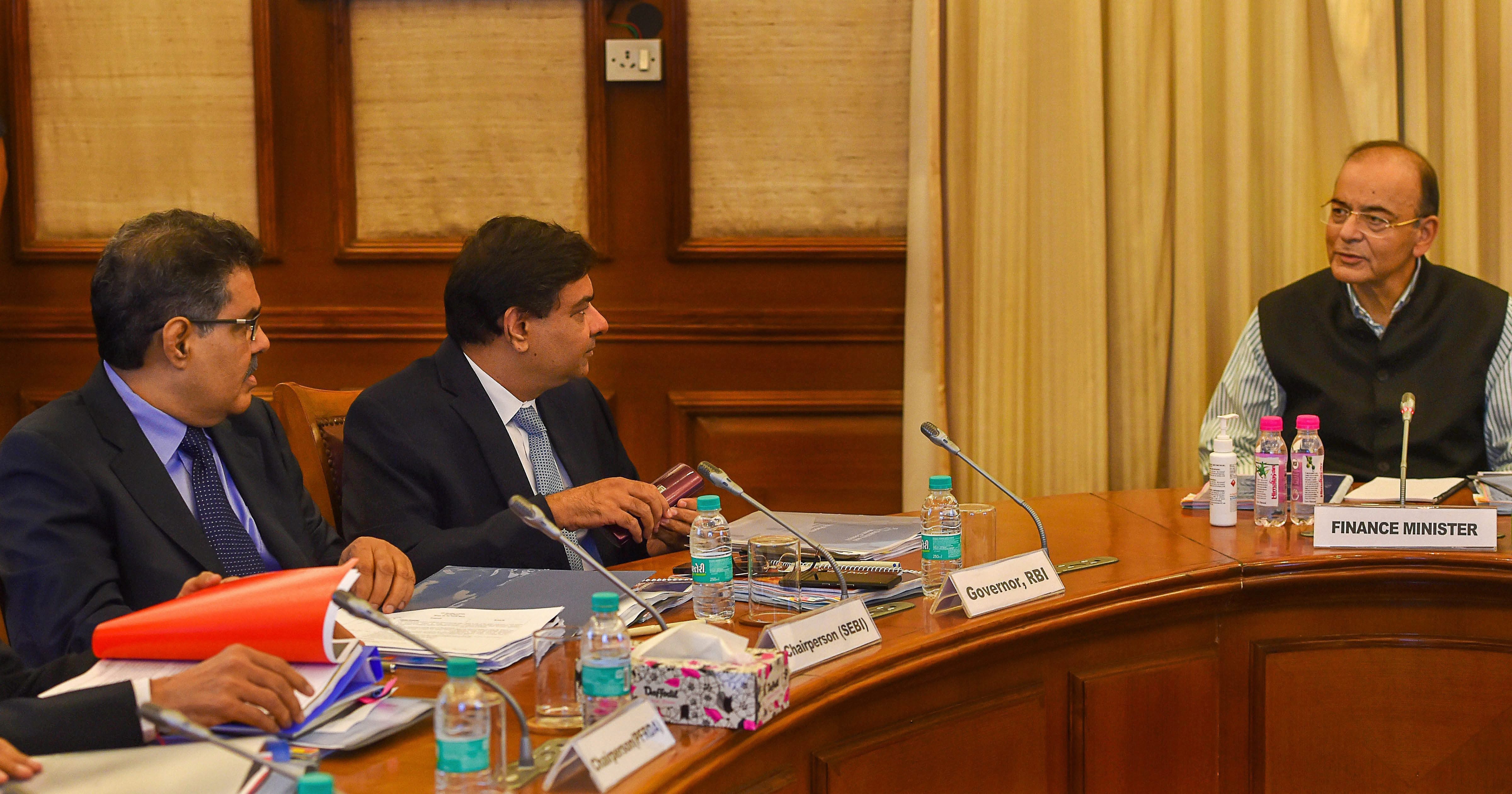
Cooperation Is Essential
In a democratic emerging economy, the political institutions must work well together and balance both the political and economic needs of the country. That is the underlying reason why politicians get to nominate the officials of the RBI. On the other hand, it is the same underlying reason for the RBI to be set up as a separate institution, away from the Ministry of Finance.
From a foreign institutional investor's perspective, no priority, beyond crystal clear investment and taxation regulations, is more sacrosanct than the independence of the central bank, especially in the context of an economy like India's, which is prone to periods of high inflation and fiscal and current account deficits.
If any Indian government truly wants to source investment capital from overseas to fuel its economic growth, it must consider the independence of the central bank and its credibility as a core foundation of that effort. One does not have to look too far back in history to see the clearly negative results of any such effort to undermine that independence.
At the same time, a duly-elected central government has a genuine political mandate. And that political mandate comes with periodic accountability.
A central bank that ignores that power structure and is consumed with its own self-importance is surely not serving its country well.
Economic policymaking is about making choices. And those choices need to be debated openly in a civil and cooperative manner to arrive at answers that make both economic and political sense.
We have been an investor in India for a long time, and we know it is doable. Please get to it before it is too late.
Krishna Memani is Chief Investment Officer at OppenheimerFunds.
The views expressed here are those of the author and do not necessarily represent the views of BloombergQuint or its editorial team.
OppenheimerFunds Disclaimers:
Carefully consider fund investment objectives, risks, charges, and expenses. Visit oppenheimerfunds.com or call your advisor for a prospectus with this and other fund information. Read it carefully before investing.
Bloomberg and Oppenheimer Funds are unaffiliated companies.

-
The Economic Imperative: Analysing The Material Driving Force Behind India-Canada Strategic Reset

This economic complementarity is further reinforced by deep institutional investment ties and talent mobility, which form the bedrock of the bilateral framework.
-
Medicine Pricing: Where Must Profit Stop?
India must confront excessive margins, hidden incentives and regulatory gaps that threaten the integrity of medicine.
-
Why Amazon And Flipkart Are Struggling To Beat Meesho In India's Smaller Cities
With 274 million users and lowest-cost logistics, Meesho is defending its value commerce crown against giants like Amazon and Flipkart.
-
High US Salaries, No Green Card Certainty: The Financial Calculation Facing Indian H-1B Families
The suspension of PERM processing at eight technology employers does not cancel existing H-1B visas. What it does is force a question many Indian families have been avoiding: is the US salary worth tying your career and family plans to one employer?
-
Swiggy vs Eternal: Food Delivery's Two Rivals Are No Longer In The Same Race
Eternal is building a private AI assistant, dark.ai. Swiggy is still working out how to make Instamart pay, with an operating loss of Rs 895 crore in the July-September quarter while Blinkit stayed profitable.
-
Where You Live Shapes How You Get To Work | The Reason Why
Two-wheelers are the most popular way to get to work in India, accounting for nearly 43% of workplace commutes.
-
Unhedged Position: Can India See An Indonesia-Style Time Correction?
The Nifty is trading below levels it first clocked in 2024. Is there, then, as I have suggested in the headline, potential that the current time correction drags on painfully for the next three-five, even ten years?
-
Navigating Friction And Energy Realities: An Analysis Of Marco Rubio's October Visit To India
Occurring at a critical juncture marked by stalled trade negotiations and escalating geopolitical pressures over global energy supplies, the visit offers a profound window into modern US-India relations.
-
India Exports Capital. Why Not Export Trusteeship?
The big question, then, is whether India can build an institution that global borrowers, investors, banks, and lawyers can trust, even without an Indian connection.
-
France's Economy & Politics Are In Crisis | The Reason Why
Let's look at how the French economy and politics evolved under Nicolas Sarkozy, Franois Hollande and Emmanuel Macron.










