How India Can Engineer A Future Beyond Software
(Bloomberg Opinion) -- In the early 2000s, Alok Nanda's new colleagues called him the “bumper guy.”
Nanda's job at General Electric Co. back then was putting some plastic between the bumper and the beam of a Suzuki Swift. The plastics division, which traced its history to the early days of synthetic rubber, had hired the young engineer from the state-run Defense Research & Development Organization, placed him at one of GE's new facilities on the outskirts of Bengaluru, and asked him to find a cost-efficient way to reduce the impact on pedestrians in auto accidents.
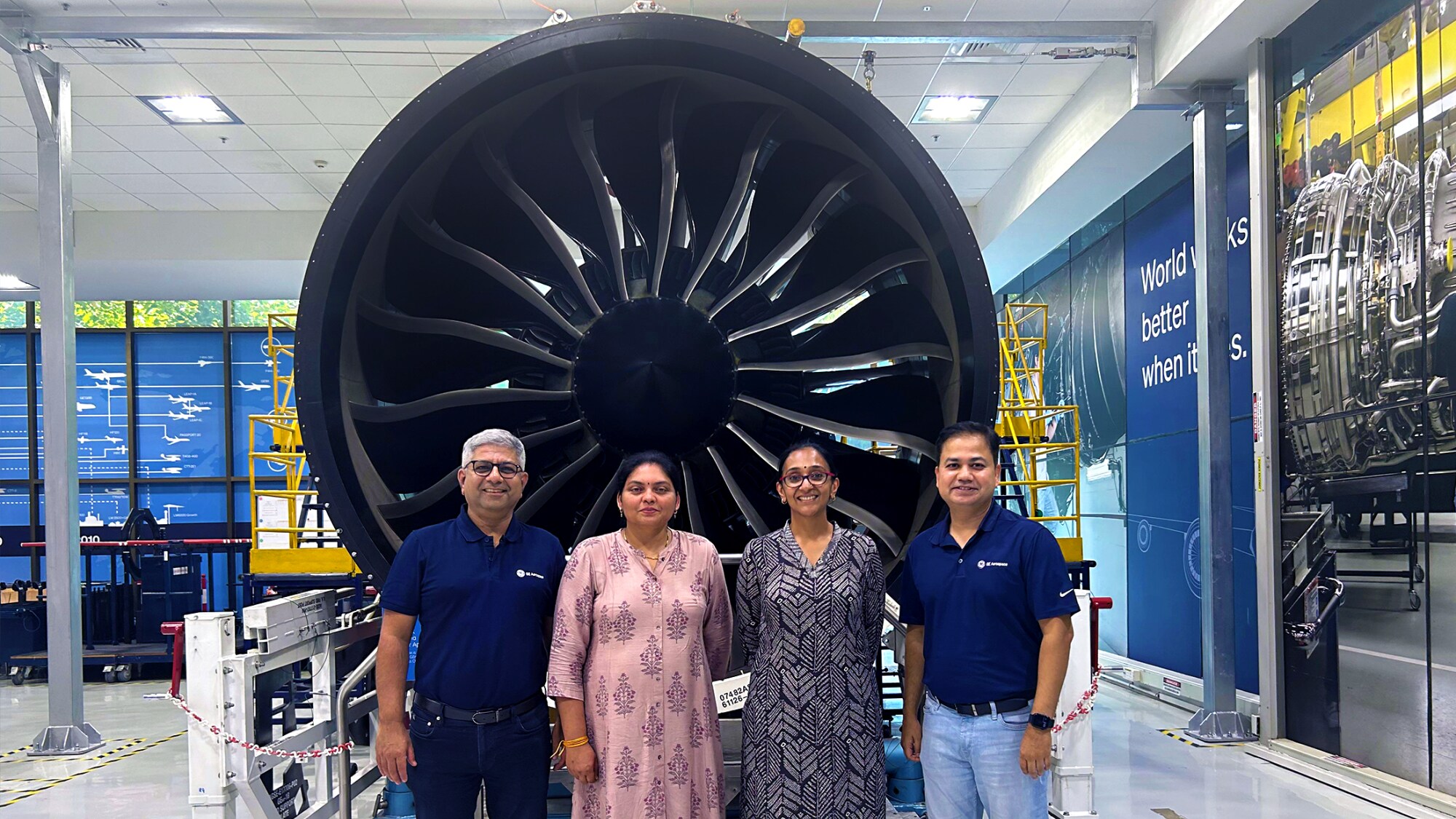
Two decades later, the former bumper guy and the John F. Welch Technology Center he now heads in Bengaluru are executing far more complex projects. In the process, they're writing a template for multinationals on how to use India's engineering talent to create intellectual property, not just cut costs.
This is very different from the code-writing work that has brought the most-populous nation global recognition in the last quarter-century. While software outsourcing will face an existential challenge from generative artificial intelligence, the engineering prowess — if harnessed well — will launch the next wave of productive and lucrative jobs.
Policymakers in New Delhi have their sight on China's factory-to-the-world crown. They are spending $24 billion over five years on production-linked incentives. Trouble is, the rivalry is not limited to other Asian countries like Vietnam, which have the same goal and are ahead in the game. The US, too, is running a very generous industrial policy to revive its manufacturing past.
While India's factory ambitions are hobbled by its stifling bureaucracy and protectionist attitude to trade, it's still possible for it to make a play as a global engineering workshop and research lab. The knowhow it exports will be embedded in products manufactured elsewhere. As Frederic Neumann, HSBC's chief Asia economist, says: “India's services connectivity to the world economy is so large nowadays that it ‘compensates' for the lack of goods trade connectivity.” It's time to use those links to target commercial services, where cross-border demand grew 9% to $7.5 trillion last year. World goods trade is three times larger, but it shrank by 5%.
Take Nanda's next big mission. As the chief technology officer for India at GE Aerospace, a role he's held since 2018, he and his team are working with colleagues in Niskayuna, New York, on a novel development platform that would, in one shot, offer 20% efficiency gains in future jet engines. Typically, each new generation of engines offers improvements only half as large. “I feel really privileged,” Nanda told me. “For an engineer, it's like being a kid in a candy store.”
When Chief Executive Officer Larry Culp rang the opening bell on the New York Stock Exchange on April 2, launching GE Aerospace as an independent public company, joining the party on the podium was Ravindra Shankar Ganiger. With 100-plus patents, Ganiger has one of the richest hauls of all scientists and engineers at the Bengaluru center. The team's intellectual inputs, already at the heart of newer jet engines like GE9X, is crucial to Culp's vision of “defining the future of flight.”
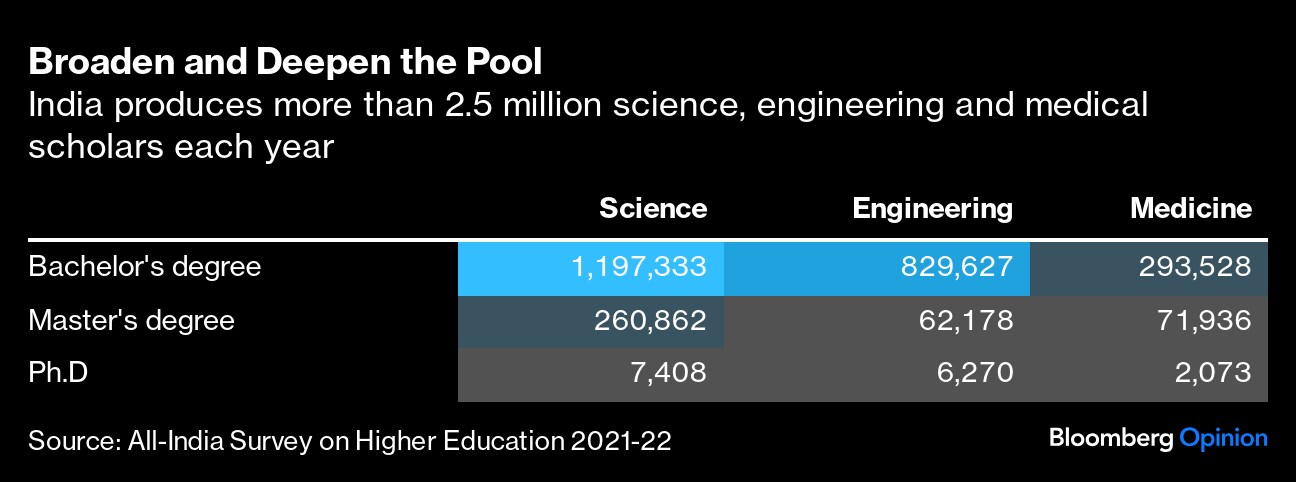
GE woke up to India's potential early. Others are doing it now. Nearly 1,600 multinationals have set up captive units, employing 1.7 million highly educated professionals. With a determined effort to lift the quantity and quality of the 2.5 million-plus graduates and Ph.Ds India mints annually in science, technology, engineering and medicine, it can conceivably expand its relevant talent pool. A little less red tape — and some improvement in civic amenities and quality of life in fast-growing cities like Bengaluru — will keep more of them at home with good jobs.
Suppose each of these highly paid individuals supports three other Indians — and not just as their chauffeurs and housemaids. By generating tax resources for publicly funded employment in urban infrastructure, the narrow top of the employment pyramid would start filling its own middle. Stronger mass consumption will create demand for locally manufactured factory goods.
The engineering that has gone into the 360 Foam Wash shows the way forward for adding value through research. Vidya Venkataramani and her team wanted to test a portable washer that could chemically clean jet engines between flights. To simulate the actual condition faced by planes over Middle Eastern routes, the Ph.D chemical engineer created her own dust in the lab. The washing machine for jet engines is already in commercial use, saving global airlines thousands of gallons of fuel every year.
Sanjeev Jha, a mechanical engineer who joined the Bengaluru center around the same time as Nanda, uses sophisticated machine-learning models to predict the maintenance schedule so carriers get the most out of their engines. That, in turn, requires a trove of data so vast that each physical engine ends up with its digital twin. Even the probes for collecting standardized pictures that can be analyzed by artificial intelligence are award-winning products designed in Bengaluru.
In September 2000, GE's then-boss Jack Welch came to India to open the Bengaluru center now named after him. I was among the reporters present. At the time, the global behemoth had 12,000 employees in a market that barely generated $1 billion in sales, not even 1% of its global revenue. “Market growth will come,” he told us. “The real opportunity in India is its incredibly skilled workforce. We have used the software generated by our India business to change the company. That's great.”
In the past 25 years, the appeal of India's talent has transformed — from streamlining internal processes to being harnessed in hardware sold to external customers.
One idea for GE's upcoming engine platform is a hybrid-powered jet: A Toyota Prius of the skies that could deliver thrust at high altitudes and temperatures — without the electronics becoming so bulky as to be unviable. Electrical engineer Suma MN is trying to crack that puzzle. I asked Suma if she is the first woman Ph.D from her village in Kerala, on India's southeastern coast. “I'm the first human,” she corrected me.
More From Bloomberg Opinion:
To Be the Next China, India Needs Faster Trains: Andy Mukherjee
How a Fading Japan Regained Its Superpowers: Gearoid Reidy
Vietnam Is Losing Its China +1 Appeal: Karishma Vaswani
This column does not necessarily reflect the opinion of the editorial board or Bloomberg LP and its owners.
Andy Mukherjee is a Bloomberg Opinion columnist covering industrial companies and financial services in Asia. Previously, he worked for Reuters, the Straits Times and Bloomberg News.
More stories like this are available on bloomberg.com/opinion
©2024 Bloomberg L.P.

-
Why Swapping Your Old Gold Can Trigger A Rs 5 Lakh Tax Bill, And How You Can Avoid It Legally

Swapping old gold for new is taxed as a sale and a fresh purchase. Getting your own gold remade can cut most of that bill, though it has its own costs.
-
The AI Trade is Done. The Real Opportunity for Investors Starts in 2027 | Unhedged Position
As pureplay AI stocks plunge and circular, capex-led financing unwinds, 2027 is set to be a year of reckoning for AI companies. Yet the bust clears the way for a better opportunity for investors in 2027 -- shifting the spotlight from AI builders to the companies using AI.
-
Leadership As Mission: Why The Age Of AI Demands More Human Leadership
Debjani Ghosh examines how AI is changing leadership, arguing that its success must be measured by its impact on people and the accountability of those guiding its use.
-
We May Need Another Tukaram Mundhe To Fight Air Pollution | The Reason Why
Developers may install basic measures such as sprinklers and green nets, resume work, and continue violating rules when this equipment stops working.
-
Extracting Value From Battery Scrap Could Be Challenging For India | The Reason Why
A discarded lithium-ion battery still contains valuable materials such as lithium, nickel and cobalt. These can be recovered and reused. When such batteries are crushed and shredded, they produce a dark powder called black mass.
-
One El Nino, India Can Handle. Two Could Break The Granary
India's grain stocks can absorb one bad year, but a second El Nino could drain the buffer in two to three years, economists say.
-
India's Troika Of Good Luck | Joining The Dots
As Jensen Huang's exit drags Nvidia down, a cooling AI trade and resilient earnings have revived investor interest in India. A likely RBI rate hike looms.
-
Talking Points This Week: Leadership Shock At Nvidia, Earnings Strength, And The Fog Over Hormuz
The Anthropic IPO pricing and first trading day, Nvidia's upcoming earnings, and any fresh signals from Iran will set the tone for the following week.
-
Signature Play: The Classic Cocktail Is Dead. Or Is It?
Classic cocktails are disappearing from India's cocktail menus. But they're still being ordered, taught to bartenders and borrowed from. So, who's really having the last drink?
-
A New Samvat Wishlist: Inclusive Prosperity And Human Development
India has strengthened its economic foundations through infrastructure, digital access and enterprise. Its next growth chapter must deepen productivity, create better livelihoods and widen participation in prosperity.









