India, Indonesia Risk Biggest Fallout From Geopolitical Shocks

(Bloomberg) -- A triumvirate of high oil prices, a surging dollar and geopolitical instability are set to weigh on India and Indonesia among Asia's emerging markets, while energy exporter Malaysia may prove a rare beneficiary.
Economists are fretting over the fallout on developing Asia from a widening of the Israel-Hamas war, with policymakers struggling to assess the consequences for oil supply and the scope of the potential impact on growth. The jump in both the dollar and long-term Treasury yields exacerbate the risks for economies running high current-account deficits.
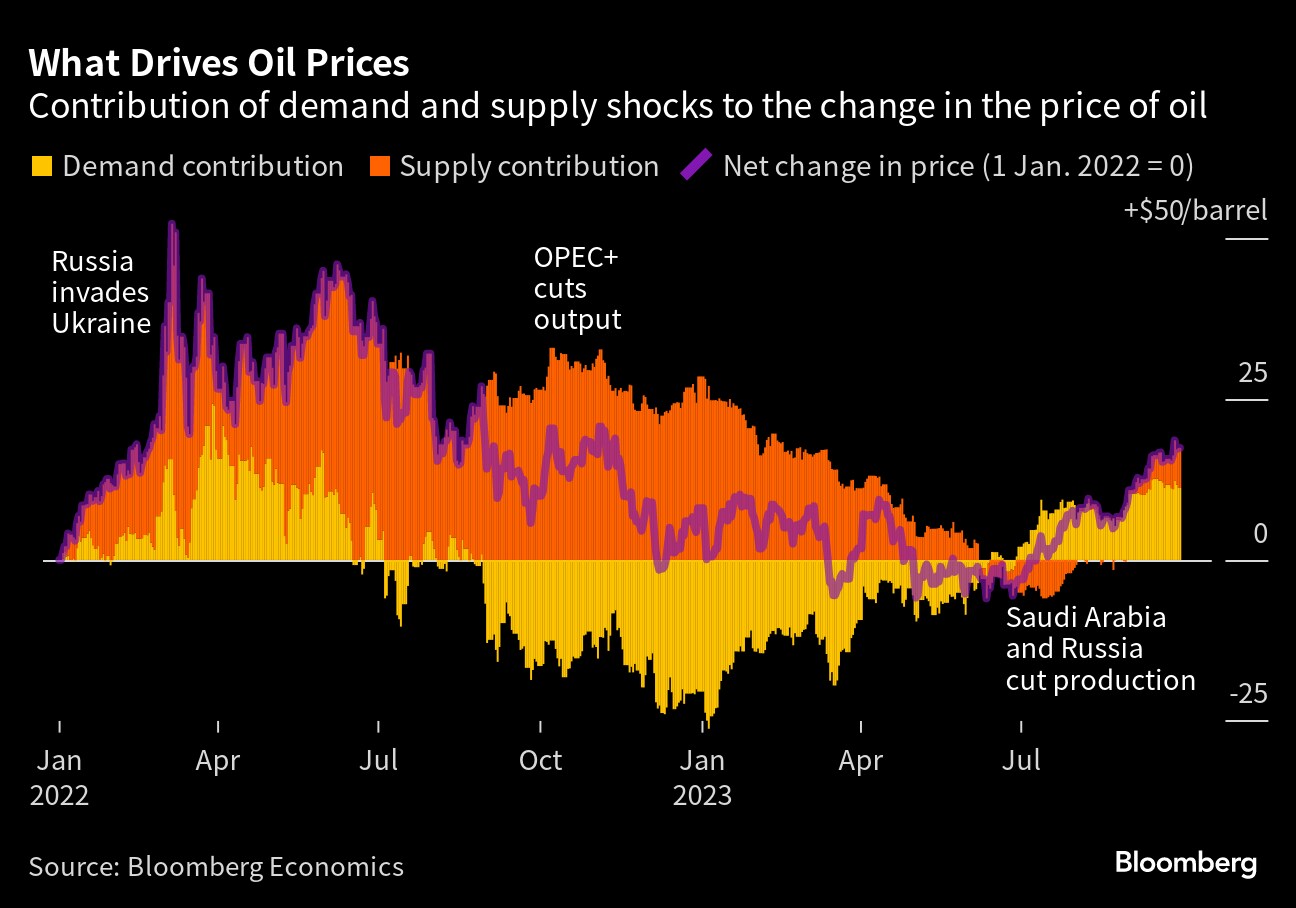
Brent crude prices have jumped almost 20% in the past three months and Bloomberg Economics estimates they could soar to $150 a barrel, from about $90 now, if the Middle East conflict widens to include Iran. The Islamic Republic supplies arms and cash to Hamas, which the US and European Union designate as a terrorist group, and backs the Hezbollah militia in Lebanon.
The Israel-Hamas conflict comes on top of Russia's protracted war on Ukraine and simmering superpower tensions between the US and China. The following charts show countries more exposed to a higher-for-longer dollar and oil price.
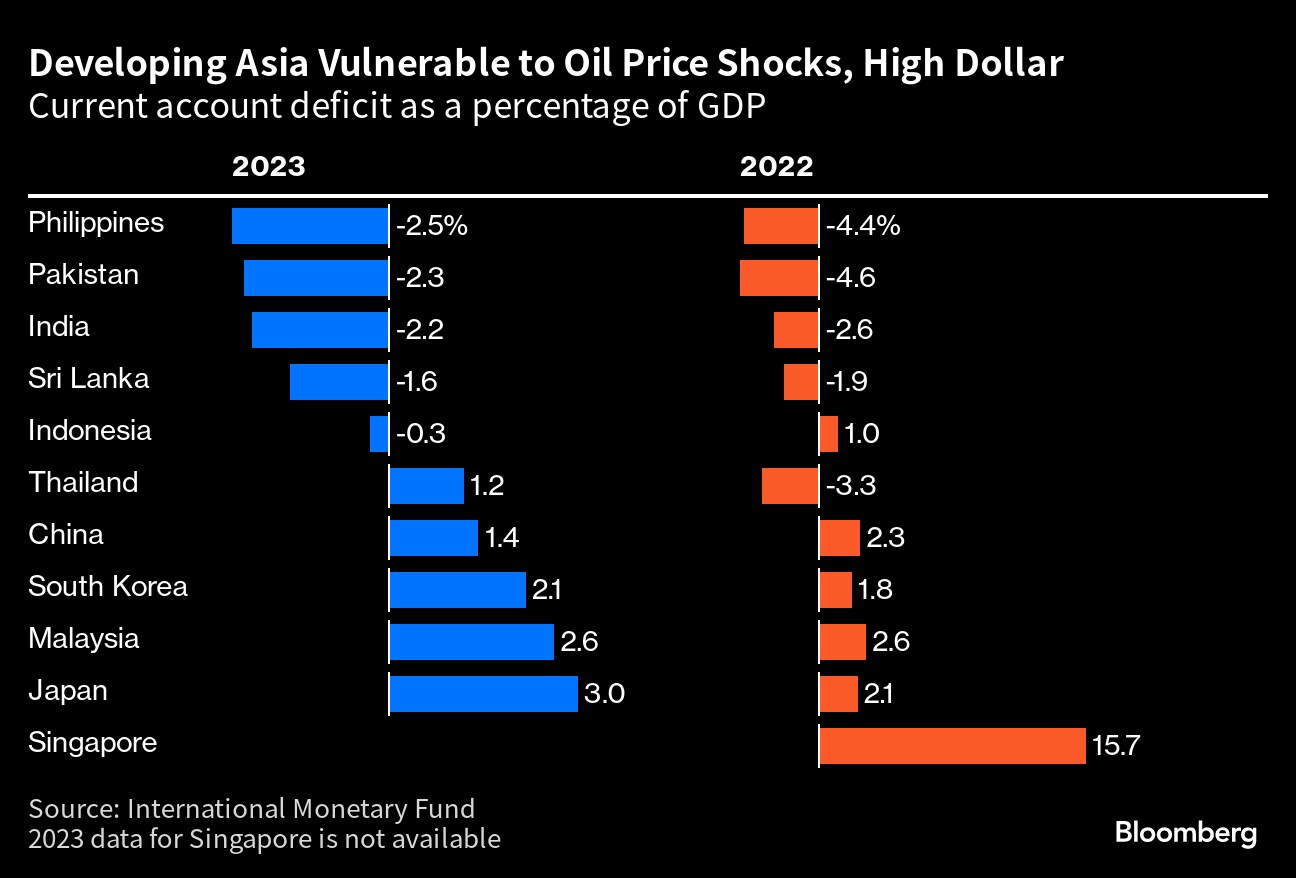
“If higher oil prices persist for a prolonged period, we see India, Thailand, the Philippines, Indonesia more vulnerable to terms of trade deterioration,” said Lavanya Venkateswaran, a senior economist at Oversea-Chinese Banking Corp. Ltd. “Moreover, as ‘twin deficit' economies — current account and fiscal deficits — they may be more vulnerable to capital outflows.”
Alicia Garcia Herrero at French investment bank Natixis SA said high external debt positions mean Sri Lanka and Pakistan are most at risk. Indonesia and India are also vulnerable “since they tend to run current-account deficits and need external financing for that,” she said.
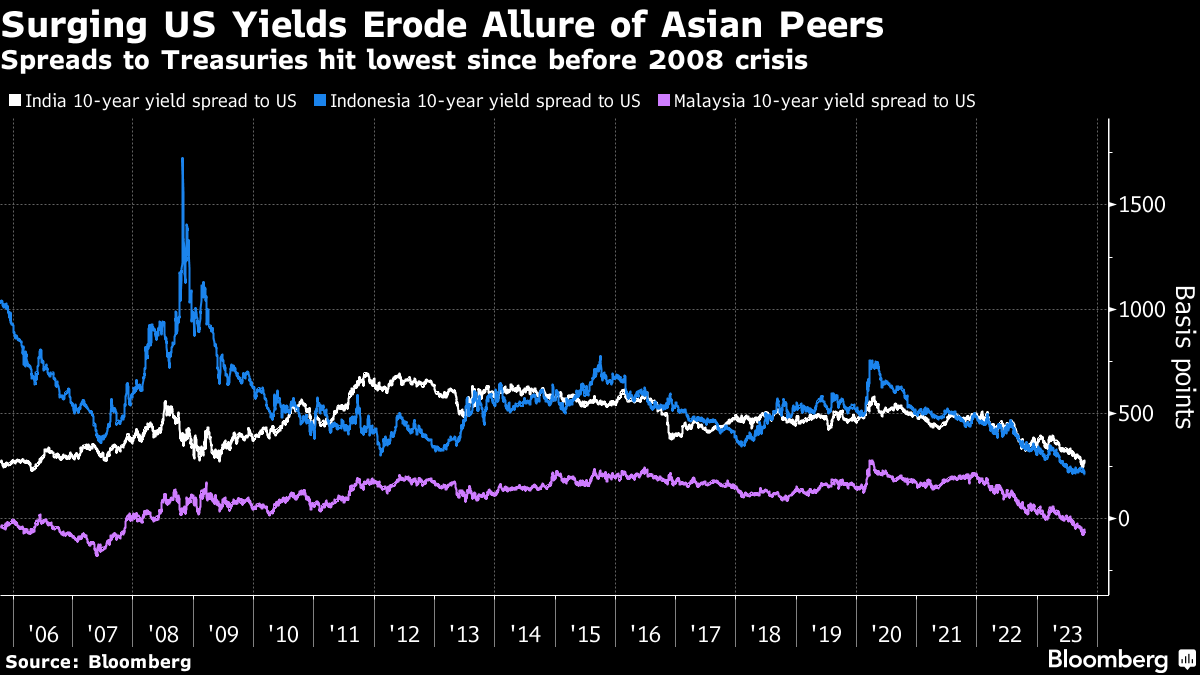
Compounding the problem, US Treasury yields have soared on concerns that higher oil prices will revive inflation pressures. That's another headwind for nations running high budget deficits as they'll likely struggle to raise funds in global markets, Garcia Herrero added.
The chart above shows emerging Asian bonds have become less attractive for investors — the premiums a borrower pays to own Indian or Indonesian bonds against US debt, for example, have hit the lowest level since at least the 2008-09 global financial crisis.
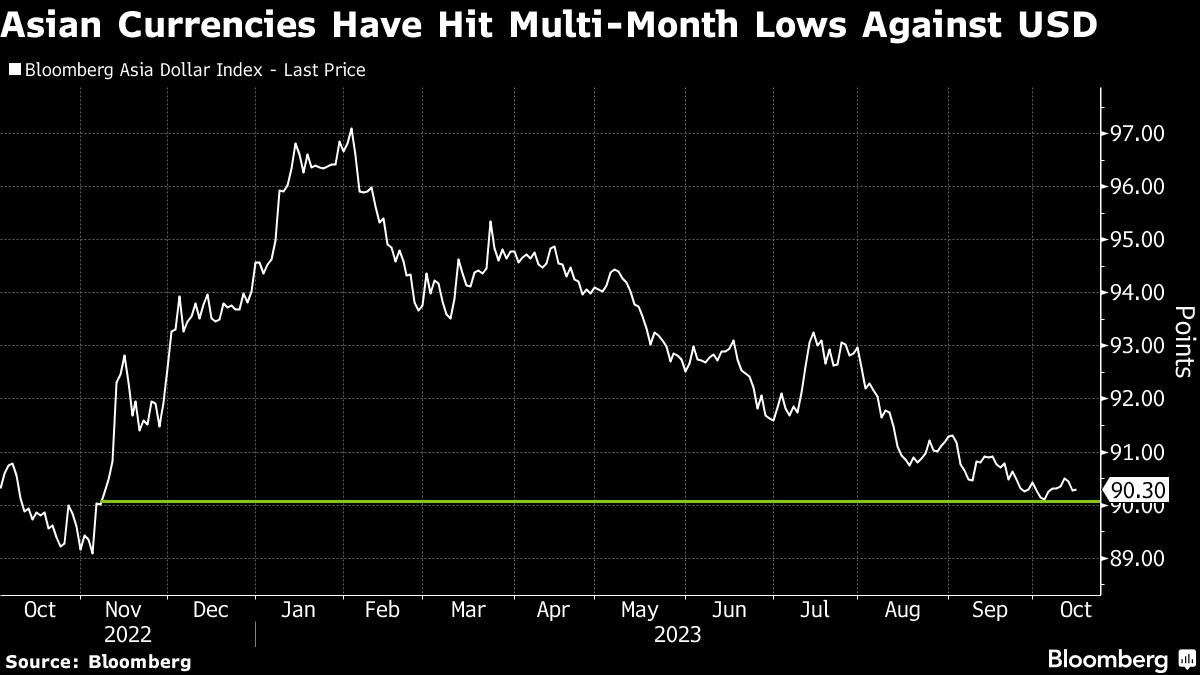
Strategists at HSBC Holdings Plc say they prefer the Chinese renminbi and the Korean won among low-yielding Asian currencies. They highlight Beijing's tight focus on fine-tuning fiscal policy and recent property market measures and the Bank of Korea's consistent foreign exchange sales and the country's potential inclusion in a global bond index next year.
“The other low-yielding currencies not only do not have these supportive factors, they also have certain individual shortcomings,” the HSBC strategists wrote, pointing to election uncertainty for the Taiwanese dollar, deteriorating fiscal metrics for the Thai Baht and overvaluation for the Singapore dollar.
“Among higher-yielding currencies, we have a slight preference for the Philippine peso and the Indian rupee over the Indonesia rupiah,” they said.
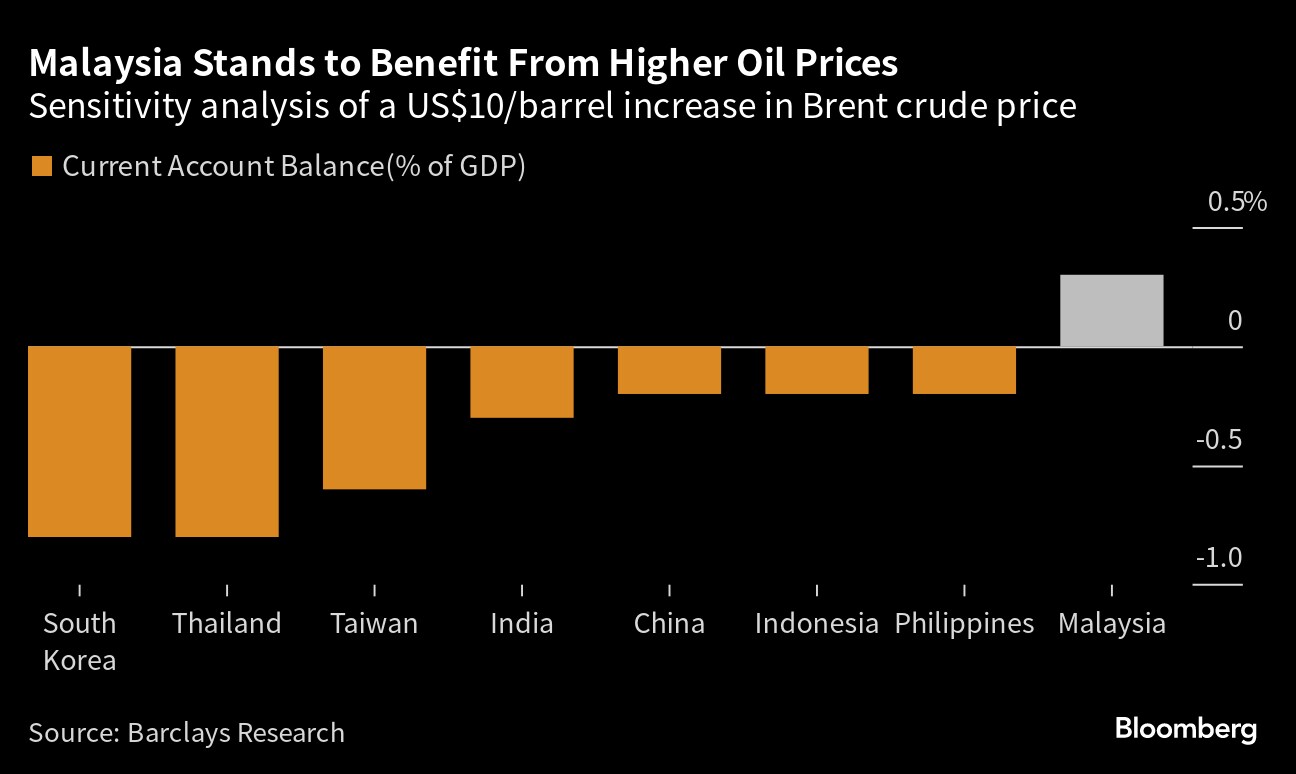
One country that stands to benefit from rising oil prices is Malaysia, in terms of both growth and the nation's fiscal position, economists said.
“We see increased export duties, petroleum income taxes, and dividends from the state-owned Petronas to be adding to the fiscal revenue,” said Bum Ki Son, Singapore-based regional economist at Barclays Plc. “For Indonesia, we think the fiscal position is likely to deteriorate.”
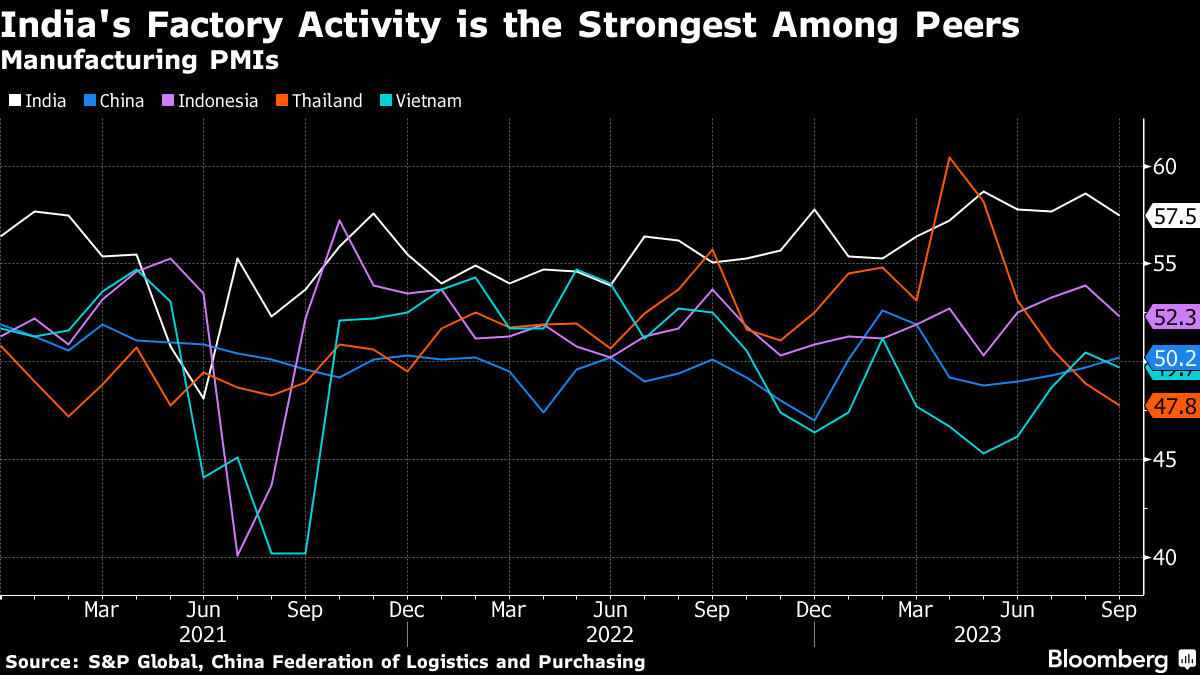
Economists see some positives for India despite the higher dollar and elevated oil prices. Natixis' Garcia Herrero pointed to strong macroeconomic data that makes the country's assets attractive despite the headwinds.
“The fact that Indian data has been so strong — latest PMI was the best in Asia — does help India,” said Garcia Herrero.
--With assistance from Garfield Reynolds.
More stories like this are available on bloomberg.com
©2023 Bloomberg L.P.

-
'Never Seen This Level Of Negativity': Sandeep Tandon Says The Next Rally May Be Closer Than You Think

Veteran investor Sandeep Tandon says foreign selling is easing, large-caps are due a comeback and mid-caps are crowded, while he turns positive on gold, power and pharma this Diwali.
-
Indians Stay With Family, Not In Hotels | The Reason Why
India still lacks enough clean, reliable and affordable hotels for budget-conscious travellers.
-
The Economic Imperative: Analysing The Material Driving Force Behind India-Canada Strategic Reset
This economic complementarity is further reinforced by deep institutional investment ties and talent mobility, which form the bedrock of the bilateral framework.
-
Medicine Pricing: Where Must Profit Stop?
India must confront excessive margins, hidden incentives and regulatory gaps that threaten the integrity of medicine.
-
Why Amazon And Flipkart Are Struggling To Beat Meesho In India's Smaller Cities
With 274 million users and lowest-cost logistics, Meesho is defending its value commerce crown against giants like Amazon and Flipkart.
-
High US Salaries, No Green Card Certainty: The Financial Calculation Facing Indian H-1B Families
The suspension of PERM processing at eight technology employers does not cancel existing H-1B visas. What it does is force a question many Indian families have been avoiding: is the US salary worth tying your career and family plans to one employer?
-
Swiggy vs Eternal: Food Delivery's Two Rivals Are No Longer In The Same Race
Eternal is building a private AI assistant, dark.ai. Swiggy is still working out how to make Instamart pay, with an operating loss of Rs 895 crore in the July-September quarter while Blinkit stayed profitable.
-
Where You Live Shapes How You Get To Work | The Reason Why
Two-wheelers are the most popular way to get to work in India, accounting for nearly 43% of workplace commutes.
-
Unhedged Position: Can India See An Indonesia-Style Time Correction?
The Nifty is trading below levels it first clocked in 2024. Is there, then, as I have suggested in the headline, potential that the current time correction drags on painfully for the next three-five, even ten years?
-
Navigating Friction And Energy Realities: An Analysis Of Marco Rubio's October Visit To India
Occurring at a critical juncture marked by stalled trade negotiations and escalating geopolitical pressures over global energy supplies, the visit offers a profound window into modern US-India relations.










