Property Prices To Stagnate Further, Hurt By Coronavirus Wave: Poll
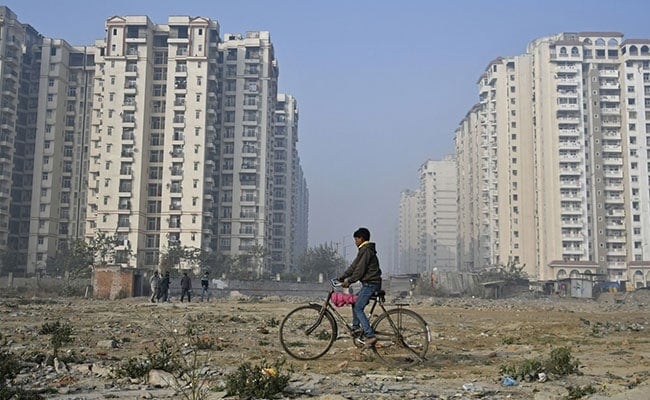
Indian house prices will stagnate this year, hurt by a devastating second wave of the coronavirus which has crushed demand and offset government tax rebates and incentives for property developers, a Reuters poll showed.
Asia's third-largest economy has become the global epicentre of the pandemic, with around 26 million cases and about 290,000 deaths so far, pushing several states to reimpose restrictions, stalling business activity.
That means average house prices will stagnate this year, according to the May 11-19 poll of 12 analysts, a downgrade from an already modest 1.3 per cent rise expected in the previous poll in January. Four analysts penciled in a decline in house prices this year.
The latest forecast for no growth in house prices suggests a decline in real terms with Indian consumer price inflation running over 4 per cent and expected to average 4.9 per cent this year.
"2021 will continue to remain subdued due to the ongoing economic distress caused by the massive second wave, and also due to fear of a third wave of the pandemic," said Arvind Nandan, managing director of research at Savills India.
"The housing market has been strongly affected on various fronts due to the pandemic. Several (property) registrations had come to a halt due to lockdowns. The demand-side has slumped owing to cashflow problems and reserve depletion among buyers."
All but one of 12 respondents said the coronavirus crisis posed a high risk to their already-dim housing market outlook. The other analyst said the risk from the pandemic was low.
Indian housing market activity was slowing from a cash crunch even before the pandemic took hold in 2020. When asked what was likely this year, seven of 11 analysts expected a further slowdown.
"Given the impact of the second wave and forecast of a third wave, buyers will take a more cautious approach before committing capital for home purchases," said Ajay Sharma, managing director at Colliers International.
"Since demand-side factors are not encouraging, the developers have either maintained or slightly corrected pricing to ensure the infused demand provided by statutory rebates are sustained in the current year."
While house prices were expected to rise 3.0 per cent on average next year, it was a downgrade from 4.5 per cent growth predicted in the previous poll.
A regional breakdown showed home prices this year in Delhi, the National Capital Region, Mumbai and Chennai would fall 2.0 per cent, 2.5 per cent, 1.5 per cent and 1.0 per cent, respectively, compared to no growth expected previously.
Housing prices in Bengaluru, dubbed India's Silicon Valley for its tech firms and startups, were forecast to decline 1.0 per cent, a reversal from a 2.5 per cent rise expected previously.
But eight of 11 analysts said demand for office space would increase over the next few years, including one who said it would be a significant increase. Three respondents said it would decrease.
"Despite remote working extension, 2022 may see at least partial new and old workforce return to office. Amid social distancing norms, offices need to de-densify work space which will create more demand," said Anuj Puri, chairman at ANAROCK Property Consultants in Mumbai.

-
Gold Is Rs 22,000 Cheaper Than A Month Ago. Should You Buy Amid The Wedding Season?

Gold's potential slide to $3,500 could save around Rs 4,700 per 10 grams, but a soft inflation print could just as easily push prices back up. One way to split the risk is to buy in parts, some now and the rest after the Fed's Dec. 9 decision.
-
AI Agents Are Gaining Power. Who Governs Them?
Artificial intelligence agents promise to transform productivity by moving machines from assisting decisions to executing them. But as organisations delegate greater authority to these AI-agents, they must first establish who controls that authority and who remains accountable when things go wrong.
-
Why Swapping Your Old Gold Can Trigger A Rs 5 Lakh Tax Bill, And How You Can Avoid It Legally
Swapping old gold for new is taxed as a sale and a fresh purchase. Getting your own gold remade can cut most of that bill, though it has its own costs.
-
The AI Trade is Done. The Real Opportunity for Investors Starts in 2027 | Unhedged Position
As pureplay AI stocks plunge and circular, capex-led financing unwinds, 2027 is set to be a year of reckoning for AI companies. Yet the bust clears the way for a better opportunity for investors in 2027 -- shifting the spotlight from AI builders to the companies using AI.
-
Leadership As Mission: Why The Age Of AI Demands More Human Leadership
Debjani Ghosh examines how AI is changing leadership, arguing that its success must be measured by its impact on people and the accountability of those guiding its use.
-
We May Need Another Tukaram Mundhe To Fight Air Pollution | The Reason Why
Developers may install basic measures such as sprinklers and green nets, resume work, and continue violating rules when this equipment stops working.
-
Extracting Value From Battery Scrap Could Be Challenging For India | The Reason Why
A discarded lithium-ion battery still contains valuable materials such as lithium, nickel and cobalt. These can be recovered and reused. When such batteries are crushed and shredded, they produce a dark powder called black mass.
-
One El Nino, India Can Handle. Two Could Break The Granary
India's grain stocks can absorb one bad year, but a second El Nino could drain the buffer in two to three years, economists say.
-
India's Troika Of Good Luck | Joining The Dots
As Jensen Huang's exit drags Nvidia down, a cooling AI trade and resilient earnings have revived investor interest in India. A likely RBI rate hike looms.
-
Talking Points This Week: Leadership Shock At Nvidia, Earnings Strength, And The Fog Over Hormuz
The Anthropic IPO pricing and first trading day, Nvidia's upcoming earnings, and any fresh signals from Iran will set the tone for the following week.









