Difficult To Gauge Extent Of Economic Disruption Under Lockdowns: Report
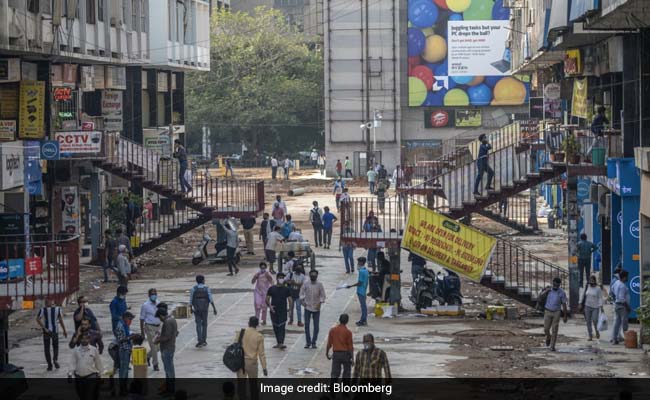
The coronavirus pandemic has made the job of predicting India's economic growth -- already a fraught process in normal times -- even harder.
Economists are bracing for possible big swings in the quarterly gross domestic product data scheduled for release on August 31 and significant revisions going forward. The statistics office suspended field surveys for several months after the country went into lockdown in March, resulting in substantial data gaps.
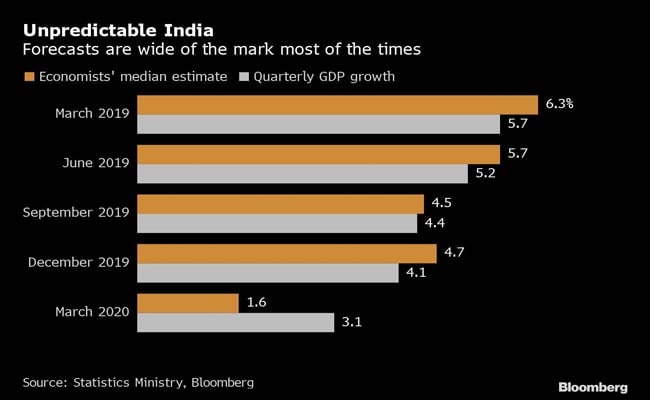
Forecasts for GDP in the quarter through June range from a contraction of 15 per cent to a decline of 25.9 per cent, with a median estimate of -19.2 per cent -- representing the worst performance since India started reporting quarterly data in 1996.
Measuring last quarter's GDP has been the “most challenging exercise in a long time,” Sumedha Das Gupta, an economist at ICICI Bank Ltd., wrote in a report on August 25. “Difficulty in gauging the extent of economic disruption under lockdowns may result in a starkly different number.”
The lack of field surveys add to the data complexities, with output in several sectors likely to be estimated and later revised once the hard numbers become available in coming months.
The data gaps could “imply imputation of value-added across major sub-sectors based on limited information from high-frequency indicators and thus prone to large revisions over time,” said Gaurav Kapur, an economist with IndusInd Bank Ltd. in Mumbai.
Incomplete price-level data, which are used as deflators to arrive at real growth, would also affect GDP numbers, he said.
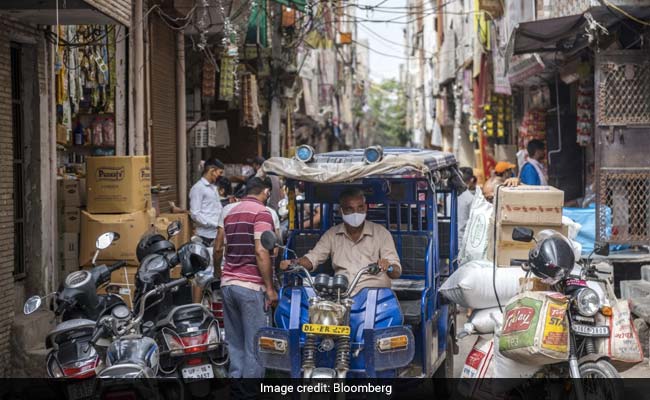
Even before the pandemic, India's GDP statistics have been a source of contention. A change in the methodology to calculate GDP introduced in 2015 made forecasting difficult, prompting some economists to use their own trackers of high-frequency indicators, which compare more closely with the old GDP series. Some are now relying on proxies to estimate output in the three months to June.
Economists are already updating their forecasts based on numbers available from alternative sources, like companies and tax collection.
State Bank of India's Soumya Kanti Ghosh revised his fiscal first-quarter GDP estimate to a 16.5 per cent year-on-year decline, milder than the 20 per cent contraction previously predicted, “though with the relevant caveats in the current uncertain scenario.”

-
Talking Points This Week: Leadership Shock At Nvidia, Earnings Strength, And The Fog Over Hormuz

The Anthropic IPO pricing and first trading day, Nvidia's upcoming earnings, and any fresh signals from Iran will set the tone for the following week.
-
Signature Play: The Classic Cocktail Is Dead. Or Is It?
Classic cocktails are disappearing from India's cocktail menus. But they're still being ordered, taught to bartenders and borrowed from. So, who's really having the last drink?
-
A New Samvat Wishlist: Inclusive Prosperity And Human Development
India has strengthened its economic foundations through infrastructure, digital access and enterprise. Its next growth chapter must deepen productivity, create better livelihoods and widen participation in prosperity.
-
Love, Sex Aur Dhokha: The Audacious Plot To Spy On Jensen Huang
A Taipei dinner, a Singapore chip buyer and a suspected Chinese asset: inside the alleged spy operation that got close to NVIDIA's Jensen Huang.
-
Ten Things I Learnt This Samvat
Patience can be a trap. Cheap stocks can stay cheap. Leverage can wipe you out. What did Samvat 2082 teach us? Niraj Shah writes on 10 lessons from the year gone by.
-
Talking Points This Week: Tech Nerves, FII Buying, And A Faraway Banking Shock
The global markets are not shining this Diwali. The exception in the large markets is, India.
-
Midterm Rally Lasted A Day. The Hard Reality Of A Divided US May Last Two Years | Opinion
Between a contested AI boom, a debt ceiling that arrives in 2027 and a president with every incentive to act alone, the next two years may prove more volatile than the first day's rally suggests.
-
Blue Wave Will Derail the AI Trade but Won't Dismantle the AI Era | Unhedged Position
The Democrats' sweep of the US Congress will see politics collide with economic forces both over the long and short term.
-
It's Time To Take The GST Council's Bet On Trust Global
Payment records can prove India's services exports, and clear, proportionate rules can bring foreign digital sellers into the tax net.
-
Opinion | India at 38: From Innovation Overperformer to Innovation Powerhouse
India now has 453 VC-backed deep science startups, 18 of them late-stage, after 117 percent growth since 2020. Laurus Labs, at USD 9.3 billion, is the most valuable deep science company in any middle-income economy outside China.









