India Financial Stocks Slump On RBI’s ‘Draconian’ Loan Rules
(Bloomberg) --
India's lenders and shadow banks tumbled after the central bank announced stricter rules to stem the relentless rise in risky consumer loans.
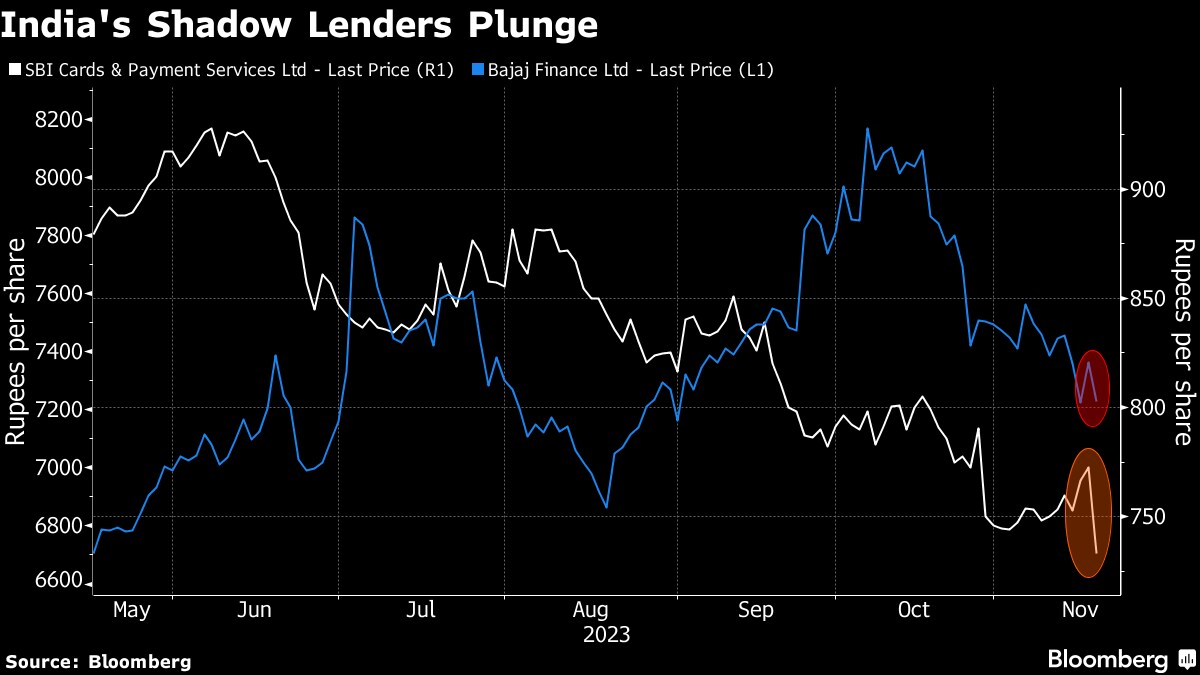
SBI Cards & Payments Services slumped as much as 6.8% to its lowest since March due to high exposure to such debt, while bank Bajaj Finance, the nation's largest shadow lender, tumbled 3.5% as investors assessed the growth prospects for financial services companies — the most influential segment of India's $3.7 trillion stock market.
The Reserve Bank of India Thursday asked lenders to boost provisions against personal loans and credit card borrowings as these debts are unsecured. The measure may hurt consumer spending — a key driver of India's economy — as loans will likely cost more, impacting banks' profits, according to brokers including Jefferies Financial Group Inc.
READ: India Central Bank Tightens Rules to Contain Consumer Loan Surge
“The final rules are far more draconian in our view,” said Suresh Ganapathy, head of financial services research at Macquarie Capital. Non-bank lenders will bear the brunt of RBI's move as their funding cost will increase, he added.
Banks will now have to increase the risk cover on some consumer loans, credit card receivables and bank credit to shadow lenders by 25 percentage points. The decision excludes mortgages, loans for education and cars, and debt backed by gold.
The increase in risk-weight of loans taken from banks may nudge non-bank lenders to seek alternative sources of credit, analysts said.
Read More: Costly Loans Drive Bond Sales to All-Time High: India Credit
The NSE Nifty Bank Index and S&P BSE Financial Services fell 1.3% each, with IDFC First Bank and RBL Bank leading the declines. A gauge of India's state-run lenders dropped as much as 2.6%, the most since Oct. 26, outpacing the fall in the gauge of private banks.
Paytm, the SoftBank Group Corp.-backed fintech bellwether, slid as much as 3.9% amid concern the new rules will hurt its lending business.
Reigning In
RBI Governor Shaktikanta Das has been urging banks to enhance internal controls as unsecured loans are growing nearly twice as fast as total lending. In October, he asked bankers to look carefully at their risk strategies, warning the surge in personal loans may heighten risks down the road.
UBS Group AG also warned last month that surging growth in unsecured lending at Indian banks could lead to a rise in credit costs as more unsecured retail loans turn sour, with state-run banks more vulnerable to this trend, compared to their private sector counterparts.
To be sure, the rising delinquencies in unsecured loans and debt sourced via fintech tie ups may not lead to systemic issues as small ticket loans accounted for 2.5% of overall personal loans by value, Nomura Holdings Inc. said in a note this week.
RBI's move “is negative for the entire sector as it takes away the growth multiple” and would raise cost of funding for non-bank lenders, Nuvama Wealth Management's analyst Mahrukh Adajania said.
--With assistance from Ashutosh Joshi.
(Updates throughout.)
More stories like this are available on bloomberg.com
©2023 Bloomberg L.P.

-
Why Swapping Your Old Gold Can Trigger A Rs 5 Lakh Tax Bill, And How You Can Avoid It Legally

Swapping old gold for new is taxed as a sale and a fresh purchase. Getting your own gold remade can cut most of that bill, though it has its own costs.
-
The AI Trade is Done. The Real Opportunity for Investors Starts in 2027 | Unhedged Position
As pureplay AI stocks plunge and circular, capex-led financing unwinds, 2027 is set to be a year of reckoning for AI companies. Yet the bust clears the way for a better opportunity for investors in 2027 -- shifting the spotlight from AI builders to the companies using AI.
-
Leadership As Mission: Why The Age Of AI Demands More Human Leadership
Debjani Ghosh examines how AI is changing leadership, arguing that its success must be measured by its impact on people and the accountability of those guiding its use.
-
We May Need Another Tukaram Mundhe To Fight Air Pollution | The Reason Why
Developers may install basic measures such as sprinklers and green nets, resume work, and continue violating rules when this equipment stops working.
-
Extracting Value From Battery Scrap Could Be Challenging For India | The Reason Why
A discarded lithium-ion battery still contains valuable materials such as lithium, nickel and cobalt. These can be recovered and reused. When such batteries are crushed and shredded, they produce a dark powder called black mass.
-
One El Nino, India Can Handle. Two Could Break The Granary
India's grain stocks can absorb one bad year, but a second El Nino could drain the buffer in two to three years, economists say.
-
India's Troika Of Good Luck | Joining The Dots
As Jensen Huang's exit drags Nvidia down, a cooling AI trade and resilient earnings have revived investor interest in India. A likely RBI rate hike looms.
-
Talking Points This Week: Leadership Shock At Nvidia, Earnings Strength, And The Fog Over Hormuz
The Anthropic IPO pricing and first trading day, Nvidia's upcoming earnings, and any fresh signals from Iran will set the tone for the following week.
-
Signature Play: The Classic Cocktail Is Dead. Or Is It?
Classic cocktails are disappearing from India's cocktail menus. But they're still being ordered, taught to bartenders and borrowed from. So, who's really having the last drink?
-
A New Samvat Wishlist: Inclusive Prosperity And Human Development
India has strengthened its economic foundations through infrastructure, digital access and enterprise. Its next growth chapter must deepen productivity, create better livelihoods and widen participation in prosperity.









