India Faces Greatest Economic Emergency Since Independence, Says Raghuram Rajan
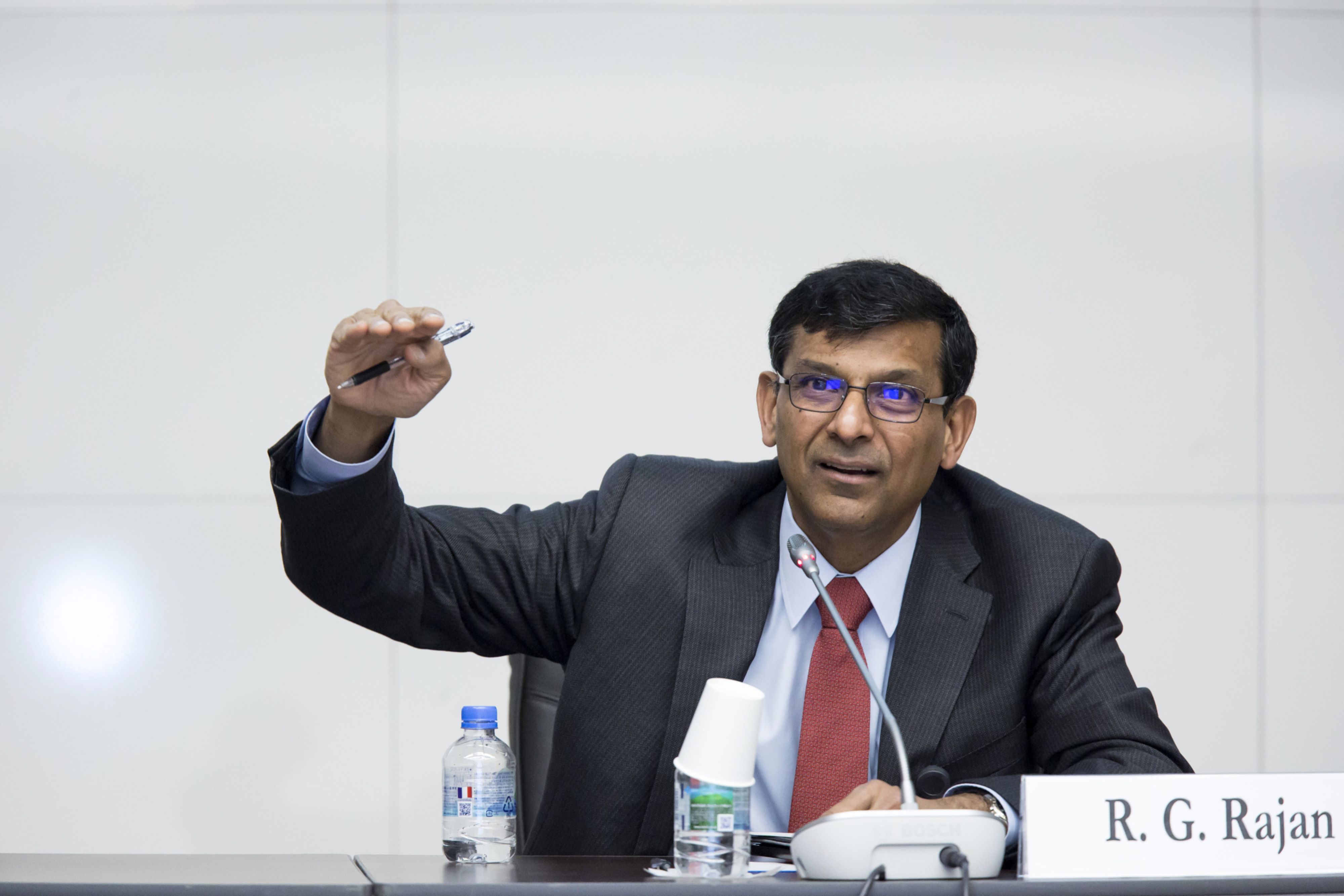
Former Reserve Bank of India governor Raghuram Rajan sees the economic fallout of the coronavirus pandemic as the “greatest emergency” India has faced since independence.
In a note posted on his LinkedIn page on Saturday, Rajan suggested some measures that he thought could help the country contain the economic damage from lockdowns imposed across the nation to curb the spread of Covid-19.
India is currently in the midst of a 21-day nationwide lockdown. The sudden stop across local businesses and major global economies could pull down GDP growth sharply. Fitch Ratings estimates that growth could fall to a 30-year low of 2 percent in 2020-21.
“Economically speaking, India is faced today with perhaps it's greatest emergency since independence,” Rajan wrote. “While the immediate priority is of course to suppress the pandemic's spread and improve preparedness, we should now plan for what happens after the lockdown.”
Rajan said that it will be hard to lockdown the country entirely for longer periods. As such, administrations need to start thinking about restarting certain activities in low infection regions with adequate precautions
“While only a handful of employers would be able to take the measures required when restarting work, they may be the largest employers,” he said. The administrative road map to enable manufacturers to activate their supply chains, will also need to be thought through now, Rajan added.
Multi Pronged Approach For The Poor And Non-Salaried Class
For the poor and the non-salaried lower middle class, whose livelihoods have been impacted, Rajan suggests a combination of state intervention, private participation and direct transfers.
The state and the centre have to come together to quickly figure out some combination of public and NGO provisions for food, healthcare and in some cases, shelter, he said. Voluntary moratorium on debt payments and a community enforced ban on evictions in the next few months by the private sector should also be considered.
Direct benefit transfers are important and will allow needy households to sustain but may not reach all, he said. Not providing the required support to this section of the society could have consequences, Rajan said. “We have already seen one such consequence—the movement of migrant labour. Another would be people defying the lockdown to get back to work if they cannot survive otherwise.”
Refocus Spending Needs
The Indian government has so far announced a fiscal support package of Rs 1.7 lakh crore, equivalent to 0.8 percent of GDP. Other nations have announced large support packages.
“Our limited fiscal resources are certainly a worry. However, spending on the needy at this time is a high priority use of resources, the right thing to do as a humane nation, as well as a contributor to the fight against the virus.”
Still budgetary constraints can't be ignored, said Rajan, adding that revenues will be severely impacted this year.
Unlike the United States or Europe, which can spend 10 percent more of GDP without fear of a ratings downgrade, we already entered this crisis with a huge fiscal deficit, and will have to spend yet more. A ratings downgrade, coupled with a loss of investor confidence, could lead to a plummeting exchange rate and a dramatic increase in long term interest rates....Raghuram Rajan, Former RBI Governor
Rajan suggests that expenditure be prioritised and less critical spending be pushed back. At the same time, to reassure investors, the government could express its commitment to return to fiscal rectitude, backing up its intent with a decision to set up an independent fiscal council.
Government Guarantee For SME Loans
Many small and medium businesses, already weakened over the last few years, may not have the resources to survive, Rajan said. “Not all can, or should, be saved given our limited resources.”
However, for larger SMEs, innovative ways must be designed to help them survive. For one, SIDBI can make the terms of its credit guarantee of bank loans more favourable. However, banks are unlikely to want to take on more credit risk, Rajan said.
He recommends that the government accept “first loss” in incremental bank loans up to the quantum of the income tax paid by the SME in the past year.
This recognises the likely future contribution of the SME to the government exchequer and rewards it with easier access to funds today. Of course, this helps the SME only if the lending bank is prohibited from directing the SME to use the guaranteed loan to pay back existing loans.Raghuram Rajan, Former RBI Governor
Expanding Securities For Repo Operations
The former RBI governor said that one way to channel funds to suppliers is through larger corporations who they serve. These corporations can raise funds through the bond markets. However, appetite is low at this point.
Banks, mutual funds and insurance companies should be encouraged to buy new investment grade bond issuances, and their way eased by the RBI agreeing to lend against their high quality bond portfolios through repo transactions.Raghuram Rajan, Former RBI Governor
The RBI Act would need to be changed to allow this and the central bank would need to apply suitable haircuts to account for the credit risk, he added,
Looking Beyond Liquidity
The difficulties in the household and corporate sector will no doubt be reflected in the financial sector, Rajan wrote. While the RBI has flooded the system with liquidity, it may need to go beyond that.
Rajan suggests the RBI can lend against high quality collateral to well managed NBFCs.
More liquidity will not help absorb loan losses. NPAs will mount, including in retail loans as unemployment rises.Raghuram Rajan, Former RBI Governor
The RBI could consider imposing a moratorium on financial institution dividend payments to build capital reserves. Even then some institutions may need capital and the RBI should be planning for that.
Reforming In Crisis
Rajan closed his note by saying the government should call on people with proven expertise and capabilities at a time like this. “If, however, the government insists on driving everything from the PMO (Prime Ministers' Office), with the same overworked people, it will do too-little-too-late,” he said.
Rajan added that the economy was weakening even before the current crisis and few would be enthusiastic about returning simply to that situation.
“It is said India reforms only in crisis. Hopefully, this otherwise unmitigated tragedy will help us see how weakened we have become as a society and will focus our politics on the critical economic and healthcare reforms we sorely need.”

-
Extracting Value From Battery Scrap Could Be Challenging For India | The Reason Why

A discarded lithium-ion battery still contains valuable materials such as lithium, nickel and cobalt. These can be recovered and reused. When such batteries are crushed and shredded, they produce a dark powder called black mass.
-
One El Nino, India Can Handle. Two Could Break The Granary
India's grain stocks can absorb one bad year, but a second El Nino could drain the buffer in two to three years, economists say.
-
India's Troika Of Good Luck | Joining The Dots
As Jensen Huang's exit drags Nvidia down, a cooling AI trade and resilient earnings have revived investor interest in India. A likely RBI rate hike looms.
-
Talking Points This Week: Leadership Shock At Nvidia, Earnings Strength, And The Fog Over Hormuz
The Anthropic IPO pricing and first trading day, Nvidia's upcoming earnings, and any fresh signals from Iran will set the tone for the following week.
-
Signature Play: The Classic Cocktail Is Dead. Or Is It?
Classic cocktails are disappearing from India's cocktail menus. But they're still being ordered, taught to bartenders and borrowed from. So, who's really having the last drink?
-
A New Samvat Wishlist: Inclusive Prosperity And Human Development
India has strengthened its economic foundations through infrastructure, digital access and enterprise. Its next growth chapter must deepen productivity, create better livelihoods and widen participation in prosperity.
-
Love, Sex Aur Dhokha: The Audacious Plot To Spy On Jensen Huang
A Taipei dinner, a Singapore chip buyer and a suspected Chinese asset: inside the alleged spy operation that got close to NVIDIA's Jensen Huang.
-
Ten Things I Learnt This Samvat
Patience can be a trap. Cheap stocks can stay cheap. Leverage can wipe you out. What did Samvat 2082 teach us? Niraj Shah writes on 10 lessons from the year gone by.
-
Talking Points This Week: Tech Nerves, FII Buying, And A Faraway Banking Shock
The global markets are not shining this Diwali. The exception in the large markets is, India.
-
Midterm Rally Lasted A Day. The Hard Reality Of A Divided US May Last Two Years | Opinion
Between a contested AI boom, a debt ceiling that arrives in 2027 and a president with every incentive to act alone, the next two years may prove more volatile than the first day's rally suggests.









