India's Auto, Pharma Sectors Not Ready To Wean Off China
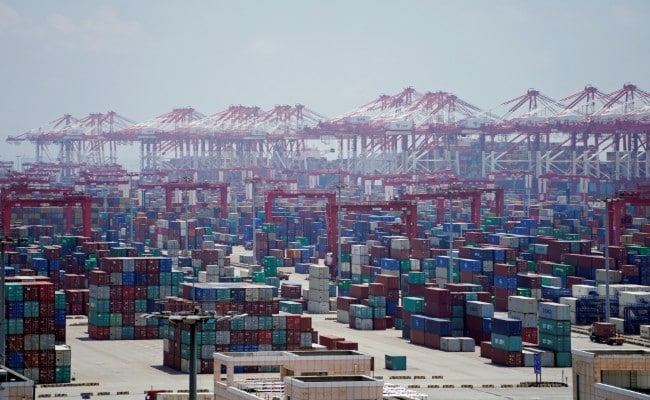
Days after a border clash with China this month in which 20 Indian soldiers were killed, New Delhi told firms to find ways to cut imports from China. But two big industries, automobiles and pharmaceuticals, say this is easier said than done. Like many countries, India relies on China for products such as electronic components and drug ingredients because it cannot make them or source them elsewhere as cheaply, company and industry figures say.
Thus any moves to curb imports or make them costlier without developing alternatives will hurt local businesses.
"We don't import because we like to, but because we have no choice," said RC Bhargava, chairman of Maruti Suzuki India, the country's biggest carmaker.
"To attract companies to produce locally, we need to be more competitive and lower our costs compared with other countries."
India imported around $70.3 billion of goods from China in the fiscal year to March 2019, and exported just $16.7 billion - its widest trade deficit with any country.
The government is now consulting with companies on tightening curbs on 1,173 non-essential products, a trade body official said on condition of anonymity. They include toys, plastics, steel items, electronics and specific auto components - which feed vehicle manufacturing.
This is on top of plans to raise trade barriers and import duties on around 300 products from China and elsewhere, as part of Prime Minister Narendra Modi's self-reliance campaign.
In April, the government also tightened rules for investments from neighbouring countries, including China, to prevent opportunistic takeovers after the pandemic.
"If things do escalate, then India stands to lose a lot more than China," said the chief of corporate strategy at one of India's top 10 drug makers. "We cannot afford this."
"No Knee-Jerk Reaction"
Over a quarter of India's auto part imports - $4.2 billion - came from China in 2019, including engine and transmission parts, according to data from the Auto Component Manufacturers' Association of India (ACMA).
Some of these components are critical and hard to source elsewhere immediately, said Vinnie Mehta, director general at ACMA, whose members include companies such as Bosch, Valeo and Minda Industries .
"We cannot have a knee-jerk reaction, especially when we are emerging from the disruption caused by the pandemic," he said.
Chinese supplies have also been a key factor in India's booming drug industry, which exports cheap generic medicines.
Some of India's largest drug companies, such as Sun Pharmaceutical Industries, Lupin and IPCA Labs, rely on China, and India overall gets about 70 per cent of its supply of active pharmaceutical ingredients (APIs) from there, industry officials said.
"In the immediate future, we are going to continue to be reliant on China," said Sudarshan Jain, secretary general of the Indian Pharmaceutical Alliance, which represents major drug makers, although he believed there was only "a very low likelihood" of API supplies being cut off.
However, this still leaves manufacturers dependent on low Chinese prices to be able to meet price controls on the home market and stay competitive abroad.
This month, China increased prices of the common pain reliever paracetamol and of ciprofloxacin, an antibiotic used to fight respiratory infections, by 25-27 per cent, one senior industry executive said.
"This is an important antibacterial drug. If we don't buy from the Chinese, there will be shortages," the executive said. "Ramping up capacity in India is a gradual, long-drawn process."

-
Getting To Work Costs Women More | The Reason Why

It is not just about women paying more than men. It is about women paying much more in cities than in villages.
-
AI Bias In Investing Cannot Be Eliminated, But It Can Be Governed
Framing is a particularly important example as identical financial information presented in terms of gains rather than losses can lead an LLM to reach a different assessment.
-
Joining The Dots | Dark Skies, Steady Diya: Why Hope Holds This Diwali
With war, a weak rupee and foreign outflows weighing on sentiment, policymakers at the NDTV World Summit and market veterans at NDTV Profit Ignite: Diwali Edition offered the same advice: stay invested and filter out the noise.
-
The Curious Case of Equitas Small Finance Bank And A CEO Who Quit For Stock
PN Vasudevan believes persistent investor concerns over a perceived conflict of interest had become a governance overhang on Equitas Small Finance Bank's stock, even as the lender improved profitability and asset quality.
-
Talking Points This Week: AI Cash Burn, A Tiger Comeback And An India That Still Finds Its Own Path
India is not immune to higher oil or tighter global liquidity, yet its earnings base is broader, its domestic policy levers are still available.
-
Foreign Investors Own Half Of HDFC Bank and ICICI Bank. An LTCG Cut Could Matter Most Here
Foreign portfolio investors have US$115 billion parked in HDFC Bank, ICICI Bank. If the government cuts long-term capital gains tax, Jefferies says returning foreign money could land here first.
-
'Never Seen This Level Of Negativity': Sandeep Tandon Says The Next Rally May Be Closer Than You Think
Veteran investor Sandeep Tandon says foreign selling is easing, large-caps are due a comeback and mid-caps are crowded, while he turns positive on gold, power and pharma this Diwali.
-
Indians Stay With Family, Not In Hotels | The Reason Why
India still lacks enough clean, reliable and affordable hotels for budget-conscious travellers.
-
The Economic Imperative: Analysing The Material Driving Force Behind India-Canada Strategic Reset
This economic complementarity is further reinforced by deep institutional investment ties and talent mobility, which form the bedrock of the bilateral framework.
-
Medicine Pricing: Where Must Profit Stop?
India must confront excessive margins, hidden incentives and regulatory gaps that threaten the integrity of medicine.










