India Endures Record Heat Wave: ‘The Only Reason Is Global Warming’
(Bloomberg) -- India's severe heat waves are expected to stretch into early next month, meaning millions of people will have to endure more days of dangerous temperatures and hours-long blackouts.
The South Asian nation is bracing for temperatures to rise to a record high, according to Mrutyunjay Mohapatra, head of the country's meteorological department. The agency is working with states and the federal government's disaster management arm to get early warnings to those on the ground, he said in an interview in New Delhi.
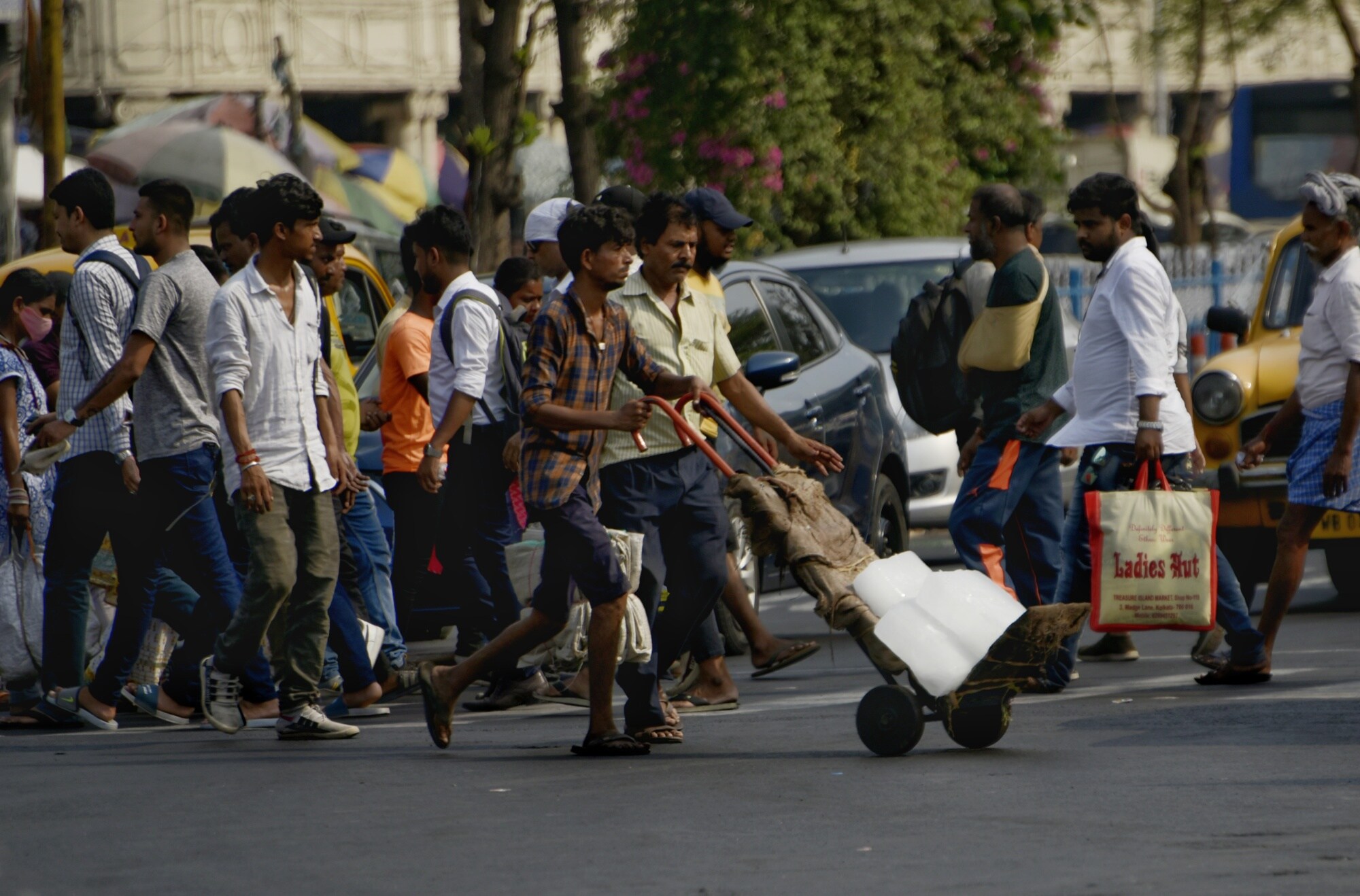
Thermometer readings have already reached 46 degrees Celsius (115 degrees Fahrenheit) in central and northern India, with two months to go before the monsoon season that typically brings cooling rains. They hit the highest since 1901 last month. The heat has tested power grids as air conditioners run on full blast and threatened wheat crops. Local authorities are implementing action plans to manage health risks and even deaths, Mohapatra said.
“Why is it exceptionally warm this year? The only reason is global warming,” said Roxy Mathew Koll, a climate scientist at the Indian Institute of Tropical Meteorology. “We have looked at data for seventy years and at the intensity, the number of heatwaves is directly in response to global warming.”
India is expected to suffer more frequent and intense heat waves, extreme rainfall and erratic monsoons in the coming decades as the planet warms, according to the United Nations' Intergovernmental Panel on Climate Change. McKinsey estimates that work hours lost to heat waves could cause losses of as much as $250 billion, or 4.5% of gross domestic product, by the end of the decade.
For India, the world's poorest super-emitter, adapting to a hotter Earth is as urgent a task as cutting planet-warming emissions. A recent study showed a 62% rise in heat-related deaths in the last 20 years. An official assessment of climate change published in 2020 showed that the frequency and intensity of droughts and cyclones had significantly increased in the last six decades. The number of days of intense rainfall and the pace at which sea levels are rising have more than doubled over that period.
The disasters underscore how countries like India, which are responsible for relatively little of the greenhouse gases accumulated in the atmosphere, often bear the brunt of climate impacts. That means spending billions to protect themselves instead of investing in economic development that could lift millions out of poverty. These countries, especially in Africa, also tend to lack resources to monitor and forecast the weather so they can better prepare for extreme events.
READ MORE: Africa Is the Continent Without Climate Data
India is investing to improve its observational data and computing capabilities to build better climate models, said Mohapatra. The country's official weather forecaster managed to cut the number of deaths caused by cyclones to six in 2021 from 10,000 a year in 1999 by making more accurate short-term predictions.
Still, the country is racing against the clock as more erratic weather becomes harder to forecast. “Worsening climate change is limiting predictability of events,” said Mohapatra.
For now, local governments may have to consider a range of measures to keep people safe from the heat, Mohapatra said. They could restrict school hours to the cooler morning hours of 7 a.m. to 11 a.m., advise against farm and construction work in the afternoon and provide extra support to street vendors, outdoor workers, police and to those living in city slums without access to cooling devices.

On Thursday evening, the meteorological department issued an orange alert for the next five days for northwest and central India. The region, home to some of the world's most polluted air, hasn't received the light summer rain that usually comes in April and May to lower temperatures and wash away dirty particulate matter.“IPCC projections clearly show that the heat intensity is increasing and encroaching on our daily lives, and the impact is on vulnerable people who have little resources in regions where we don't even have observations,” said Koll from the Indian Institute of Tropical Meteorology. “We need higher resolution data and, more importantly, we need long-term policies.”
More stories like this are available on bloomberg.com
©2022 Bloomberg L.P.

-
Signature Play: The Classic Cocktail Is Dead. Or Is It?

Classic cocktails are disappearing from India's cocktail menus. But they're still being ordered, taught to bartenders and borrowed from. So, who's really having the last drink?
-
A New Samvat Wishlist: Inclusive Prosperity And Human Development
India has strengthened its economic foundations through infrastructure, digital access and enterprise. Its next growth chapter must deepen productivity, create better livelihoods and widen participation in prosperity.
-
Love, Sex Aur Dhokha: The Audacious Plot To Spy On Jensen Huang
A Taipei dinner, a Singapore chip buyer and a suspected Chinese asset: inside the alleged spy operation that got close to NVIDIA's Jensen Huang.
-
Ten Things I Learnt This Samvat
Patience can be a trap. Cheap stocks can stay cheap. Leverage can wipe you out. What did Samvat 2082 teach us? Niraj Shah writes on 10 lessons from the year gone by.
-
Talking Points This Week: Tech Nerves, FII Buying, And A Faraway Banking Shock
The global markets are not shining this Diwali. The exception in the large markets is, India.
-
Midterm Rally Lasted A Day. The Hard Reality Of A Divided US May Last Two Years | Opinion
Between a contested AI boom, a debt ceiling that arrives in 2027 and a president with every incentive to act alone, the next two years may prove more volatile than the first day's rally suggests.
-
Blue Wave Will Derail the AI Trade but Won't Dismantle the AI Era | Unhedged Position
The Democrats' sweep of the US Congress will see politics collide with economic forces both over the long and short term.
-
It's Time To Take The GST Council's Bet On Trust Global
Payment records can prove India's services exports, and clear, proportionate rules can bring foreign digital sellers into the tax net.
-
Opinion | India at 38: From Innovation Overperformer to Innovation Powerhouse
India now has 453 VC-backed deep science startups, 18 of them late-stage, after 117 percent growth since 2020. Laurus Labs, at USD 9.3 billion, is the most valuable deep science company in any middle-income economy outside China.









