India-Based Outsourcing Field Will Change With AI, Automation: IOpex CEO
He is a technocrat-businessman. He calls his company a 'merchant of disruption'. The founder of San Jose-based IOpex Technologies, Shiva Ramani is convinced that artificial intelligence will dramatically alter the way the business is conducted across the globe in the coming days.
In a free-wheeling chat with this correspondent, Ramani said that AI and automation would redefine the India-based outsourcing space. He indicated that a tectonic shift had already been happening in the world of business in the wake of these new dynamics.
"Traditionally, the India-based outsourcing field has revolved around a people-centric model. This will now change with the advent of AI and automation," he said. "The number of people is no longer going to be the business construct. We have AI and human eyes to make sure that the automation goes through well. We now look at the outcome and not necessarily the number of people involved."
Ramani is the current chief executive officer at IOpex Technologies. Prior to this, he was the principal founder and chairperson at CSS Corp. from October 1998 to May 2009.
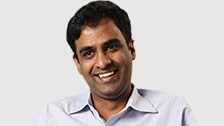
As a service solution provider, IOpex Technologies, which has a huge presence in Chennai and workstations in Bengaluru and Gurgaon as well, is focussed on optimisation of operating expenses for business. "Bulk of our focus is in the opex areas. Essentially, a business operation covers areas such as finance, sales, customer service. For all these functions, we write AI functions and automation softwares," he said.
Nearly 75% of revenue for IOpex Technologies comes from the U.S. Europe accounts for 15–20%. It has a headcount of 3,000, with 90% of them located in Chennai. "We don't sub-contract. We have engineers who write AI functions for our customers," Ramani said.
While refusing to divulge the revenue numbers, the head of the private company said that the business was doing well. "We are growing at 40% year-on-year since 2017. The business is profitable, and we have no investors other than me and my brother Shivakumar. Top 10 of our customers are in retail, media, technology and telco," he added.
As a solution provider, IOpex Technologies nudges its clients to look at the outcome and not necessarily the number of people involved. Ipso facto, it expects clients to share a percentage of their savings arising out of an integrated optimisation solution provided by IOpex. Asserting that IOpex was "redefining the business construct with its customers', he said that the speed of clinching deals with clients, however, was slightly lower since they needed education on the huge positive implications of AI and automation in their businesses. The combination of AI and automation could prove a disruptive change-change agent.
"We are giving cutting-edge technology that is changing the world. The Indian outsourcing scene is going to see a significant change in the next five to seven years. There could be a drop in headcount because there is going to be AI and co-pilots. Much of the writing (60%) is done by co-pilots," Ramani said.
"If I don't embrace AI, I will become a victim. I am a merchant of disruption. I am the beneficiary of people like Infosys who are victims of the public market. They can't go out and say I am cutting down employees. Since I am a private company, I can do that," he said.
"I am the beneficiary of the business that they can't pick up because I am the merchant of disruption. This is going to be a potential next generation services company that will come out from India and that will take out business from existing services companies," Ramani said.
Knowledge, according to him, is getting commoditised. Using AI, one could now ask ChatGPT to generate a model for a rocket engine. ChatGPT is a form of generative AI, a tool that lets users enter prompts to receive humanlike images, text or videos that are created by AI.
"ChatGPT will give you a design. It may not be completely functional. Previously, you needed an army at ISRO to build the foundation and others to further build on it. Now, basic human knowledge has become commoditized," he said.
"Do you want to use people to do higher order things and add to the commoditised knowledge? In the next 15 to 20 years, there are going to be fewer factories. About 80 % will be commoditised knowledge," he said. "I will encourage every new graduate and everyone in the industry to actually engage on how to use co-pilots and drive higher added values. Knowledge is absolutely commoditised now."
"The previous Industrial Revolution saw electricity and others commoditised. This time around, knowledge is commoditized. Now that AI has come, try to take the basics and build value-added things," Ramani said.
In the AI-driven business landscape, people had to discover new avenues to gain knowledge, he said. "With the U.S. taking a definite stand on AI chip-making in China, I think all engineers in India will have to look to new skills beyond writing software. A 100-person project could now turn out to be a 10-person project. I think the entry-level engineering world will get commoditised," he said.
KT Jagannathan is a senior financial journalist based in Chennai. He has been in business journalism for over three decades, covering corporate developments and critical industry verticals. He is the co-founder of www.carnaticdarbar.com, a news website for Carnatic music, a niche art form.

-
Extracting Value From Battery Scrap Could Be Challenging For India | The Reason Why

A discarded lithium-ion battery still contains valuable materials such as lithium, nickel and cobalt. These can be recovered and reused. When such batteries are crushed and shredded, they produce a dark powder called black mass.
-
One El Nino, India Can Handle. Two Could Break The Granary
India's grain stocks can absorb one bad year, but a second El Nino could drain the buffer in two to three years, economists say.
-
India's Troika Of Good Luck | Joining The Dots
As Jensen Huang's exit drags Nvidia down, a cooling AI trade and resilient earnings have revived investor interest in India. A likely RBI rate hike looms.
-
Talking Points This Week: Leadership Shock At Nvidia, Earnings Strength, And The Fog Over Hormuz
The Anthropic IPO pricing and first trading day, Nvidia's upcoming earnings, and any fresh signals from Iran will set the tone for the following week.
-
Signature Play: The Classic Cocktail Is Dead. Or Is It?
Classic cocktails are disappearing from India's cocktail menus. But they're still being ordered, taught to bartenders and borrowed from. So, who's really having the last drink?
-
A New Samvat Wishlist: Inclusive Prosperity And Human Development
India has strengthened its economic foundations through infrastructure, digital access and enterprise. Its next growth chapter must deepen productivity, create better livelihoods and widen participation in prosperity.
-
Love, Sex Aur Dhokha: The Audacious Plot To Spy On Jensen Huang
A Taipei dinner, a Singapore chip buyer and a suspected Chinese asset: inside the alleged spy operation that got close to NVIDIA's Jensen Huang.
-
Ten Things I Learnt This Samvat
Patience can be a trap. Cheap stocks can stay cheap. Leverage can wipe you out. What did Samvat 2082 teach us? Niraj Shah writes on 10 lessons from the year gone by.
-
Talking Points This Week: Tech Nerves, FII Buying, And A Faraway Banking Shock
The global markets are not shining this Diwali. The exception in the large markets is, India.
-
Midterm Rally Lasted A Day. The Hard Reality Of A Divided US May Last Two Years | Opinion
Between a contested AI boom, a debt ceiling that arrives in 2027 and a president with every incentive to act alone, the next two years may prove more volatile than the first day's rally suggests.









