Increase Tax On Cryptocurrencies, Says BJP's Sushil Kumar Modi
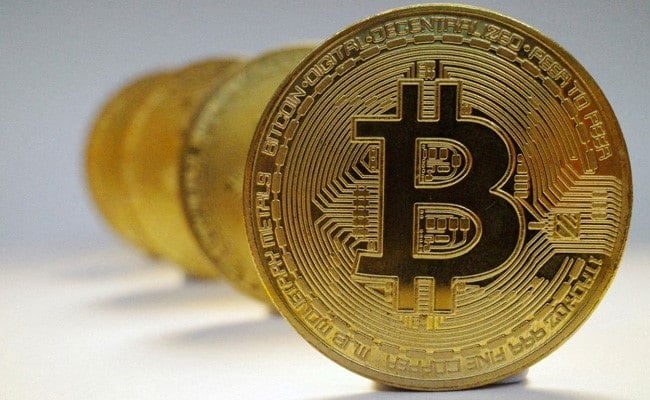
BJP member Sushil Kumar Modi on Monday asked the government to increase tax on cryptocurrencies from the current rate of 30 per cent, saying it is a form of gambling and countries like Japan, German, France and Austria have imposed up to 55 per cent tax on it.
Taking part in the discussion on the Appropriation Bill, 2022 and the Finance Bill, 2022 moved in Rajya Sabha by Finance Minister Nirmala Sitharaman, he also called for regulations for online gaming, digital lending, social media and edtech.
Modi also said the Information Technology Act 2000 needs to be drafted afresh in order to meet the current and future challenges.
"I would like to request the finance minister that the 30 per cent tax that you have imposed on crypto, please consider in the coming days if this tax can be further increased," he said.
Arguing that a cryptocurrency is not a commodity, asset, goods or a service, he said it does not have an intrinsic value and also does not have the backing of any company unlike shares in the stock markets.
"Crypto is gambling. It is a form of lottery, a form of horse racing... When you put money in share market you know companies who are behind it but who are behind crypto?," he asked.
He said Japan has imposed 55 per cent tax on cryptocurrencies, German, France and Austria have also imposed up to 45 per cent and the US, 37 per cent.
Modi said on the sale of crypto currency only 18 per cent GST is imposed on the service provider who runs the exchange and it needs to be increased.
Since it is not an asset, security, good, commodity, or services, he said, "cryptos are similar to lottery, casinos betting, gambling and horse racing. In all these activities, 28 per cent tax (GST) is imposed on the total transaction value... So I request to you that the GST council needs to consider imposing GST on the total transaction value of crypto." Modi asserted that the 30 per cent tax on crypto currency that Sitharaman had announced in the Budget for 2022-23 does make a difference to those who are earning from trading in it as the growth rate is very high.
"Investors are attracted by extraordinary profits," he said and added "no one knows what is the value of crypto".
He claimed that investors have been parking these currencies in private wallets before April 1 and "$8 billion worth of crypto assets are expected to go out of the country".
Asking the minister to consider the matter, he also drew the government's attention to gambling that's happening in the name of online gaming.
He said it is estimated that the fantasy gaming industry will touch a value of $2.8 billion in 2022 and stressed on the need for regulating online gaming and lending platforms.
Citing a news report, he said that more than 40 digital lending apps were found to be run by Chinese nationals and the government needs to look at how the large scale online lending, social media and EdTech can be regulated.
Stating that the Information Technology (IT) Act is 20 years old, he said it should be drafted afresh so that the current and future challenges can be met.
Taking part in the discussion on the two bills, Shaktisinh Gohil (Congress) alleged that the tax structure in the Finance Bill will only widen the gap between "the haves and the have nots" and the government is not fulfilling its duty of bridging the divide.
Stating that many people suffered from the coronavirus pandemic and the budget of each household has been hit, he welcomed the tax benefit proposal on Covid medical treatment but wondered how much will it help those who have suffered from the pandemic.
Gohil also accused the government of increasing excise duty on petrol and diesel even when the international crude prices were low and also criticised the Centre for increasing cooking LPG price even when the international prices had gone down.

-
Getting To Work Costs Women More | The Reason Why

It is not just about women paying more than men. It is about women paying much more in cities than in villages.
-
AI Bias In Investing Cannot Be Eliminated, But It Can Be Governed
Framing is a particularly important example as identical financial information presented in terms of gains rather than losses can lead an LLM to reach a different assessment.
-
Joining The Dots | Dark Skies, Steady Diya: Why Hope Holds This Diwali
With war, a weak rupee and foreign outflows weighing on sentiment, policymakers at the NDTV World Summit and market veterans at NDTV Profit Ignite: Diwali Edition offered the same advice: stay invested and filter out the noise.
-
The Curious Case of Equitas Small Finance Bank And A CEO Who Quit For Stock
PN Vasudevan believes persistent investor concerns over a perceived conflict of interest had become a governance overhang on Equitas Small Finance Bank's stock, even as the lender improved profitability and asset quality.
-
Talking Points This Week: AI Cash Burn, A Tiger Comeback And An India That Still Finds Its Own Path
India is not immune to higher oil or tighter global liquidity, yet its earnings base is broader, its domestic policy levers are still available.
-
Foreign Investors Own Half Of HDFC Bank and ICICI Bank. An LTCG Cut Could Matter Most Here
Foreign portfolio investors have US$115 billion parked in HDFC Bank, ICICI Bank. If the government cuts long-term capital gains tax, Jefferies says returning foreign money could land here first.
-
'Never Seen This Level Of Negativity': Sandeep Tandon Says The Next Rally May Be Closer Than You Think
Veteran investor Sandeep Tandon says foreign selling is easing, large-caps are due a comeback and mid-caps are crowded, while he turns positive on gold, power and pharma this Diwali.
-
Indians Stay With Family, Not In Hotels | The Reason Why
India still lacks enough clean, reliable and affordable hotels for budget-conscious travellers.
-
The Economic Imperative: Analysing The Material Driving Force Behind India-Canada Strategic Reset
This economic complementarity is further reinforced by deep institutional investment ties and talent mobility, which form the bedrock of the bilateral framework.
-
Medicine Pricing: Where Must Profit Stop?
India must confront excessive margins, hidden incentives and regulatory gaps that threaten the integrity of medicine.










