With Polarisation in West Uttar Pradesh, Will BJP Repeat Its 2014 Landslide?
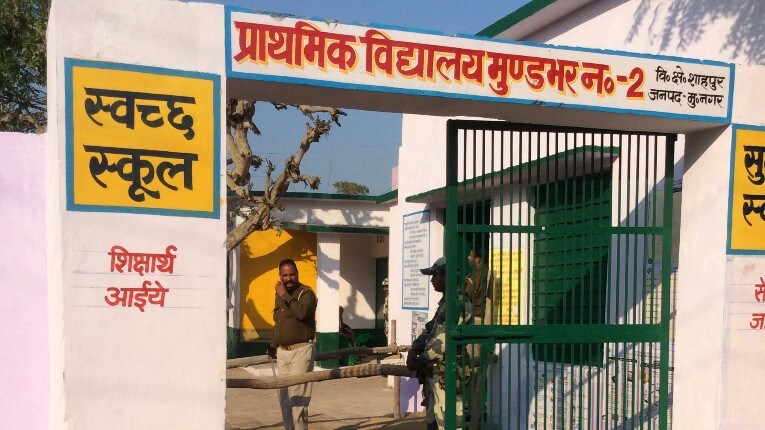
The middle-aged Jat man's lengthening shadow follows him, almost as a story foretold, when he steps outside the car in which we travelled through the narrow lanes of Munbhar village in Muzaffarnagar district's Budhana assembly segment. The man, with creases of anxiety on his face, is on chaperone duty.
Chaperoning girls is not uncommon in these troubled lands of western Uttar Pradesh, where daughters are zealously protected to ensure that they neither ‘stray' nor fall ‘prey' to boys from other communities, especially from another religion.
But this father is chaperoning no ordinary girl. For his daughter, who is in her early twenties, carries the ‘unfortunate' identity of being the girl at whom a Muslim boy had passed a lewd comment, sparking unprecedented communal conflict in Muzaffarnagar and several districts of western UP in 2013.
Also Read: Muslim Vote Remains Divided in Western UP: Is It Advantage BJP?
BJP Fails to retain Support of the Jats
The girl's father came to the village where we met him the previous night from Muzaffarnagar city, where the family now lives in a rented accommodation because he lives in insecurity and is haunted by memories of his son Gaurav and nephew Sachin.
Till 2013, the family lived in Malikpura, a majra or locality in Kawal village where the conflict left the two brothers and a Muslim youth, Shahnawaz Qureshi, dead. This sparked the riots that communally polarised the entire state and led to the Bharatiya Janata Party's unprecedented sweep in the Lok Sabha polls. Almost one in four of the BJP's 282 seats came from UP, and thus the interest in this region in the current polls.
The girl had to come to Munbhar as she is on ‘election duty', a task allotted because the state government provided her a permanent job in the Education Department as part of the compensation package worked out for the family.
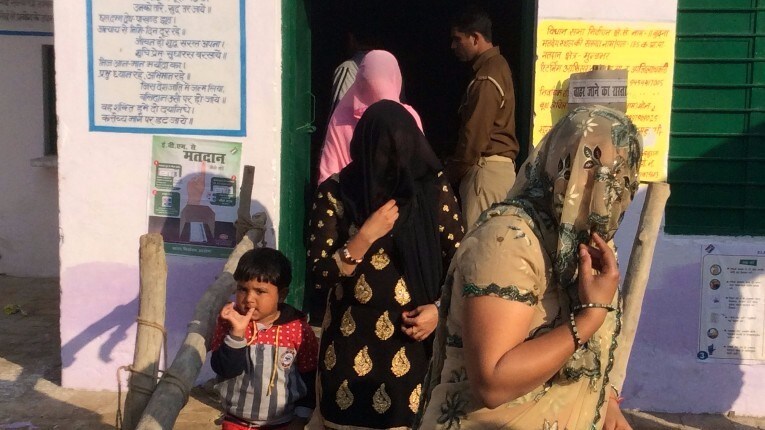
I see her sitting inside the booth, heavily protected by policemen, while she scans voter slips and scrutinises identity cards.
Her father talks about her with pride, that she is good in her job and gets shahbashi from seniors but quickly – and with anger in his tone – points to the “irony” that the party which “did something”, meaning Samajwadi Party, for his family after 2013 is not being backed by him and the party which “did nothing”, indicating BJP, is the one that he is canvassing for. His ire is not personal but almost universal in his Jat community.
Backed by Jats massively in 2014 in a first, the BJP however has failed to retain support of the community.
Also Read: In West UP's ‘Jatland', Polls Are a Litmus Test for Modi, Mayawati
The decision to appoint a non-Jat as Chief Minister in Haryana, handling of the Jat reservation stir by the Manohar Lal Khattar regime and inadequate political representation for the community by way of party tickets, has alienated the community, particularly elders. He doesn't explicitly say, but in the father's ire it is evident that he wanted people like him to be projected as political symbols by the BJP.
Hindutva Agenda Takes Centrestage
Despite the anger at not being “looked after”, the middle-aged man and significant numbers of Jats returned to the BJP fold in the just-concluded first phase of polling in UP.
Without a doubt, Jats in subsequent rounds too will take the same decision because Hindu-Muslim polarisation became the biggest issue in the first phase despite BJP initially declaring that it would seek votes in the name of demonetisation and the surgical strikes. “Total polarisation” is how the SP candidate from Thana Bhawan, Sudhip Panwar, described the election-day mood.
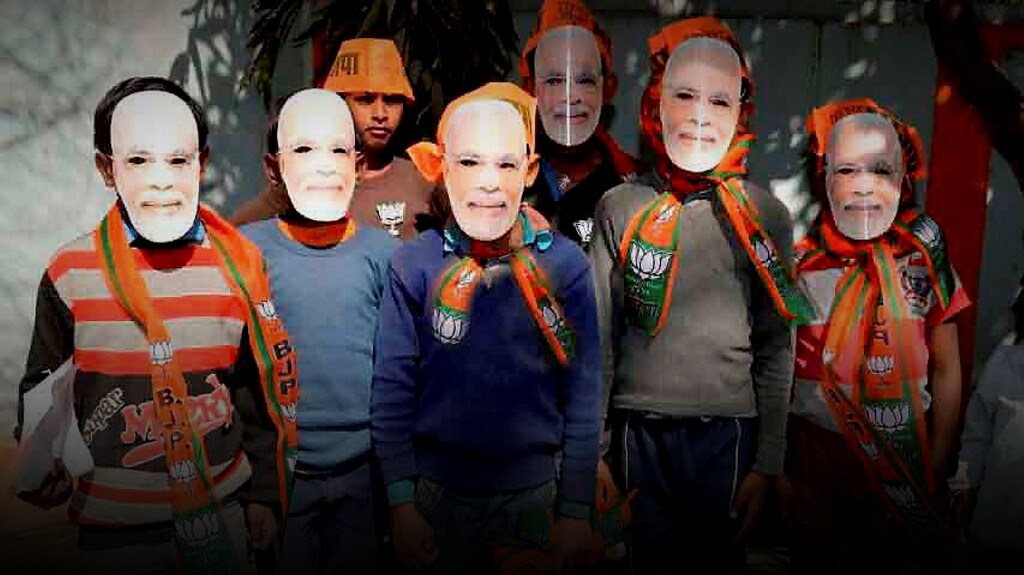
Visits to western UP in the last few weeks and on polling day left no ambiguity that communal polarisation is not a thing of the past. After initial promise, the BJP returned to a Hindutva-centric manifesto and now Goebbels' soldiers lose no opportunity to claim that both Bahujan Samaj Party and SP fielded Muslims candidates in excess of their population ratio.
The message has gone out across the RSS' network that this round has gone well for the BJP solely because of polarisation, a split in the Muslim vote and because the Brahmin, Thakur, Bania support for the BJP was backed by OBCs and non-Jatav Dalits. Jats too eventually voted for the BJP because of the return of communal polarisation. Yet the community has lost its bargaining power with the party.
Infighting Within the BJP
Sanjay Sharma, Muzaffarnagar district Prachar Pramukh and prabhari for the Charthawal assembly segment explained that Jats, despite support to the BJP in western UP, will henceforward be seen with suspicion and will have to await their turn for official largesse in event of the party forming government in the state.
Clearly, the BJP will look at assuaging castes that joined the party bandwagon prior to the Jats, and it will be a while before the community regains its social clout. Whether this impinges the importance of Union minister Sanjeev Baliyan is yet to be seen. Questions will surely be asked over his inability to enlist Jats in greater numbers.
After distribution of seats, the BJP was not on an easy wicket. Besides uncertainty over which issues would work best, the RSS network was estranged because workers were unhappy with candidate selection. “If they were chosen without consultation, let the party find ways to them get elected, why come to us,” was the refrain whenever swayamsevaks met. While none wished to be candidates as per the RSS tradition, they surely desired that the nominees must look up to local RSS leaders.
The BJP leadership was severely criticised for nominating Avtar Singh Bhadana, a frequent political ‘migrant' and a three-time Congress MP from Haryana, from Mirapur seat in Muzaffarnagar district. Known for his lavish lifestyle, the self-styled ‘Gujjar Imam' lost in 2014 to BJP leader and Union minister Krishan Pal Gurjar and soon joined the INLD. His nomination from a key western UP seat was nothing short of political affront.
Also Read: UP: After Driving out Kutba-Kutbi's Muslims, Jats Rue Their Future
RSS in Damage Control Mode
Sensing the sullen sentiment within its rank and file, the RSS leadership got into the act to rally support for the BJP. Dattatreya Hosabale and Krishna Gopal, joint general secretaries of the RSS, convened a meeting of important functionaries from across UP in late January and explained that even if candidates were not as per their preference, the RSS workers should not lose sight that the organisation would gain ideologically if the BJP formed government in the state.
They elaborated that just as identity of 282 BJP MPs was inconsequential because the government was headed by a former pracharak, eventually individual legislators would have little role if the party came to power in the state.
The meeting had the desired effect and the BJP campaign has not faltered thereafter. Like 2014, the RSS network fanned out with each functionary being allocated specific responsibilities. The strategy of designating ‘page pramukhs' when important RSS members were entrusted to manage voters in one page of electoral lists in every constituency is being used again.
After round one of polls, it is evident that identity politics reigns supreme in UP. For the BJP, however, it isn't a walk in the park like in 2014. Yet, it would be wrong to assume that UP will witness the Bihar verdict being repeated because the SP and Congress forged an alliance. Firstly, Akhilesh Yadav is no Nitish Kumar and Rahul Gandhi is no Lalu Prasad. Secondly, in Mayawati, there is a formidable third force, still with the ability to spring a surprise and divide anti-BJP vote.
(The writer is an author and journalist based in Delhi. His most recent books are ‘Sikhs: The Untold Agony of 1984' and ‘Narendra Modi: The Man, The Times'. He can be reached @NilanjanUdwin. This is an opinion piece and the views expressed above are the author's own. The Quint neither endorses nor is responsible for the same.)
Also Read: Why Thana Bhawan's Voters Could Decide Future of Indian Politics

-
Getting To Work Costs Women More | The Reason Why

It is not just about women paying more than men. It is about women paying much more in cities than in villages.
-
AI Bias In Investing Cannot Be Eliminated, But It Can Be Governed
Framing is a particularly important example as identical financial information presented in terms of gains rather than losses can lead an LLM to reach a different assessment.
-
Joining The Dots | Dark Skies, Steady Diya: Why Hope Holds This Diwali
With war, a weak rupee and foreign outflows weighing on sentiment, policymakers at the NDTV World Summit and market veterans at NDTV Profit Ignite: Diwali Edition offered the same advice: stay invested and filter out the noise.
-
The Curious Case of Equitas Small Finance Bank And A CEO Who Quit For Stock
PN Vasudevan believes persistent investor concerns over a perceived conflict of interest had become a governance overhang on Equitas Small Finance Bank's stock, even as the lender improved profitability and asset quality.
-
Talking Points This Week: AI Cash Burn, A Tiger Comeback And An India That Still Finds Its Own Path
India is not immune to higher oil or tighter global liquidity, yet its earnings base is broader, its domestic policy levers are still available.
-
Foreign Investors Own Half Of HDFC Bank and ICICI Bank. An LTCG Cut Could Matter Most Here
Foreign portfolio investors have US$115 billion parked in HDFC Bank, ICICI Bank. If the government cuts long-term capital gains tax, Jefferies says returning foreign money could land here first.
-
'Never Seen This Level Of Negativity': Sandeep Tandon Says The Next Rally May Be Closer Than You Think
Veteran investor Sandeep Tandon says foreign selling is easing, large-caps are due a comeback and mid-caps are crowded, while he turns positive on gold, power and pharma this Diwali.
-
Indians Stay With Family, Not In Hotels | The Reason Why
India still lacks enough clean, reliable and affordable hotels for budget-conscious travellers.
-
The Economic Imperative: Analysing The Material Driving Force Behind India-Canada Strategic Reset
This economic complementarity is further reinforced by deep institutional investment ties and talent mobility, which form the bedrock of the bilateral framework.
-
Medicine Pricing: Where Must Profit Stop?
India must confront excessive margins, hidden incentives and regulatory gaps that threaten the integrity of medicine.










