In Tiger Pugmarks, A Blueprint For Conservation
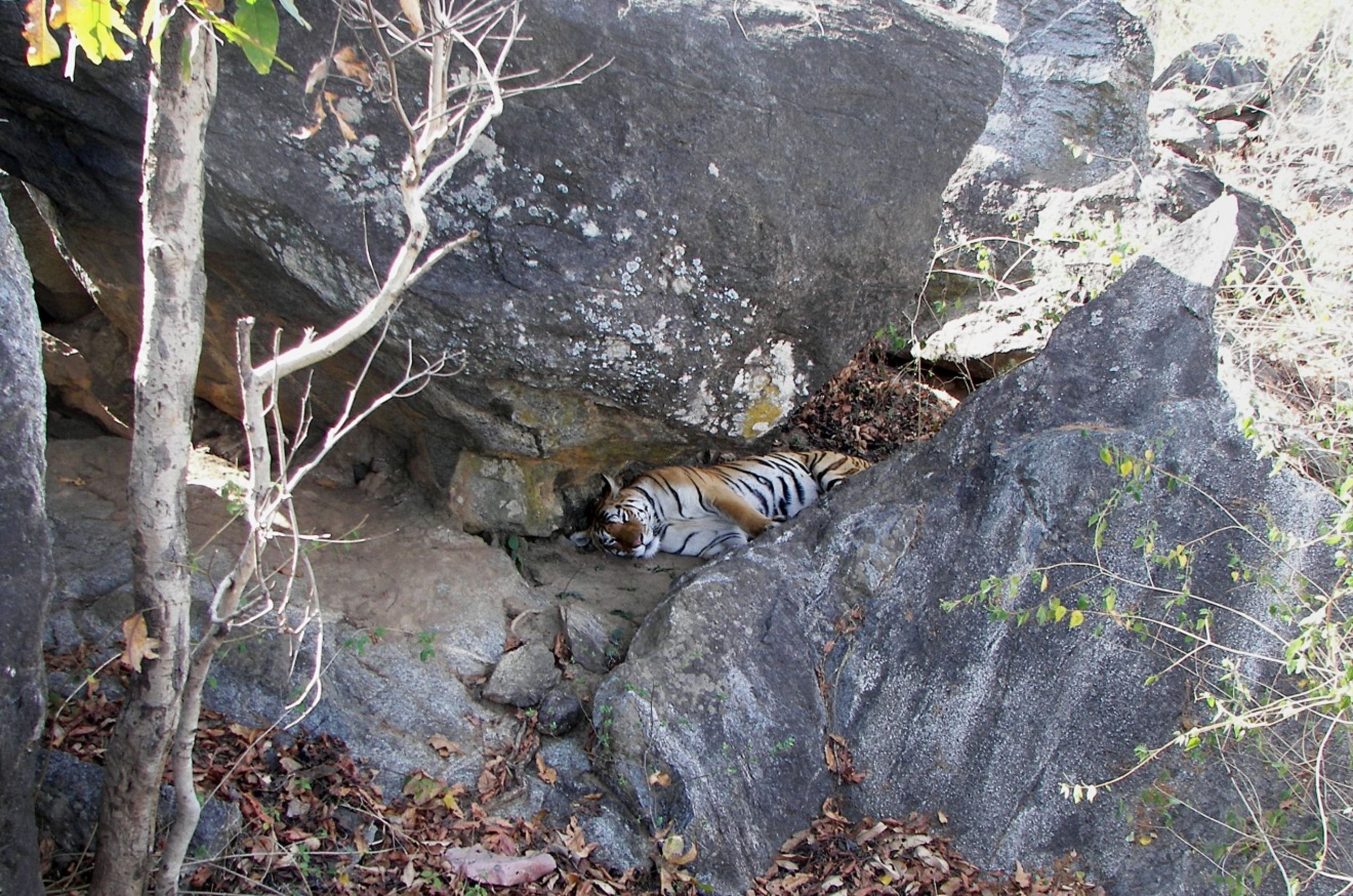
Some good news is tailing the tigers of India.
Surmounting large roads, tropical storms, vehicular traffic, houses, pits, fences, and fields, tigers have claimed new territory. On July 29, international tiger day, the Government of India released the full report on tiger status in India. We have close to 3,000 tigers, which is most of the world's wild tiger population.
A close look at the report shows huge discrepancies between Indian tiger reserves – while areas like Corbett, Kaziranga, Kanha have high tiger density, at least 25 reserves have low density. But two areas newly claimed by tigers show that we have reason to cheer – and cause also to safeguard corridors between tiger reserves.

A tiger from the Sahyadri tiger reserve in Maharashtra has traveled more than 200 kilometres to settle itself in the Kali tiger reserve in Karnataka. All tigers have different stripe patterns. While the difference in faces is discernible, images from camera traps—hidden cameras that take images of animals that move in front of the device—have positively identified the Kali tiger to be the same as the one from Sahyadri. And camera trap images from Assam show that tigers have moved to newer areas that haven't seen stripes for a long time. Camera trap images reveal that four tigers settling in Laokhowa Burhachapori wildlife sanctuary—which lies on the buffer of Kaziranga national park—have gone there from Kaziranga.
Park authorities say this is the result of more than fifteen years of work in the Kaziranga landscape, which is lashed by floods each year and is in the grip of chronic poaching. The Kaziranga tigers expanding their range means more viability for the tiger population.
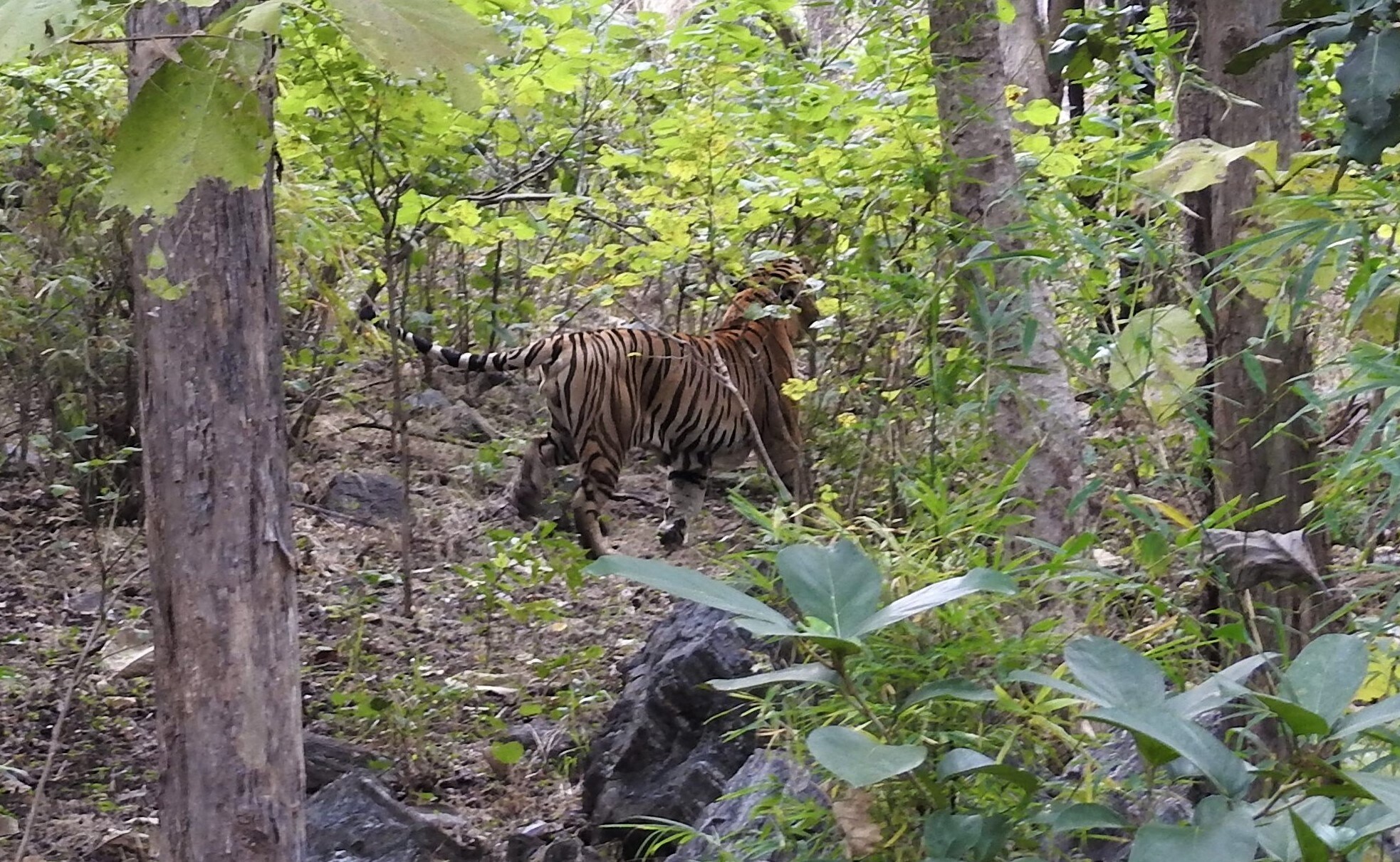
Tigers have very specific sociology. Unlike lions, they are solitary animals. If we were to use the ‘king of the jungle' moniker, a tiger would be the right contender, for a life that is hard-won till the end. Tigresses raise cubs alone. They may die defending them from unknown male tigers. Males and females establish their own territories, which they guard. A male tiger will have larger territories than females – between 50-100 square kilometres.
Most tiger sightings in reserves happen because tigers are out patrolling their territory, and they may appear along the same places as they march on their areas. This means that there is a limit to how many tigers an area can hold. It also means that young tigers, after weaning from their mothers, have to disperse far distances to establish their own territory. This is a fledgling from the nest, which could soon be in the jaws of another tiger or getting knocked down on highways and railways. In 2010, a male tiger from Ranthambhore, in search of territory, walking hundreds of kilometres. It went first to Mathura, walking along fields and highways. Not finding forest cover there, it finally settled in Keoladeo bird sanctuary. It was later caught and taken to Sariska.

A close look at the new tiger estimation report shows that almost half of India's fifty tiger reserves have low tiger density. On one hand, reserves like Corbett, Kaziranga, and Nagarhole have between 10-14 tigers per 100 square kilometres. But reserves like Kali, Achanakmar, Bor, and others have one tiger per 100 square kilometres.
The states of Jharkhand, Chhattisgarh, and Odisha are doing badly despite having tiger reserves, and in spite of receiving tigers from central Indian highlands.
Strengthening corridors and restoring tiger reserves here will be crucial. This becomes even more important because the report indicates we are both losing forests as well as gaining areas with tigers in them – that is, tigers are colonising new areas even as we lose forest cover.

Practically, it is unlikely India will form many more tiger reserves. But optimising the ones we have can only happen by preserving and restoring wilderness corridors. Genetic studies show that the more tiger populations intermingle, the greater their genetic diversity is. Forests that are cut off from other wildernesses have isolated populations (such as Sariska tiger reserve) which could lead to genetic depression.
Happily, the Sahyadri tiger walking to Kali—an area with very low tiger density—shows that natural corridors still exist in the Western Ghats. In Assam, the four tigers in Laokhowa demonstrate that we could have a much larger tiger area, between the reserves of Orang and Kaziranga, the hills of Karbi-Anglong and the Laokhowa sanctuary. The good news isn't just 3,000 tigers, but the fact that tigers are still able to make their way to areas that can hold them.

Consider corridors as a living map, one that exists in negotiation with large infrastructure, and the prospect of disasters like floods. In several instances, these corridors are fringe forests, degraded sanctuaries, riverbeds, fields, reserve forests, and streams. They are used by many other wild animals for cover or feeding. New railway lines or roads need to avoid these areas. The tiger estimation gives a sense of the corridors the animals are using. This should be a blueprint for avoiding new highways and railways.
India is crucial for the wild tigers of the world. But as we celebrate tiger numbers, it is important to remember that numbers are not everything. At the end of the day, we don't just want safari parks where you can see one tiger for the album. That one tiger spotted often is from a handful of individuals in the tourism zone. What we really need is to ensure tigers have a vibrant gene pool, and can inherit living forest corridors.
The tigers are, in fact, showing us that following in their pugmarks would mean a blueprint for positive conservation action – in the forests and grasslands that remain in the world.
Neha Sinha works with the Bombay Natural History Society. Views expressed are personal.
The views expressed here are those of the author and do not necessarily represent the views of BloombergQuint or its editorial team.

-
Getting To Work Costs Women More | The Reason Why

It is not just about women paying more than men. It is about women paying much more in cities than in villages.
-
AI Bias In Investing Cannot Be Eliminated, But It Can Be Governed
Framing is a particularly important example as identical financial information presented in terms of gains rather than losses can lead an LLM to reach a different assessment.
-
Joining The Dots | Dark Skies, Steady Diya: Why Hope Holds This Diwali
With war, a weak rupee and foreign outflows weighing on sentiment, policymakers at the NDTV World Summit and market veterans at NDTV Profit Ignite: Diwali Edition offered the same advice: stay invested and filter out the noise.
-
The Curious Case of Equitas Small Finance Bank And A CEO Who Quit For Stock
PN Vasudevan believes persistent investor concerns over a perceived conflict of interest had become a governance overhang on Equitas Small Finance Bank's stock, even as the lender improved profitability and asset quality.
-
Talking Points This Week: AI Cash Burn, A Tiger Comeback And An India That Still Finds Its Own Path
India is not immune to higher oil or tighter global liquidity, yet its earnings base is broader, its domestic policy levers are still available.
-
Foreign Investors Own Half Of HDFC Bank and ICICI Bank. An LTCG Cut Could Matter Most Here
Foreign portfolio investors have US$115 billion parked in HDFC Bank, ICICI Bank. If the government cuts long-term capital gains tax, Jefferies says returning foreign money could land here first.
-
'Never Seen This Level Of Negativity': Sandeep Tandon Says The Next Rally May Be Closer Than You Think
Veteran investor Sandeep Tandon says foreign selling is easing, large-caps are due a comeback and mid-caps are crowded, while he turns positive on gold, power and pharma this Diwali.
-
Indians Stay With Family, Not In Hotels | The Reason Why
India still lacks enough clean, reliable and affordable hotels for budget-conscious travellers.
-
The Economic Imperative: Analysing The Material Driving Force Behind India-Canada Strategic Reset
This economic complementarity is further reinforced by deep institutional investment ties and talent mobility, which form the bedrock of the bilateral framework.
-
Medicine Pricing: Where Must Profit Stop?
India must confront excessive margins, hidden incentives and regulatory gaps that threaten the integrity of medicine.










