In India, Millions Of Millennials Are Piling Into The Stock Market
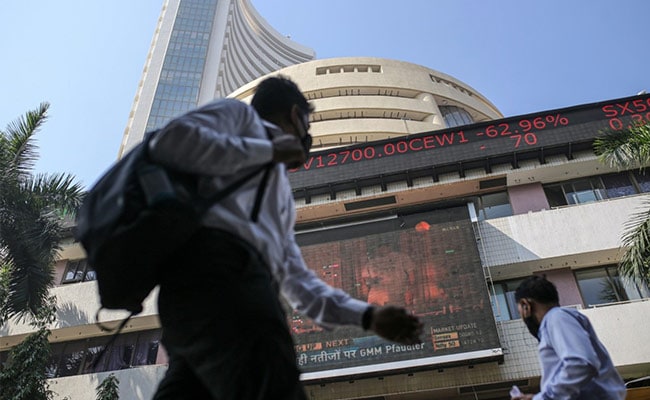
When his parents first learned that Vishal Baveja, a 27-year-old doctor of forensic medicine, had invested some of his savings in Indian equity mutual funds, they were worried about the risk. Those fears abated when they saw the income those investments produced. Then, as the coronavirus pandemic took hold last year, they supported his decision to start buying individual blue-chip stocks.
"The tables have turned," says Baveja, a native of Bhopal who works in neighboring Indore. "The stock market now always comes up in my daily phone conversations with my mother."
Millions of young Indians such as Baveja have taken to stock trading during the pandemic, raising hopes that the appetite for equities in the world's second-most-populated nation is finally growing. Active investor accounts rose by a record 10.4 million in 2020, according to data from the country's two main depositories. Retail ownership in more than 1,500 companies listed on the National Stock Exchange of India Ltd. jumped to 9% in the third quarter of 2020, the highest since March 2018.

Angel Broking Ltd., a securities firm established in 1987, says 72% of the 510,000 customers it added from October to December had never traded stocks before. Of India's 1.36 billion people, only about 3.7% invest in equities, compared with about 12.7% in China, according to stock depository data on the number of investment accounts (and assuming one account per person). In the U.S., by contrast, a poll found about 55% of the population owns stocks either individually or through a mutual fund.
"In terms of retail investor participation, China is probably a model of what you can expect will happen in India," says Mark Mobius, the veteran emerging-market investor. "India could easily equal China's market cap in the next 5 to 10 years because going forward, growth in India's market will probably be faster. China, because of its size, will probably grow more slowly."
As in other parts of the world, India's retail trading boom has been fueled by pandemic-driven restrictions and job losses that left millions of people at home with little to do. The relentless stock market rally since March 2020 has drawn in more investors. And technology, including the rise of cheap trading apps and social media-YouTube influencers, Twitter, and Telegram stock-tipping chat groups-has attracted hordes of day traders into discount brokers such as Zerodha Broking Ltd.
But unlike during previous retail investing booms, many of the new entrants live outside of Mumbai and New Delhi, the biggest cities. More than half of Angel Broking's new customers in the quarter that ended in December were from smaller cities and towns, the firm says.
"The adoption of internet and online access is going deeper into the country," says Peeyush Mittal, a co-manager of the Matthews India Fund in San Francisco. "What we hear from companies in the brokerage space is Tier 2 and Tier 3 city investors are more long term in their view of the market. Whenever the markets are down, they tend to put in more money compared to people in the biggest cities."
Baveja, the doctor from Indore, says he started with about 10,000 rupees ($138) in February 2020, then piled further into Indian stocks after the market plunged in March. "My investments rose to a healthy six-figure mark by April," he says, adding that he plans to be a long-term investor.
Even as many of the pandemic restrictions that India imposed in March were lifted, the retail investing fervor continued. Central Depository Services (India) Ltd. opened a record 1.47 million accounts in January, up more than threefold from the same month in 2020, and 1.36 million in February.
India's mutual fund industry has targeted small towns through television, social media, and billboard advertising. Investments by individuals in equity funds jumped 16% in February from the same month a year earlier, according to data from the Association of Mutual Funds in India.
The moves are part of a broader shift away from traditional physical assets such as real estate and gold, as well as bank deposits. Rural farmers and the urban working class have traditionally relied on gold as both an insurance policy and a retirement plan in a country that lacks robust social welfare systems or widespread access to formal credit. But Indian millennials are more inclined to take risks in the market.
Apoorv, a 30-year-old director at a nongovernmental organization who declined to provide his last name for privacy reasons, is among them. He says he took to trading stocks after realizing how easy it was to do on Zerodha and other platforms.
"I never thought active day traders would be trading out of a mobile [phone], but they do sometimes, like 100 trades a day," says Nithin Kamath, chief executive officer at Zerodha, which started in 2010 and is now India's largest broker, with more than 4 million customers. "In 2015, 95% of our business was from the desktop-trading platform. Now 75% is from mobile."
The influx of amateurs has put a spotlight on market regulation. The Securities and Exchange Board of India was created in the aftermath of India's first billion-dollar financial scandal, which erupted during the heady days of economic liberalization in the early 1990s. SEBI has focused on safeguarding the interests of retail investors with measures such as raising financial literacy, improving transparency, and increasing regulatory requirements for brokers, which have helped to boost confidence in the markets.
"Until a few years back, people looked down on equity markets and would tell their kids who are millennials [and are] investing to be safe, because the stock market is a sham and people will cheat you," Kamath says. "There was a need to change that image, and I think the regulator has done a great job."
In 2017, SEBI created a warning system called the graded surveillance measure (GSM) to prevent unwarranted price swings and manipulation of stocks with a market capitalization below 250 million rupees. The aim is to avert the kind of frenzy surrounding shares of GameStop Corp. in the U.S. this year.
Apoorv, the NGO director, says he's the first person in his family to trade stocks. He expects to stay at it for at least a decade, he says.
"I am looking to keep doing this till I am 40 to 45 years of age," says Apoorv, who comes from Ahmedabad. "I am building a corpus of stocks, hoping that I will invest in things that will give me greater returns over a longer period of time, rather than on a daily, monthly, or even yearly basis."

-
We May Need Another Tukaram Mundhe To Fight Air Pollution | The Reason Why

Developers may install basic measures such as sprinklers and green nets, resume work, and continue violating rules when this equipment stops working.
-
Extracting Value From Battery Scrap Could Be Challenging For India | The Reason Why
A discarded lithium-ion battery still contains valuable materials such as lithium, nickel and cobalt. These can be recovered and reused. When such batteries are crushed and shredded, they produce a dark powder called black mass.
-
One El Nino, India Can Handle. Two Could Break The Granary
India's grain stocks can absorb one bad year, but a second El Nino could drain the buffer in two to three years, economists say.
-
India's Troika Of Good Luck | Joining The Dots
As Jensen Huang's exit drags Nvidia down, a cooling AI trade and resilient earnings have revived investor interest in India. A likely RBI rate hike looms.
-
Talking Points This Week: Leadership Shock At Nvidia, Earnings Strength, And The Fog Over Hormuz
The Anthropic IPO pricing and first trading day, Nvidia's upcoming earnings, and any fresh signals from Iran will set the tone for the following week.
-
Signature Play: The Classic Cocktail Is Dead. Or Is It?
Classic cocktails are disappearing from India's cocktail menus. But they're still being ordered, taught to bartenders and borrowed from. So, who's really having the last drink?
-
A New Samvat Wishlist: Inclusive Prosperity And Human Development
India has strengthened its economic foundations through infrastructure, digital access and enterprise. Its next growth chapter must deepen productivity, create better livelihoods and widen participation in prosperity.
-
Love, Sex Aur Dhokha: The Audacious Plot To Spy On Jensen Huang
A Taipei dinner, a Singapore chip buyer and a suspected Chinese asset: inside the alleged spy operation that got close to NVIDIA's Jensen Huang.
-
Ten Things I Learnt This Samvat
Patience can be a trap. Cheap stocks can stay cheap. Leverage can wipe you out. What did Samvat 2082 teach us? Niraj Shah writes on 10 lessons from the year gone by.
-
Talking Points This Week: Tech Nerves, FII Buying, And A Faraway Banking Shock
The global markets are not shining this Diwali. The exception in the large markets is, India.









