In Charts: M&As Set The Ball Rolling For Investment Banking In India

Mergers and acquisitions contributed two-thirds to the overall investment banking deals in the country in 2018, aided by stressed debt resolution at India's insolvency courts.
Investment banking deals worth $110 billion were executed until November this year, according to a Kotak Investment Bank report. As much as 67 percent of the total deal value came through M&As, with an average deal valued at $93 million. That compares with M&A's contributing 45 percent of $100 billion in the entire 2017.
Investment banking firms raked in $500-600 million this calendar year, aided by the increasing deal sizes. The report, which sees the equity market as “conducive”, forecasts the investment banking fee pool to swell closer to the $1 billion mark in the next three-four years.
Resolution through the Insolvency and Bankruptcy Code aided the deal activity in the last two years through distressed M&As with deals worth $14.3 billion completed during the period, according to the report. India rolled out the new law two years ago as stressed assets of banks jumped after the Reserve Bank of India initiated an asset quality review to clean up bank balance sheets.
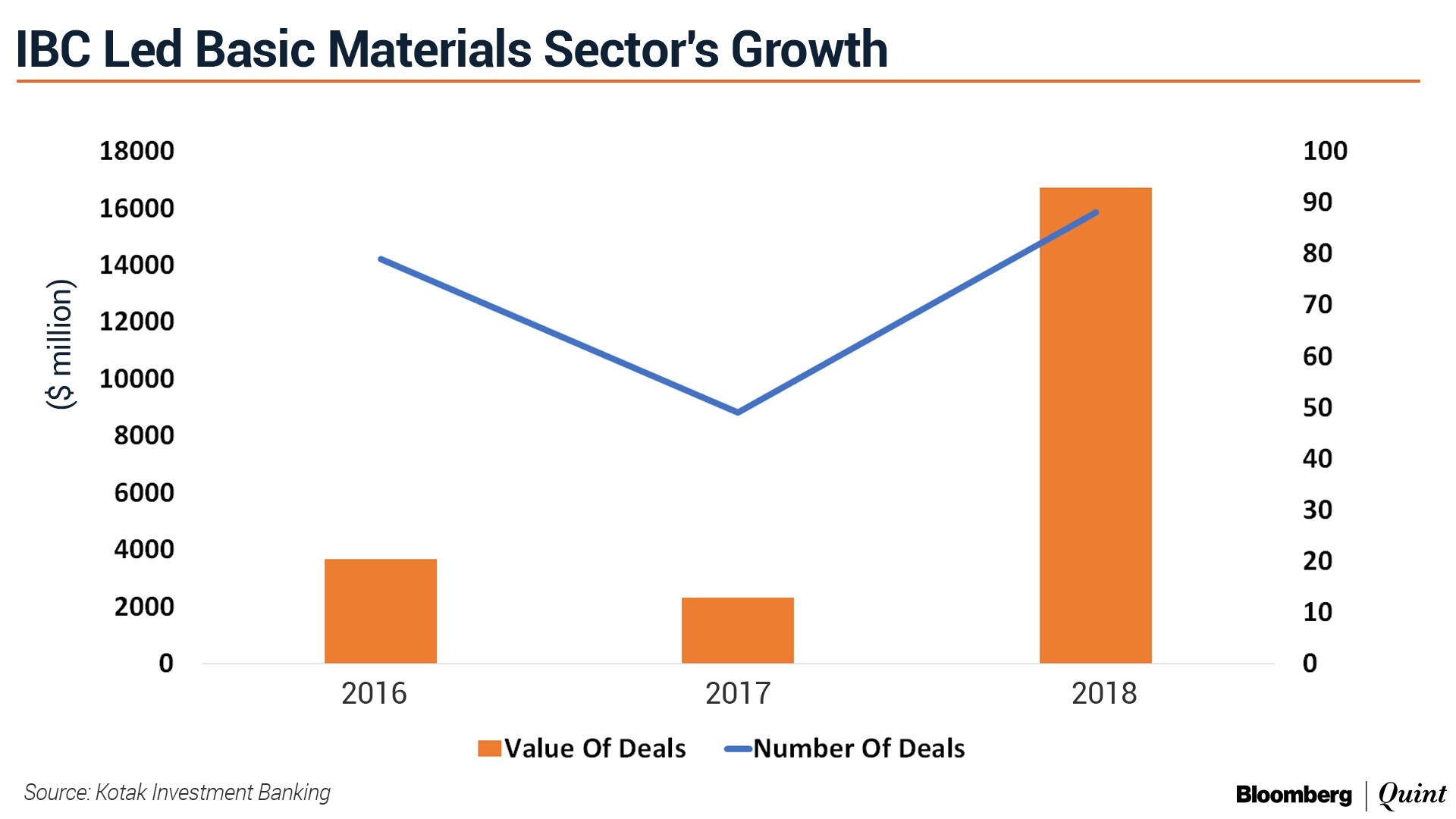
The basic materials sector largely drove home the growth on the back of the Insolvency and Bankruptcy Code. The $6.8 billion dollar acquisition of Bhushan Steel Ltd. by Tata Steel Ltd. was the most important deal that stemmed out of the new law, driving the flow of money into the sector in 2017-18. Other deals include Vedanta Ltd.'s acquisition of Electrosteel Steels Ltd., Reliance Jio Infocomm Ltd.'s decision to buy assets worth $428 million from Reliance Communications Ltd. and IHH Healthcare Ltd.'s planned acquisition of Fortis Healthcare Ltd.
Initial public offerings, in the latter half of 2018, virtually came to a standstill owing to global concerns arising from the U.S.-China trade war, liquidity crisis, and the political uncertainty ahead of state and general elections in India.
2017 witnessed several large IPOs—HDFC Life, ICICI Lombard, SBI Life. In fact, financial institution groups continued to dominate the IPO landscape, accounting for 50 percent of the total IPO volumes in 2018.
The first half of 2018 saw a trend of large IPOs, continuing with the Bandhan Bank's Rs 4,473-crore listing, and HDFC Asset Management Company Ltd.'s market debut, which turned out to be the sixth-best in over two years.
The report remains positive about the recovery of IPO momentum in the latter half of 2019. “IPO recovery and tone will be led by sector leaders/differentiated businesses in the first quarter as investors will be selective in their investment themes,” the report said.
Although the number of deals in the digital sector dipped in 2018 to 83 from 2016's 144, the value of deals surged 1,500 percent to $18,731 million this year from $1,170 million in 2016. The $445 million investment in Paytm by Alibaba and SoftBank, and the $310 million funding received by Swiggy were among the key deals that drove the growth in the digital sector.
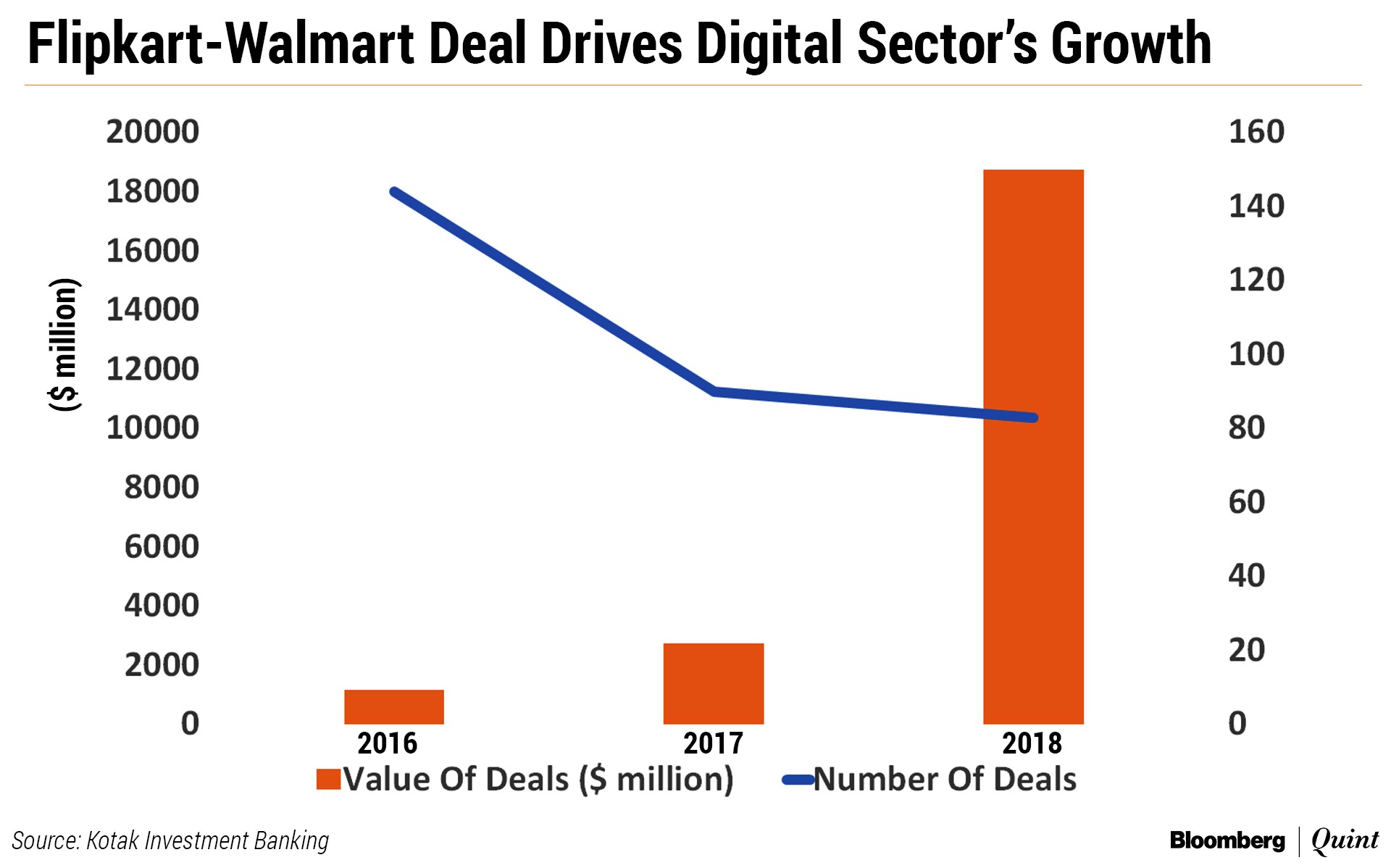
Strategic and secondary sale contributed 85 percent to the exit activity in 2018. Strategic sale included exit of investors like Tiger Global, Naspers and SoftBank from e-commerce company Flipkart.

-
Why Swapping Your Old Gold Can Trigger A Rs 5 Lakh Tax Bill, And How You Can Avoid It Legally

Swapping old gold for new is taxed as a sale and a fresh purchase. Getting your own gold remade can cut most of that bill, though it has its own costs.
-
The AI Trade is Done. The Real Opportunity for Investors Starts in 2027 | Unhedged Position
As pureplay AI stocks plunge and circular, capex-led financing unwinds, 2027 is set to be a year of reckoning for AI companies. Yet the bust clears the way for a better opportunity for investors in 2027 -- shifting the spotlight from AI builders to the companies using AI.
-
Leadership As Mission: Why The Age Of AI Demands More Human Leadership
Debjani Ghosh examines how AI is changing leadership, arguing that its success must be measured by its impact on people and the accountability of those guiding its use.
-
We May Need Another Tukaram Mundhe To Fight Air Pollution | The Reason Why
Developers may install basic measures such as sprinklers and green nets, resume work, and continue violating rules when this equipment stops working.
-
Extracting Value From Battery Scrap Could Be Challenging For India | The Reason Why
A discarded lithium-ion battery still contains valuable materials such as lithium, nickel and cobalt. These can be recovered and reused. When such batteries are crushed and shredded, they produce a dark powder called black mass.
-
One El Nino, India Can Handle. Two Could Break The Granary
India's grain stocks can absorb one bad year, but a second El Nino could drain the buffer in two to three years, economists say.
-
India's Troika Of Good Luck | Joining The Dots
As Jensen Huang's exit drags Nvidia down, a cooling AI trade and resilient earnings have revived investor interest in India. A likely RBI rate hike looms.
-
Talking Points This Week: Leadership Shock At Nvidia, Earnings Strength, And The Fog Over Hormuz
The Anthropic IPO pricing and first trading day, Nvidia's upcoming earnings, and any fresh signals from Iran will set the tone for the following week.
-
Signature Play: The Classic Cocktail Is Dead. Or Is It?
Classic cocktails are disappearing from India's cocktail menus. But they're still being ordered, taught to bartenders and borrowed from. So, who's really having the last drink?
-
A New Samvat Wishlist: Inclusive Prosperity And Human Development
India has strengthened its economic foundations through infrastructure, digital access and enterprise. Its next growth chapter must deepen productivity, create better livelihoods and widen participation in prosperity.









