IMF Welcomes India's COP26 Announcement To Reduce Carbon Intensity
International Monetary Fund (IMF) has welcomed India's announcement at the COP26 summit on new targets to increase reliance on renewables and reduce the carbon intensity of its economy, including to adopt a net zero target by 2070.
Gerry Rice, Director, Communication Department at the IMF, said India's actions may help catalyse action in other emerging economies as well in addressing the climate change challenges.
"We welcome India's announcement at the COP26 of new targets to increase reliance on renewables and reduce the carbon intensity of its economy, including to adopt a net zero target by 2070," Mr Rice told reporters at a news conference on Thursday.
"As you know, India is currently one of the world's largest emitters, still heavily reliant on coal for electricity generation. India's significant investment in renewables and climate change adaptation policies suggest it is well positioned to take further steps to reach this new target," Mr Rice said responding to a question.
"We are heartened by India's focus on achieving progress in the current decade given the urgent need for global mitigation action. And as with other countries, it will be important to follow through with specific actions to contain emissions over the current decade," he added.
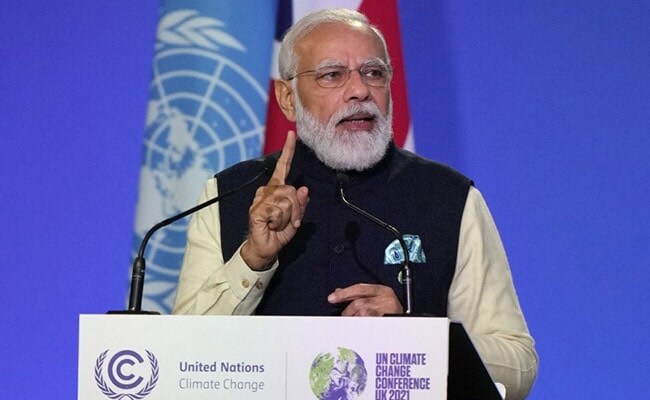
At the COP26 summit in Glasgow, Prime Minister Narendra Modi made significant announcements, including the bold pledge of India becoming net zero by 2070.
Besides the net zero target, Mr Modi also raised India's Nationally Determined Contributions (NDCs) of achieving 450 giga watt non-fossil energy capacity to 500 giga watt by 2030.
"India will increase its non-fossil energy capacity to 500 giga watt by 2030; India will fulfil 50 per cent of its energy requirements from renewable energy sources by 2030. Between now and 2030, India will reduce its total projected carbon emissions by 1 billion tonnes and by 2030," Mr Modi had said at the conference.

-
Why Swapping Your Old Gold Can Trigger A Rs 5 Lakh Tax Bill, And How You Can Avoid It Legally

Swapping old gold for new is taxed as a sale and a fresh purchase. Getting your own gold remade can cut most of that bill, though it has its own costs.
-
The AI Trade is Done. The Real Opportunity for Investors Starts in 2027 | Unhedged Position
As pureplay AI stocks plunge and circular, capex-led financing unwinds, 2027 is set to be a year of reckoning for AI companies. Yet the bust clears the way for a better opportunity for investors in 2027 -- shifting the spotlight from AI builders to the companies using AI.
-
Leadership As Mission: Why The Age Of AI Demands More Human Leadership
Debjani Ghosh examines how AI is changing leadership, arguing that its success must be measured by its impact on people and the accountability of those guiding its use.
-
We May Need Another Tukaram Mundhe To Fight Air Pollution | The Reason Why
Developers may install basic measures such as sprinklers and green nets, resume work, and continue violating rules when this equipment stops working.
-
Extracting Value From Battery Scrap Could Be Challenging For India | The Reason Why
A discarded lithium-ion battery still contains valuable materials such as lithium, nickel and cobalt. These can be recovered and reused. When such batteries are crushed and shredded, they produce a dark powder called black mass.
-
One El Nino, India Can Handle. Two Could Break The Granary
India's grain stocks can absorb one bad year, but a second El Nino could drain the buffer in two to three years, economists say.
-
India's Troika Of Good Luck | Joining The Dots
As Jensen Huang's exit drags Nvidia down, a cooling AI trade and resilient earnings have revived investor interest in India. A likely RBI rate hike looms.
-
Talking Points This Week: Leadership Shock At Nvidia, Earnings Strength, And The Fog Over Hormuz
The Anthropic IPO pricing and first trading day, Nvidia's upcoming earnings, and any fresh signals from Iran will set the tone for the following week.
-
Signature Play: The Classic Cocktail Is Dead. Or Is It?
Classic cocktails are disappearing from India's cocktail menus. But they're still being ordered, taught to bartenders and borrowed from. So, who's really having the last drink?
-
A New Samvat Wishlist: Inclusive Prosperity And Human Development
India has strengthened its economic foundations through infrastructure, digital access and enterprise. Its next growth chapter must deepen productivity, create better livelihoods and widen participation in prosperity.









