IMF Says Monitoring Situation In India; Bats For RBI’s Independence
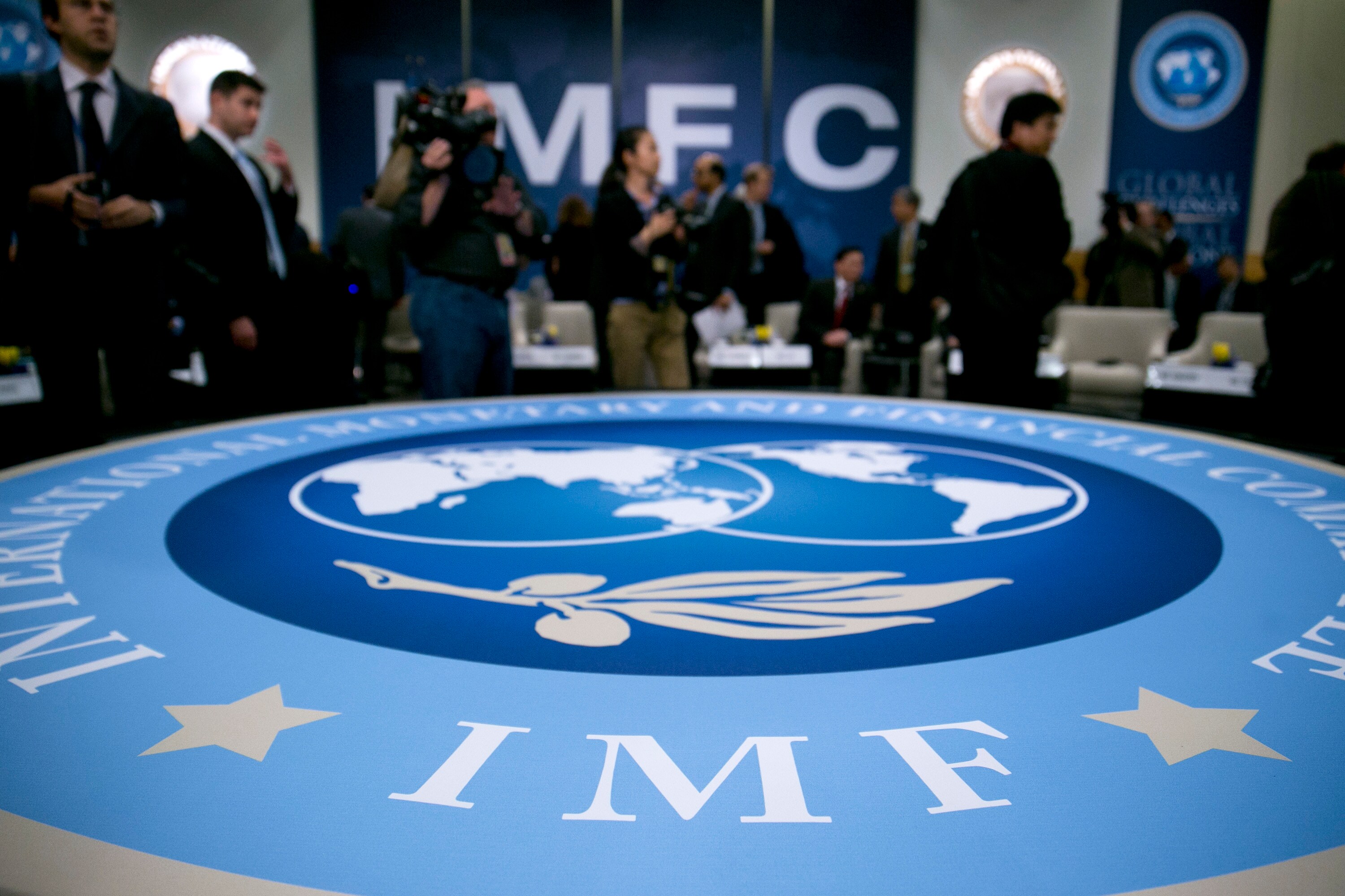
The International Monetary Fund has said it was monitoring the reported rift between the Reserve Bank of India and the central government in India, and expressed its opposition to any move that compromises the independence of central banks anywhere in the world.
There were reports of mounting tension between the Ministry of Finance and the RBI over the autonomy of monetary policy makers after Finance Minister Arun Jaitley on Tuesday criticised the central bank for failing to check indiscriminate lending during 2008 and 2014 that has led to the present bad loan or Non-Performing Asset crisis in the banking industry.
"We're monitoring the development on that issue and will continue to do so," IMF Director of Communications Gerry Rice told reporters on Thursday when asked about the row.
"Just stepping back, as a general principle, and we've said this before. I've said this before standing here that we support clear lines of responsibility and accountability... And, international best practice is that there should be no government or industry interference that compromises the independence of the central bank and financial supervisor," Rice said.
This is true across the range of countries that the independence of the central bank and the financial supervisor is of utmost importance, he asserted.
"We regard it as such and we have to make that statement in the context of a number of countries. So, I think that's probably the best response I can give you," Rice said, responding to a question on the increasing efforts globally to criticise central banks, including the one by the U.S. President Donald Trump in recent weeks.
The row was sparked off last Friday when RBI Deputy Governor Viral Acharya in a hard-hitting speech warned that undermining central bank's independence could be "potentially catastrophic", possible indication of the RBI being pushed to relax its policies ahead of general elections next year.
Sources privy to development said the government had sent at least three letters on different issues under Section 7 of the RBI Act that gives it powers to issue any direction to the central bank governor on matters of public interest.
The standoff was in relation to RBI's handling of weak public sector banks, tight liquidity in the market and ways of resolving bad loans in the power sector. Some reports claimed that RBI Governor Urjit Patel was considering stepping down if the government were to issue an unprecedented direction.

-
The Economic Imperative: Analysing The Material Driving Force Behind India-Canada Strategic Reset

This economic complementarity is further reinforced by deep institutional investment ties and talent mobility, which form the bedrock of the bilateral framework.
-
Medicine Pricing: Where Must Profit Stop?
India must confront excessive margins, hidden incentives and regulatory gaps that threaten the integrity of medicine.
-
Why Amazon And Flipkart Are Struggling To Beat Meesho In India's Smaller Cities
With 274 million users and lowest-cost logistics, Meesho is defending its value commerce crown against giants like Amazon and Flipkart.
-
High US Salaries, No Green Card Certainty: The Financial Calculation Facing Indian H-1B Families
The suspension of PERM processing at eight technology employers does not cancel existing H-1B visas. What it does is force a question many Indian families have been avoiding: is the US salary worth tying your career and family plans to one employer?
-
Swiggy vs Eternal: Food Delivery's Two Rivals Are No Longer In The Same Race
Eternal is building a private AI assistant, dark.ai. Swiggy is still working out how to make Instamart pay, with an operating loss of Rs 895 crore in the July-September quarter while Blinkit stayed profitable.
-
Where You Live Shapes How You Get To Work | The Reason Why
Two-wheelers are the most popular way to get to work in India, accounting for nearly 43% of workplace commutes.
-
Unhedged Position: Can India See An Indonesia-Style Time Correction?
The Nifty is trading below levels it first clocked in 2024. Is there, then, as I have suggested in the headline, potential that the current time correction drags on painfully for the next three-five, even ten years?
-
Navigating Friction And Energy Realities: An Analysis Of Marco Rubio's October Visit To India
Occurring at a critical juncture marked by stalled trade negotiations and escalating geopolitical pressures over global energy supplies, the visit offers a profound window into modern US-India relations.
-
India Exports Capital. Why Not Export Trusteeship?
The big question, then, is whether India can build an institution that global borrowers, investors, banks, and lawyers can trust, even without an Indian connection.
-
France's Economy & Politics Are In Crisis | The Reason Why
Let's look at how the French economy and politics evolved under Nicolas Sarkozy, Franois Hollande and Emmanuel Macron.










