Illegal Brazil Gold Tied To Italian Refiner, Big Tech Customers: Report
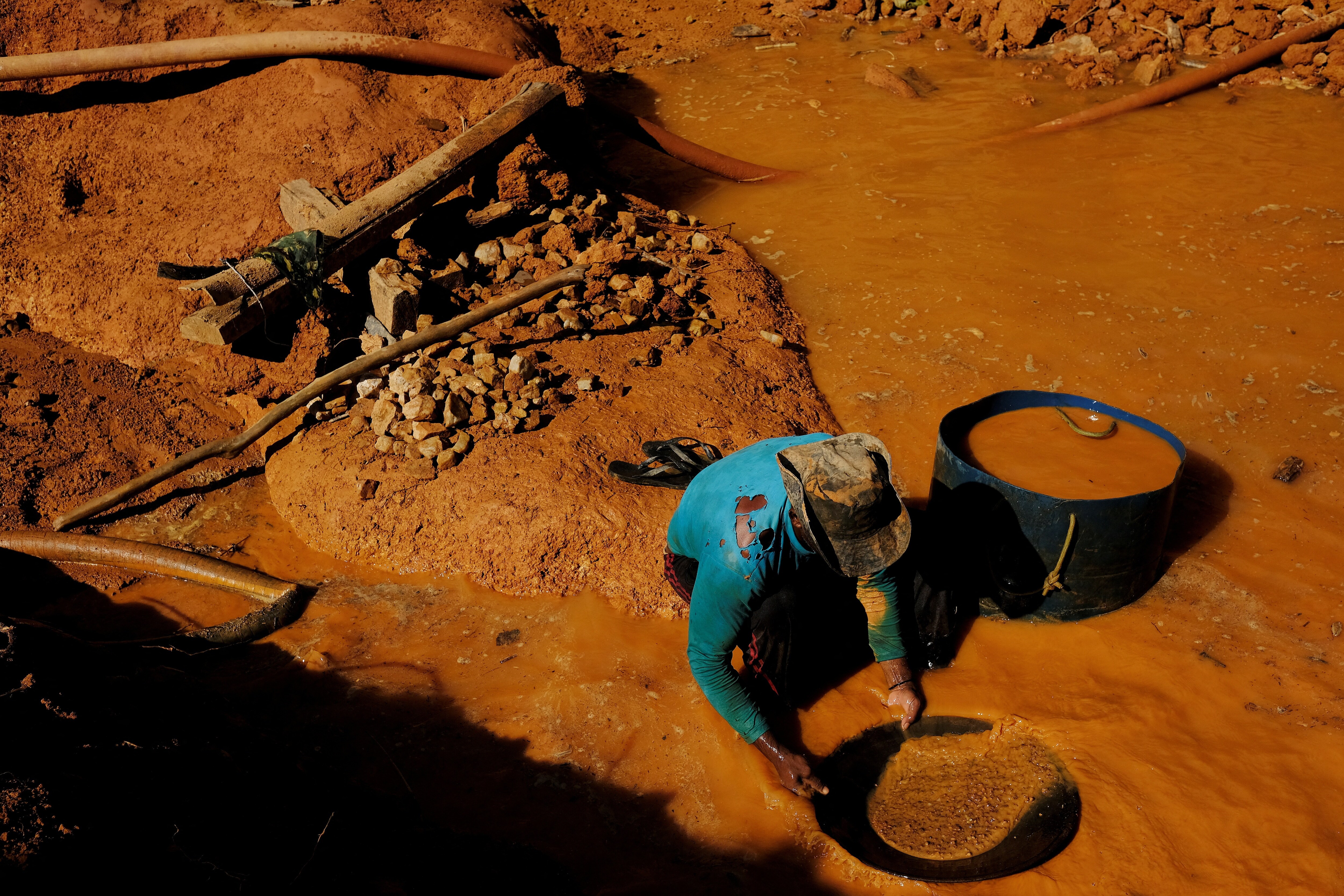
Brazilian police allege an Italian refiner purchased gold from a trader sourcing it illegally in the Amazon rainforest region, according to police documents, and corporate disclosures show that refiner has supplied the precious metal to four of the world's largest tech companies.
Public filings by Amazon.com, Apple, Microsoft and Google-parent Alphabet name the private Italian firm Chimet as a source of some gold used in their products. Tech companies often use small amounts of the metal in circuit boards for consumer electronics.
According to police documents obtained by investigative journalism outfit Reporter Brasil and reviewed by Reuters, Brazilian federal police have accused Chimet of buying millions of dollars in gold from trader CHM do Brasil, which allegedly acquired the precious metal illegally from wildcat miners.
CHM do Brasil, responding to questions via a lawyer, said all its gold was legally acquired with proper documentation.
Illegal mining has surged in Brazil since right-wing President Jair Bolsonaro took office in 2019, advocating for wildcatters and seeking to legalize mining on indigenous land.
Unregulated mines have destroyed rainforest land in the Amazon while polluting rivers with deadly mercury. Miners have clashed violently with indigenous tribes protecting their land, leaving a trail of death, disease and intimidation.
Brazilian sustainability think tank Instituto Escolhas estimated that the country produced 84 tonnes of illegal gold in Bolsonaro's first two years in office, up 23% from the two years before and equivalent to nearly half of Brazil's total gold output.
"A company that is buying gold from Brazil already knows there is a huge risk it is buying irregular gold - Amazon blood gold," said Larissa Rodrigues, an author of the Escolhas report.
A Chimet representative said the company cut off relations with CHM upon learning of the allegations in October 2021, when police conducted raids in nine Brazilian states and the federal district targeting CHM and others allegedly involved in the illegal gold trade.
A police document summarizing the investigation dated August 2021 states that Chimet allegedly bought 2.1 billion reais ($385 million) worth of gold from CHM between 2015 and 2020.
A Federal police spokesperson in Para state declined to comment on the investigation because it is ongoing and remains under seal. Indictments will likely be announced when the probe concludes later this year, he said.
Federal prosecutors would then have to decide whether to press charges, he added.
The four U.S. tech firms listed Chimet among more than 100 gold refiners in their supply chains during the investigation's five-year timeframe and in the most recent 2021 disclosures.
Chimet does not have a direct relationship with the four tech majors but sells gold to banks that can resell it for a variety of uses, company representative Giovanni Prelazzi said in a statement to Reuters. He did not name the banks.
Apple did not specifically address Chimet but said in a statement that its policies prohibit use of illegally mined minerals. Companies that cannot comply are removed from its supply chain, the iPhone maker said.
Amazon, Alphabet and Microsoft declined to comment.
Chimet said that, after learning of the CHM investigation in Brazil, it contracted accounting firm Deloitte to conduct an audit of its other suppliers and in April 2022 it was again certified by bullion market association LBMA as meeting responsible gold sourcing standards.
An LBMA representative told Reuters that Chimet's actions showed similar problems did not exist with other suppliers and that verification methods were being strengthened.
Not Registered
The police documents allege that CHM was not registered with Brazil's central bank as an entity legally authorized to buy and sell gold, known as DTVMs.
CHM does not appear in the central bank's online directory of registered DTVMs. It is illegal for anyone other than miners and their associations to buy and sell gold in Brazil without such a registration.
CHM said it did not buy gold as a financial instrument and that registration is not required to buy gold as a commodity.
The central bank said it did not regulate "operations with gold classified as a commodity."
A 2020 analysis of relevant laws by federal prosecutors found that such registration is required for anyone other than miners to buy and sell gold, regardless of its usage.
Financial records of bank transfers show CHM bought gold from both the cooperative and directly from several individuals in the southern part of Para state, which forms part of the Brazilian Amazon.
The cooperative COOPEROURI has a permit to mine in an area next to the protected Kayapo indigenous reserve, but police found both CHM and the coop bought from independent miners without permits, according to the investigation documents.
COOPEROURI could not be reached for comment.
The police report said the cooperative and individual miners are believed to be extracting ore illegally in the indigenous reserve, although did not state the basis for that allegation.
In the police report, satellite images of the Kayapo reserve - a region larger than Belgium - show vast swathes of muddy mining pools and clandestine airstrips to access them.
(Except for the headline, this story has not been edited by NDTV staff and is published from a syndicated feed.)

-
We May Need Another Tukaram Mundhe To Fight Air Pollution | The Reason Why

Developers may install basic measures such as sprinklers and green nets, resume work, and continue violating rules when this equipment stops working.
-
Extracting Value From Battery Scrap Could Be Challenging For India | The Reason Why
A discarded lithium-ion battery still contains valuable materials such as lithium, nickel and cobalt. These can be recovered and reused. When such batteries are crushed and shredded, they produce a dark powder called black mass.
-
One El Nino, India Can Handle. Two Could Break The Granary
India's grain stocks can absorb one bad year, but a second El Nino could drain the buffer in two to three years, economists say.
-
India's Troika Of Good Luck | Joining The Dots
As Jensen Huang's exit drags Nvidia down, a cooling AI trade and resilient earnings have revived investor interest in India. A likely RBI rate hike looms.
-
Talking Points This Week: Leadership Shock At Nvidia, Earnings Strength, And The Fog Over Hormuz
The Anthropic IPO pricing and first trading day, Nvidia's upcoming earnings, and any fresh signals from Iran will set the tone for the following week.
-
Signature Play: The Classic Cocktail Is Dead. Or Is It?
Classic cocktails are disappearing from India's cocktail menus. But they're still being ordered, taught to bartenders and borrowed from. So, who's really having the last drink?
-
A New Samvat Wishlist: Inclusive Prosperity And Human Development
India has strengthened its economic foundations through infrastructure, digital access and enterprise. Its next growth chapter must deepen productivity, create better livelihoods and widen participation in prosperity.
-
Love, Sex Aur Dhokha: The Audacious Plot To Spy On Jensen Huang
A Taipei dinner, a Singapore chip buyer and a suspected Chinese asset: inside the alleged spy operation that got close to NVIDIA's Jensen Huang.
-
Ten Things I Learnt This Samvat
Patience can be a trap. Cheap stocks can stay cheap. Leverage can wipe you out. What did Samvat 2082 teach us? Niraj Shah writes on 10 lessons from the year gone by.
-
Talking Points This Week: Tech Nerves, FII Buying, And A Faraway Banking Shock
The global markets are not shining this Diwali. The exception in the large markets is, India.









