India’s Lehman Genie Is Out of the Bottle Again
(Bloomberg Opinion) -- First, it was the IL&FS Group that ran out of money. Now that the bankrupt Indian infrastructure lender-operator has been sequestered from creditors, the country's securitization industry is on borrowed time.
It all began on Tuesday with S&P Global's Indian affiliate, Crisil, downgrading Jharkhand Road Projects Implementation Co.'s annuity-backed bonds to D after it skipped interest and principal payments. It's a strategic default on an instrument rated AA just last week. The borrower had money. It reneged on the obligation because the IL&FS parent and 348 group companies have been allowed by the country's bankruptcy tribunal to block creditors while a government-appointed board sorts out the $12.8 billion debt load.
What makes Jharkhand's default disturbing is that investors believed its securitized debt would be unaffected by the parent's bankruptcy. These bonds were legally backed by annuity income from the Indian state of Jharkhand. That assurance was the basic premise on which they invested in the structured debt obligation in the first place.
Now this illusion has been shattered, let's look at the implications.
Page 38 of the debt prospectus from 2017 lists the order in which Jharkhand's project cash flows must be used, with payments for senior debt ranking behind taxes, construction costs, and operations and maintenance-related obligations. So hopefully, the physical assets will continue to be maintained and a set of perfectly serviceable roads won't slip into what the World Bank once termed India's culture of “build, neglect, rebuild.”
However, that's where the good news ends because the damage to India's shadow-banking industry is incalculable. Most gray market lenders don't finance roads and bridges, but advance money raised from deposit-taking banks and money-market mutual funds to small businesses and micro-finance borrowers, as well as against home and vehicle ownership. Their wholesale borrowing costs spiked in the aftermath of IL&FS defaults.
Since their assets are mostly doing just fine, and certainly a lot better than conventional banks' big-ticket advances to India Inc., the shadow financiers started to package small loans for sale to the likes of State Bank of India. The whole point of the exercise was to create pooled assets that would survive the originator's bankruptcy. Jharkhand's default has removed that comfort. Last quarter's record $3.7 billion monthly run rate of Indian securitization deals is suddenly at risk.
When IL&FS started to blow up in September, I warned that this was India's mini-Lehman moment. A fairly swift rescue by the authorities managed to contain a full-blown crisis of confidence. But the Jharkhand default has put the genie of mistrust out of the bottle again. ICRA, the local affiliate of Moody's Investors Service, on Tuesday put the AA and AAA ratings of six Indian bond funds on rating watch because of their exposure to securities debt raised by Jharkhand and other IL&FS-linked special purpose vehicles.
An immediate order to IL&FS's new board to honor securitized debt is the need of the hour. Otherwise, India's funding markets could see a repeat of last autumn's freeze. Back then, the government blamed the central bank for not infusing enough liquidity into the system; now that New Delhi has swapped a difficult technocrat with a former bureaucrat as the Reserve Bank governor, whom will it blame for any fresh tremors?
The collapse of IL&FS has put a question mark on India's model of infrastructure financing. Was involving the private sector to break the constraint of inadequate tax resources a viable alternative? Or did it merely allow IL&FS's erstwhile management to get rich at the expense of everyone else by privatizing profits, and socializing losses? Even now, India needs hundreds of billions of dollars for roads, bridges and power plants. It will be hard to raise that money if ring-fenced investments go from AA one week to D the next.
When IL&FS stopped paying its debt, rating firms were rightly blamed for being asleep at the switch. The Jharkhand default, however, can't be pinned on analytical incompetence. India's bankruptcy tribunal must understand that it's there to prevent contagion, not to manufacture one of its own.
To contact the editor responsible for this story: Matthew Brooker at mbrooker1@bloomberg.net
This column does not necessarily reflect the opinion of the editorial board or Bloomberg LP and its owners.
Andy Mukherjee is a Bloomberg Opinion columnist covering industrial companies and financial services. He previously was a columnist for Reuters Breakingviews. He has also worked for the Straits Times, ET NOW and Bloomberg News.
©2019 Bloomberg L.P.

-
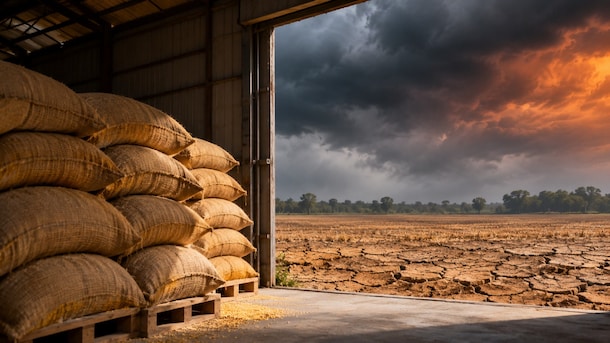
One El Nino, India Can Handle. Two Could Break The Granary

India's grain stocks can absorb one bad year, but a second El Nino could drain the buffer in two to three years, economists say.
-
India's Troika Of Good Luck | Joining The Dots
As Jensen Huang's exit drags Nvidia down, a cooling AI trade and resilient earnings have revived investor interest in India. A likely RBI rate hike looms.
-
Talking Points This Week: Leadership Shock At Nvidia, Earnings Strength, And The Fog Over Hormuz
The Anthropic IPO pricing and first trading day, Nvidia's upcoming earnings, and any fresh signals from Iran will set the tone for the following week.
-
Signature Play: The Classic Cocktail Is Dead. Or Is It?
Classic cocktails are disappearing from India's cocktail menus. But they're still being ordered, taught to bartenders and borrowed from. So, who's really having the last drink?
-
A New Samvat Wishlist: Inclusive Prosperity And Human Development
India has strengthened its economic foundations through infrastructure, digital access and enterprise. Its next growth chapter must deepen productivity, create better livelihoods and widen participation in prosperity.
-
Love, Sex Aur Dhokha: The Audacious Plot To Spy On Jensen Huang
A Taipei dinner, a Singapore chip buyer and a suspected Chinese asset: inside the alleged spy operation that got close to NVIDIA's Jensen Huang.
-
Ten Things I Learnt This Samvat
Patience can be a trap. Cheap stocks can stay cheap. Leverage can wipe you out. What did Samvat 2082 teach us? Niraj Shah writes on 10 lessons from the year gone by.
-
Talking Points This Week: Tech Nerves, FII Buying, And A Faraway Banking Shock
The global markets are not shining this Diwali. The exception in the large markets is, India.
-
Midterm Rally Lasted A Day. The Hard Reality Of A Divided US May Last Two Years | Opinion
Between a contested AI boom, a debt ceiling that arrives in 2027 and a president with every incentive to act alone, the next two years may prove more volatile than the first day's rally suggests.
-
Blue Wave Will Derail the AI Trade but Won't Dismantle the AI Era | Unhedged Position
The Democrats' sweep of the US Congress will see politics collide with economic forces both over the long and short term.