IIT-Kanpur Alumnus Arvind Krishna To Be The CEO of IBM: 10 Things To Know
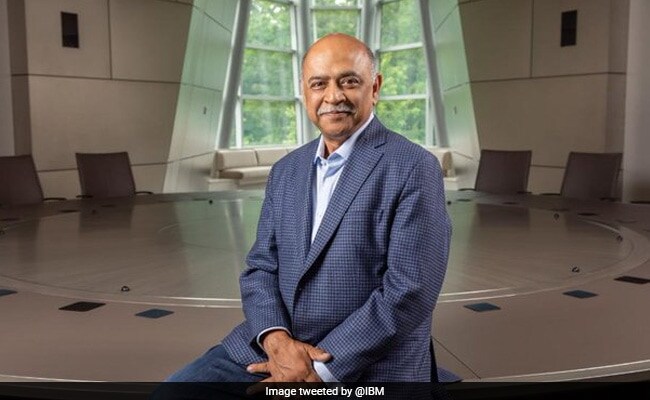
- Arvind Krishna joined IBM in 1990 and has an undergraduate degree from the Indian Institute of Technology, Kanpur, and a PhD in electrical engineering from the University of Illinois at Urbana-Champaign.
- Mr Krishna is currently IBM Senior Vice President, spearheading IBM Cloud, IBM Security and Cognitive Applications business, and IBM Research. Previously, he was general manager of IBM's Systems and Technology Group's development and manufacturing organisation.
- "I am thrilled and humbled to be elected as the next Chief Executive Officer of IBM, and appreciate the confidence that Ginni and the Board have placed in me," Mr Krishna said in a press statement released by IBM.
- Ms Rometty will step aside on April 6 but will continue as the executive chairman till the end of the year, when she will retire after almost 40 years with the company, IBM said in a statement Thursday.
- Since taking over at IBM in 2012, Ms Rometty, 62, had emphasized cloud computing and artificial intelligence through the Watson program. IBM credited Ms Rometty with reinventing more than 50 percent of IBM's portfolio following acquisitions of 65 companies and extensive in-house research and development efforts.
- Virginia Rometty said that Mr Krishna is a "brilliant technologist who has played a significant role in developing our key technologies such as artificial intelligence, cloud, quantum computing and blockchain."
- IBM will likely continue its trajectory under Mr Krishna, but may pursue more small acquisitions in the cloud and analytics space, said Tim Hubbard, assistant professor at the University of Notre Dame and a former IBM consultant.
- The company was a late entrant to the business of cloud services, a segment now dominated by Amazon.com Inc and Microsoft Corporation.
- Arvind Krishna's appointment as head of the global IT giant adds to the growing list of Indian-origin executives at the helm of some of the biggest multinational companies.
- Microsoft CEO Satya Nadella, Google and Alphabet CEO Sundar Pichai, MasterCard CEO Ajay Banga, PepsiCo's former CEO Indra Nooyi and Adobe CEO Shantanu Narayen have an Indian origin.

-
Why Prashant Jain's 3P Investment Managers Bought 2.5% Stake In This Healthcare Firm

After slowing acquisitions, Entero now has the opportunity to extract greater value from the network. The key, however, will be execution.
-
Taxing A Promise: The Unsettled Story Of GST On Corporate Guarantees
These concerns are particularly relevant for businesses in the infrastructure, real estate, power and EPC sectors, where guarantees run for several years over the duration of the project and involve substantial amounts.
-
Who Will Care When Women Work? That Is The Wrong Question
The debate on women and work becomes strangely patronising when even our most enlightened elites assume that care is a woman's natural duty.
-
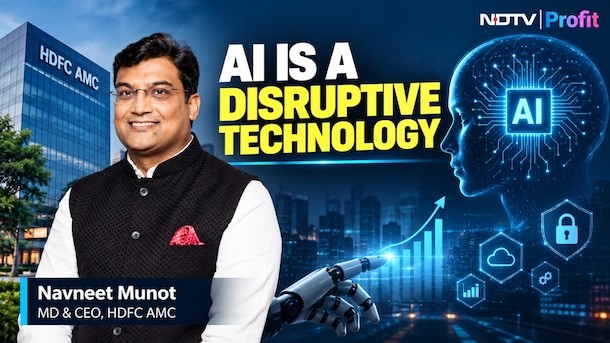
AI Disruption Is Exponential, Businesses Need A Margin Of Safety: HDFC AMC's Navneet Munot
According to Munot, one of the biggest challenges in assessing AI's impact is that the pace of change is exponential rather than linear.
-
The AI Race Is Bigger Than AI Models | The Week In Whys
The AI race and the humanoid race may look like two different technology stories. But underneath, they are increasingly about the same thing: who controls the ecosystem needed to build the technology.
-
FCNR Deposits Beat Estimates, RBI To Pull Out Rs 6-7 Lakh Crore: Pranjul Bhandari
HSBC's chief India economist says the central bank must drain up to Rs 7 lakh crore of surplus liquidity within a fortnight, either through a cash reserve ratio hike or dollar sales, as Foreign Currency Non-Resident (Bank) deposits far outpace expectations
-
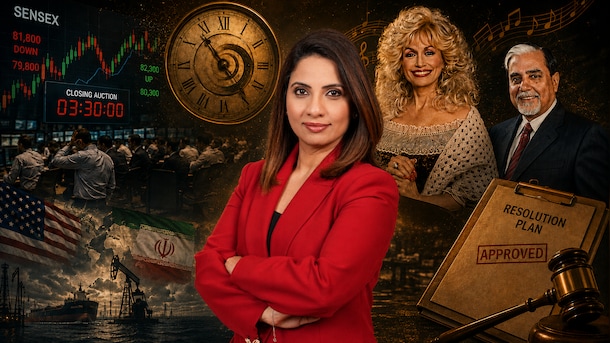
Joining The Dots | CAS Turmoil, The Large-Cap Debate And Zee's Almost Rs 22,000-Crore Haircut
Time bends on Dalal Street, Dylan's lyrics haunt the large-cap debate, and Zee's promoter picks up the bargain of the year.
-
India Wants To Be Vietnam; Vietnam Wants To Be China | The Reason Why
India may become a global hub for smartphones. It could also make more camera modules, batteries and semiconductor packaging over the years.
-
India's Open Path To Digital Sovereignty
India's flagship digital infrastructure —the identity, payments and data-sharing layers that make up what is often called India Stack —was designed as an open platform.