‘Idiotic’ Idea That Saved the Rupee: Rajan Says He Was Wrong on Foreign Deposit Swap Window
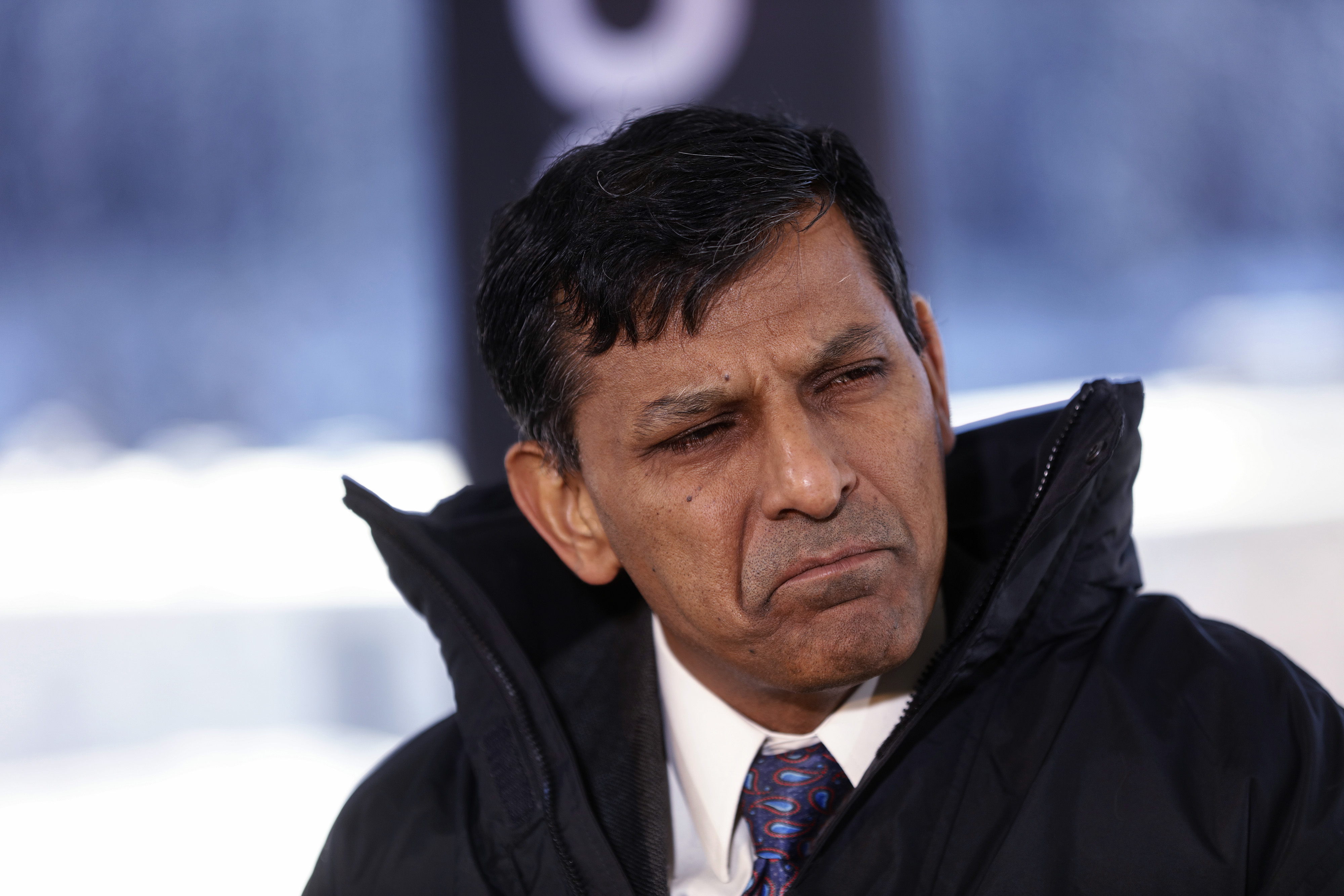
Ever heard a story where the protagonist just happened to be at the right place, at the right time, and so got lauded as the hero who saved the day? Well, it seems this happened not too far from home, at the Reserve Bank of India, and Governor Raghuram Rajan was that hero.
In an address at the RBI's central office in Mumbai on Friday, Rajan said he wrongly got credit for opening a swap window for banks to attract foreign currency deposits in 2013--a move that helped stabilise a wildly swinging Indian rupee.
Rajan was speaking at an event to launch a book authored by former RBI Governor Duvvuri Subbarao.
I get the credit for that idea, which actually, neither did I invent it, nor actually believe in...Raghuram Rajan, Governor, Reserve Bank of India
The swap scheme was considered to be a masterstroke by Rajan who announced the step to boost the rupee on September 4, 2013, his first day in office.
The scheme, called the FCNR (B) scheme, subsidised the premia on currency forwards for banks by 3.5 percentage points and encouraged them to raise foreign currency deposits.
Here's how it worked: A window was opened for banks to invite non-resident Indians to deposit their foreign currency for an interest payment of 3.5 percent. The banks sold the foreign currency that came in through these deposits to the RBI and used the proceeds to lend more.
But of course, the deposits needed to be repaid at the end of the term in foreign currency. And here's the carrot. The RBI offered banks a foreign exchange forward at half the premium required--that's 3.5 percent--so as to incentivise them.
The swap window brought in close to $30 billion and went a long way towards solving India's current account deficit problem in 2013.
But little did Rajan pre-empt its success. “..amongst the sort of things we proposed to do, however, there was one that I found completely idiotic....It wasn't at all clear when we thought about this, that it would succeed. And it was, in my view, the worst of the ideas that we had on the table,” Rajan said, recounting his time as officer on special duty at the RBI, while Subbarao was still governor.
The first time the scheme was proposed, Rajan was deputed at the finance ministry as chief economic advisor. Unimpressed with the idea mooted by bankers at the time, Rajan “sent them off with a flea in their ear, saying it doesn't make sense”.
As officer on special duty at the central bank in August of 2013, Rajan came across the idea for the scheme again. But even then, he balked at the bill that would need to be footed by the government .
“10 billion dollars at 3.5 percent! Think of the subsidy outgo that we would be paying in order to get that,” Rajan said to an an amused gathering of the country's top bankers and economists. “...if you think about it, the cost if we had to pay out would be in the order of Rs 10,000-20,000 crore. Big money!”
However, Rajan was surprised that the deputy governors at the time, including HR Khan, were seriously considering the idea. The then governor, Subbarao also felt the scheme should be pursued. And above all, the finance ministry, Rajan says, was “gung-ho”.
All this forced him to reconsider his reticence, and he found that there was some merit to the idea. At the very least, it was a risk worth taking.
It was reasoned then, that perhaps an inflow of foreign funds would lead to a stronger currency. This in turn would make the outgo at the time of redemption cheaper. Also, it would make India's sizeable imports cheaper.
“...think of having a stronger currency, relative to an undervalued rate of about Rs 3-4, multiply that by about $400 billion in imports. That would mean Rs 1.6 trillion in savings if we only stabilised the currency,” Rajan said, explaining his thinking and that of his colleagues at the central bank at the time.
“And so on the morning that I was going to take over, I went to Dr Subbarao and said, ‘Would you like to announce it?'
“He was gracious enough at that point to say, ‘No, you go ahead.' And now, I get the credit for that idea, which actually, neither did I invent it, nor actually believe in… but ultimately I decided we had to do it,” Rajan said.
“And ultimately it made money! Ultimately we have made money on that swap deal, but now of course, it seems as if it was all very clear,” Rajan said.
Rajan's three-year term at the RBI's top office is set to end in the first week of September. He is credited with several landmark decisions that were taken by the central bank since he took charge. It seems, by his own admission, that at least one of them wasn't his idea at all.

-
Getting To Work Costs Women More | The Reason Why

It is not just about women paying more than men. It is about women paying much more in cities than in villages.
-
AI Bias In Investing Cannot Be Eliminated, But It Can Be Governed
Framing is a particularly important example as identical financial information presented in terms of gains rather than losses can lead an LLM to reach a different assessment.
-
Joining The Dots | Dark Skies, Steady Diya: Why Hope Holds This Diwali
With war, a weak rupee and foreign outflows weighing on sentiment, policymakers at the NDTV World Summit and market veterans at NDTV Profit Ignite: Diwali Edition offered the same advice: stay invested and filter out the noise.
-
The Curious Case of Equitas Small Finance Bank And A CEO Who Quit For Stock
PN Vasudevan believes persistent investor concerns over a perceived conflict of interest had become a governance overhang on Equitas Small Finance Bank's stock, even as the lender improved profitability and asset quality.
-
Talking Points This Week: AI Cash Burn, A Tiger Comeback And An India That Still Finds Its Own Path
India is not immune to higher oil or tighter global liquidity, yet its earnings base is broader, its domestic policy levers are still available.
-
Foreign Investors Own Half Of HDFC Bank and ICICI Bank. An LTCG Cut Could Matter Most Here
Foreign portfolio investors have US$115 billion parked in HDFC Bank, ICICI Bank. If the government cuts long-term capital gains tax, Jefferies says returning foreign money could land here first.
-
'Never Seen This Level Of Negativity': Sandeep Tandon Says The Next Rally May Be Closer Than You Think
Veteran investor Sandeep Tandon says foreign selling is easing, large-caps are due a comeback and mid-caps are crowded, while he turns positive on gold, power and pharma this Diwali.
-
Indians Stay With Family, Not In Hotels | The Reason Why
India still lacks enough clean, reliable and affordable hotels for budget-conscious travellers.
-
The Economic Imperative: Analysing The Material Driving Force Behind India-Canada Strategic Reset
This economic complementarity is further reinforced by deep institutional investment ties and talent mobility, which form the bedrock of the bilateral framework.
-
Medicine Pricing: Where Must Profit Stop?
India must confront excessive margins, hidden incentives and regulatory gaps that threaten the integrity of medicine.










