IDBI Bank Looks To Separate Its Retail, Corporate Lending Verticals
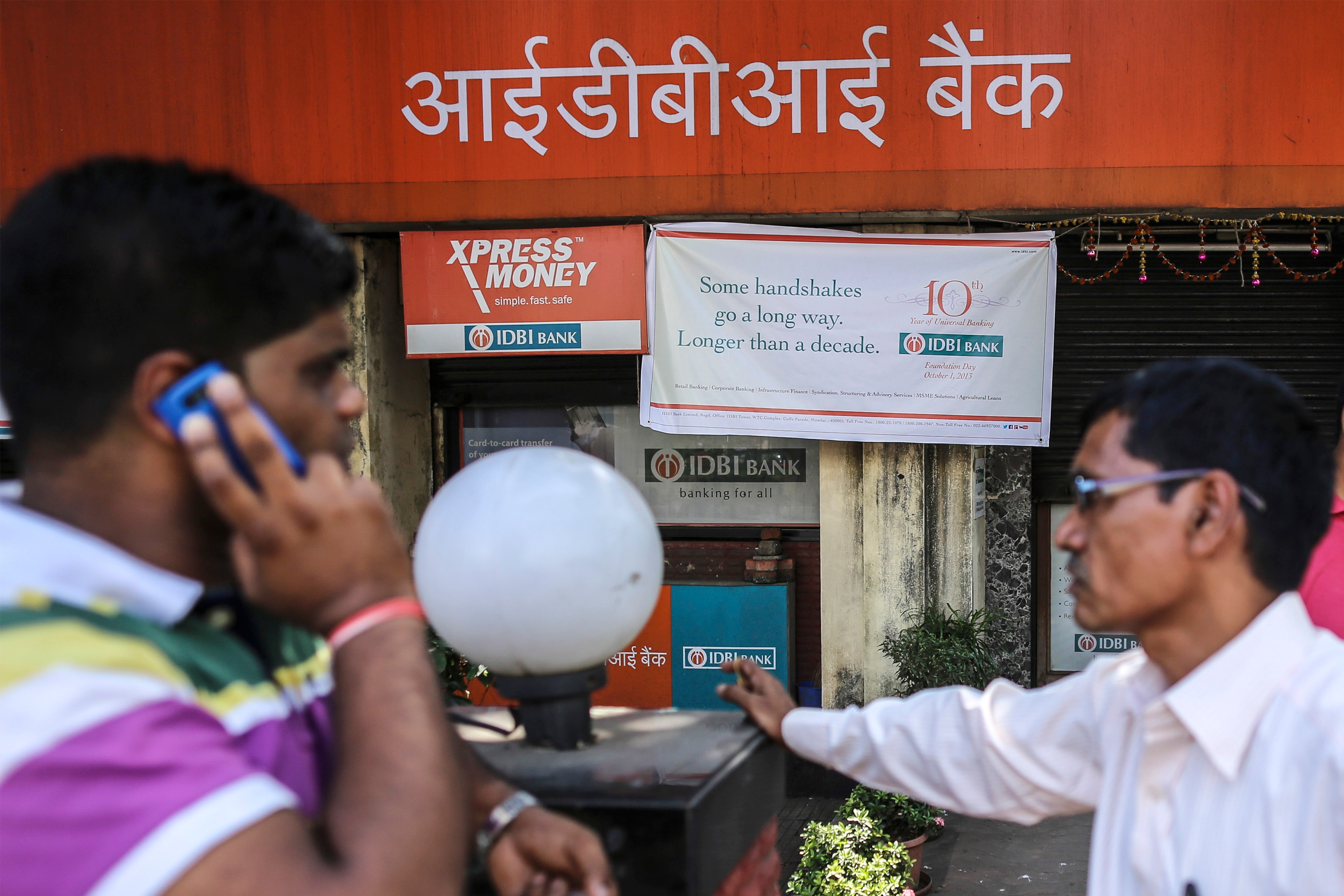
IDBI Bank has submitted a revival plan to the government seeking to separate its corporate and retail banking operations, three people aware of the development told BloombergQuint on the condition of anonymity. The plan was submitted two months ago, said one of the people quoted above while adding that the government is open to the idea.
Separating IDBI's operations and demerging the retail business into a “good bank” may allow the government to bring in a private investor at attractive valuations, said the second person quoted above.
IDBI Bank declined to comment on the plan. Emailed queries to a finance ministry spokesperson did not elicit a response.
The plan comes against the backdrop of surging bad loans on the books of IDBI Bank. As of the quarter ended March 2018, 28 percent of IDBI Bank's loan book had turned bad. Most of the bad loans are corporate loans. The lender reported a net loss of Rs 5,663 crore for the January-March quarter.
The government has been keen to sell stake in IDBI Bank for some time now. At the time of the Union Budget 2016-17, the government had said it would consider the option of bringing its stake down to below 50 percent in IDBI Bank. However, the plan has failed to take off because of the poor quality of the bank's loan book.
Currently, government owns 85.96 percent in the lender, according to data on exchange's website.
The third person quoted above said that one way to address concerns of potential investors would be to segregate the retail and corporate assets. The government could then go ahead and sell stake in the retail bank. A separate entity, which holds the corporate loans, could focus on resolving the stressed assets.
IDBI is the only lender where the government can reduce stake without a change in legislation. The bank, which started as a development finance institution, functions under the IDBI Act. This allows the government to reduce its stake in the lender to below 51 percent. In the case of nationalised banks, a minimum 51 percent government shareholding is mandatory as per the Bank Nationalisation Act.
The government is keen to send a message via IDBI Bank that it is committed to banking sector reforms, the third person quoted above said.
How Strong Is IDBI Bank's Retail Franchise?
IDBI Bank had gross advances of Rs 1.98 lakh crore as of March 2018. Of this, retail advances stood at 45 percent or Rs 88,599 crore, shows an analyst presentation on the bank's website. The share of retail advances has risen from 40 percent in March 2017 and could rise further as the bank shifts focus away from corporate lending.
At a press conference last week, MK Jain, chief executive officer of IDBI Bank said that the lender intends to halt corporate lending and focus on its retail book. The bank will also continue to rationalise costs by cutting down on some unviable branches, Jain said. IDBI Bank hopes to become a digital bank in the future, Jain added.
Apart from its retail loan book, IDBI Bank has a steady deposit franchise. It's low-cost CASA (current account and savings account) deposits stood at just over Rs 92,000 crore or 37 percent of the total deposit base. Term deposits stood at Rs 1.55 lakh crore.
The bank also has over 1,900 branches and 3,200 ATMs.
Any plan to separate the retail and corporate operations of the bank would be subject to approvals from the Reserve Bank of India. IDBI is currently under the RBI's prompt corrective action framework due to its high level of bad loans.
The RBI, however, may not be in favour of the plan, the third person quoted above said as it is not clear which entity would be responsible for resolving the stressed assets.

-
We May Need Another Tukaram Mundhe To Fight Air Pollution | The Reason Why

Developers may install basic measures such as sprinklers and green nets, resume work, and continue violating rules when this equipment stops working.
-
Extracting Value From Battery Scrap Could Be Challenging For India | The Reason Why
A discarded lithium-ion battery still contains valuable materials such as lithium, nickel and cobalt. These can be recovered and reused. When such batteries are crushed and shredded, they produce a dark powder called black mass.
-
One El Nino, India Can Handle. Two Could Break The Granary
India's grain stocks can absorb one bad year, but a second El Nino could drain the buffer in two to three years, economists say.
-
India's Troika Of Good Luck | Joining The Dots
As Jensen Huang's exit drags Nvidia down, a cooling AI trade and resilient earnings have revived investor interest in India. A likely RBI rate hike looms.
-
Talking Points This Week: Leadership Shock At Nvidia, Earnings Strength, And The Fog Over Hormuz
The Anthropic IPO pricing and first trading day, Nvidia's upcoming earnings, and any fresh signals from Iran will set the tone for the following week.
-
Signature Play: The Classic Cocktail Is Dead. Or Is It?
Classic cocktails are disappearing from India's cocktail menus. But they're still being ordered, taught to bartenders and borrowed from. So, who's really having the last drink?
-
A New Samvat Wishlist: Inclusive Prosperity And Human Development
India has strengthened its economic foundations through infrastructure, digital access and enterprise. Its next growth chapter must deepen productivity, create better livelihoods and widen participation in prosperity.
-
Love, Sex Aur Dhokha: The Audacious Plot To Spy On Jensen Huang
A Taipei dinner, a Singapore chip buyer and a suspected Chinese asset: inside the alleged spy operation that got close to NVIDIA's Jensen Huang.
-
Ten Things I Learnt This Samvat
Patience can be a trap. Cheap stocks can stay cheap. Leverage can wipe you out. What did Samvat 2082 teach us? Niraj Shah writes on 10 lessons from the year gone by.
-
Talking Points This Week: Tech Nerves, FII Buying, And A Faraway Banking Shock
The global markets are not shining this Diwali. The exception in the large markets is, India.









