ICICI Bank CEO Chanda Kochhar Explains Q1 Results
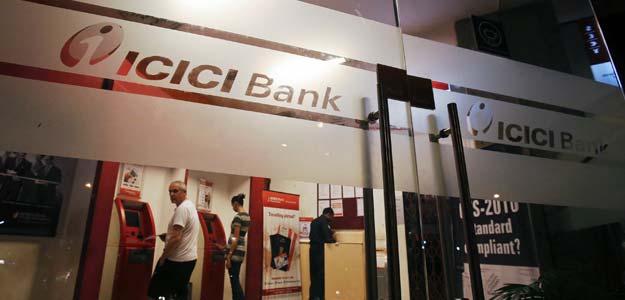
ICICI Bank, India's second largest lender by assets reported a better-than-estimated 17 per cent year-on-year (y-o-y) jump in its net profit for the June quarter to Rs 2,655 crore and its net interest income grew 18 per cent y-o-y to Rs 4,492 crore in the same quarter.
Chanda Kochhar, CEO and MD of ICICI Bank explaining the bank's performance in the June quarter said the following things: (Watch)
On Loan and Deposit Growth
The growth in profit is backed by sustained growth in business as well as our strong performing parameters.
Our retail portfolio during the quarter grew by 26 per cent. As we have mentioned in past we have been calibrating our growth on the corporate side so our domestic corporate portfolio grew by about 8 per cent, our international portfolio grew by about 8 per cent in dollar terms and 10 per cent in rupee terms. All this has led to about 17 per cent growth in our domestic advances and 15 per cent growth in our overall advances.
This loan growth was supported by a healthy growth in the deposit base. Our CASA (Current Account Savings Account) deposits also grew 15 per cent on y-o-y basis. During the quarter we added Rs 3,603 crore to our savings account deposits and our CASA ratio was 43 per cent as on June 30.
Reflecting the strong funding franchise as well as the growth in our business, out net interest income grew by 18 per cent on a y-o-y basis.
On Profitability
Our net interest margin was very healthy at 3.4 per cent during the quarter compared to 3.27 in the same quarter last year.
On Other Income
Our non-interest income also grew by 15 per cent in this quarter. Fee income grew 8 per cent on a y-o-y basis. We had treasury gains of Rs 388 crores, about Rs 416 crore of dividends from our subsidiaries and Rs 103 crore of exchange rate gains on repatriation of retained earnings from our overseas branches.
On Cost Efficiency
We continued to maintain our focus on operating efficiencies, our cost to income ratio which has always been very strong improved even further to 38.4 per cent in this quarter.
These trends in our operating metrics translated to a18 per cent y-o-y growth in our operating profit for this quarter and the operating profit was Rs 4,517 crore in this quarter.
On Provisions and Asset Quality
The additions to both gross NPAs and to restructure loans were lower in this quarter on a sequential basis. During the first quarter of FY15 the bank added Rs 1,195 crore to gross NPAs compared to Rs 1,241 crores in the fourth quarter of last year. Similarly additions to restructured loans were Rs 1,394 crores in this quarter compared to Rs 2,156 crores in the fourth quarter of last year. Our net NPA ratio was 0.87 per cent as on June 30.
During the first quarter the bank made provisions of Rs 726 crores but this also includes the provisions on account of exposure to clients having un-hedged foreign currency exposures.
On Subsidiary Performance
For the life insurance subsidiary, the retail rated premium growth for us was 36 per cent compared to about 8-9 per cent for the industry as a whole. We have seen a robust growth in the business as well as the market share in the life insurance segment. This life insurance subsidiary made a profit of Rs 382 crore in the first quarter of FY15.
The general insurance subsidiary company made a profit of Rs 72 crores in the first quarter of FY2015.
Our asset management subsidiary achieved a 65 per cent y-o-y growth in profit to Rs 61 crores and securities and broking firm again saw huge increase in profit to Rs 61 crores in this quarter compared to Rs 13 crores in the same quarter last year.
On Return on Equity
The consolidated profit after tax for the ICICI group was Rs 2,832 crores for the first quarter of FY15 which represents a return on equity of 14.6 per cent.
On Branch Network
The bank continued to focus on our customer service franchise and on expanding our distribution network. We have a branch network of 3,763 branches as on June 30, which is the largest branch network among the private sector banks and ATMs of 11, 447.
On Capital Adequacy Ratio
The bank's capital adequacy ratio as per the RBI guidelines on Basel III continued to remain very strong. Including the profits for the first quarter of FY15 the capital adequacy ratio for the bank on Basel III norms is 17.39 per cent and the tire 1 ratio is 12.62 per cent.

-
Signature Play: The Classic Cocktail Is Dead. Or Is It?

Classic cocktails are disappearing from India's cocktail menus. But they're still being ordered, taught to bartenders and borrowed from. So, who's really having the last drink?
-
A New Samvat Wishlist: Inclusive Prosperity And Human Development
India has strengthened its economic foundations through infrastructure, digital access and enterprise. Its next growth chapter must deepen productivity, create better livelihoods and widen participation in prosperity.
-
Love, Sex Aur Dhokha: The Audacious Plot To Spy On Jensen Huang
A Taipei dinner, a Singapore chip buyer and a suspected Chinese asset: inside the alleged spy operation that got close to NVIDIA's Jensen Huang.
-
Ten Things I Learnt This Samvat
Patience can be a trap. Cheap stocks can stay cheap. Leverage can wipe you out. What did Samvat 2082 teach us? Niraj Shah writes on 10 lessons from the year gone by.
-
Talking Points This Week: Tech Nerves, FII Buying, And A Faraway Banking Shock
The global markets are not shining this Diwali. The exception in the large markets is, India.
-
Midterm Rally Lasted A Day. The Hard Reality Of A Divided US May Last Two Years | Opinion
Between a contested AI boom, a debt ceiling that arrives in 2027 and a president with every incentive to act alone, the next two years may prove more volatile than the first day's rally suggests.
-
Blue Wave Will Derail the AI Trade but Won't Dismantle the AI Era | Unhedged Position
The Democrats' sweep of the US Congress will see politics collide with economic forces both over the long and short term.
-
It's Time To Take The GST Council's Bet On Trust Global
Payment records can prove India's services exports, and clear, proportionate rules can bring foreign digital sellers into the tax net.
-
Opinion | India at 38: From Innovation Overperformer to Innovation Powerhouse
India now has 453 VC-backed deep science startups, 18 of them late-stage, after 117 percent growth since 2020. Laurus Labs, at USD 9.3 billion, is the most valuable deep science company in any middle-income economy outside China.









