"I Am Very Happy Where I Am": Raghuram Rajan Won't Apply For Bank Of England Top Job
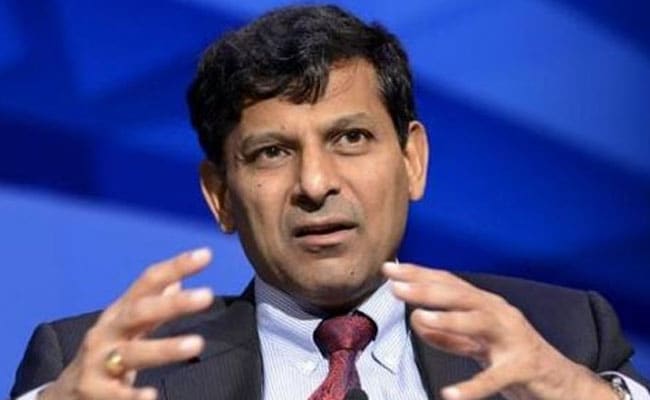
London: Former Reserve Bank of India chief Raghuram Rajan said on Wednesday he did not intend to apply for the job of Bank of England governor which is due to come vacant next year. Rajan has been mentioned by analysts as a possible future BoE governor after Mark Carney - who previously headed Canada's central bank - steps down at the end of June 2019.
Also Read: Notes Ban Wasn't A Good Idea, Not Well-Planned, Says Raghuram Rajan
"I have a very good job at the University of Chicago and I actually am an academic, not a professional central banker. I am very happy where I am," Rajan told reporters after an event in London hosted by the U.S. university's Booth School of Business, where he is a finance professor.
"I think I've said all I can say. I'm not going to apply for a job anywhere, absolutely."
Asked what he would do if he were approached to fill the role, Rajan - who was the RBI's governor until September 2016 - said he had answered a similar question.
British finance minister Philip Hammond is expected to name Carney's successor later this year, and said in Washington last month that he would consider candidates from abroad.
Andrew Bailey, a former BoE deputy governor who now heads Britain's Financial Conduct Authority, is seen as the front-runner by many economists in the City of London.
Aside from current senior BoE staff, other names mentioned include Agustin Carstens, the Mexican who is general manager of the Bank for International Settlements, Minouche Shafik, a former BoE deputy governor who heads the London School of Economics and Shriti Vadera, who chairs Santander UK.
Rajan is a former chief economist at the International Monetary Fund, and warned of financial imbalances in the run-up to the 2007-08 global crisis.
On Wednesday, he said that banks were now much safer but risk had shifted to other parts of the financial system.
Debt troubles in Argentina were likely to be repeated elsewhere and he highlighted the increased volume of 'covenant-lite' loans compared with before the crisis.
The U.S. Federal Reserve and the European Central Bank had probably done too much in the way of asset purchases once the worst of the crisis had passed, Rajan added, and had let governments off the hook in terms of undertaking structural reform and providing fiscal stimulus.
In the ECB's case, asset purchases appeared to have weakened the euro but not boosted real economic activity.
He declined to comment on whether the BoE's 435 billion pound ($587 billion) asset purchases were too much, or if Britain's fiscal austerity since 2010 had been excessive, as he had not studied the British economy in as much depth.
(Except for the headline, this story has not been edited by NDTV staff and is published from a syndicated feed.)

-
We May Need Another Tukaram Mundhe To Fight Air Pollution | The Reason Why

Developers may install basic measures such as sprinklers and green nets, resume work, and continue violating rules when this equipment stops working.
-
Extracting Value From Battery Scrap Could Be Challenging For India | The Reason Why
A discarded lithium-ion battery still contains valuable materials such as lithium, nickel and cobalt. These can be recovered and reused. When such batteries are crushed and shredded, they produce a dark powder called black mass.
-
One El Nino, India Can Handle. Two Could Break The Granary
India's grain stocks can absorb one bad year, but a second El Nino could drain the buffer in two to three years, economists say.
-
India's Troika Of Good Luck | Joining The Dots
As Jensen Huang's exit drags Nvidia down, a cooling AI trade and resilient earnings have revived investor interest in India. A likely RBI rate hike looms.
-
Talking Points This Week: Leadership Shock At Nvidia, Earnings Strength, And The Fog Over Hormuz
The Anthropic IPO pricing and first trading day, Nvidia's upcoming earnings, and any fresh signals from Iran will set the tone for the following week.
-
Signature Play: The Classic Cocktail Is Dead. Or Is It?
Classic cocktails are disappearing from India's cocktail menus. But they're still being ordered, taught to bartenders and borrowed from. So, who's really having the last drink?
-
A New Samvat Wishlist: Inclusive Prosperity And Human Development
India has strengthened its economic foundations through infrastructure, digital access and enterprise. Its next growth chapter must deepen productivity, create better livelihoods and widen participation in prosperity.
-
Love, Sex Aur Dhokha: The Audacious Plot To Spy On Jensen Huang
A Taipei dinner, a Singapore chip buyer and a suspected Chinese asset: inside the alleged spy operation that got close to NVIDIA's Jensen Huang.
-
Ten Things I Learnt This Samvat
Patience can be a trap. Cheap stocks can stay cheap. Leverage can wipe you out. What did Samvat 2082 teach us? Niraj Shah writes on 10 lessons from the year gone by.
-
Talking Points This Week: Tech Nerves, FII Buying, And A Faraway Banking Shock
The global markets are not shining this Diwali. The exception in the large markets is, India.









