Hurricane Harvey Hits Insurance Stocks As Loss Estimates Surge
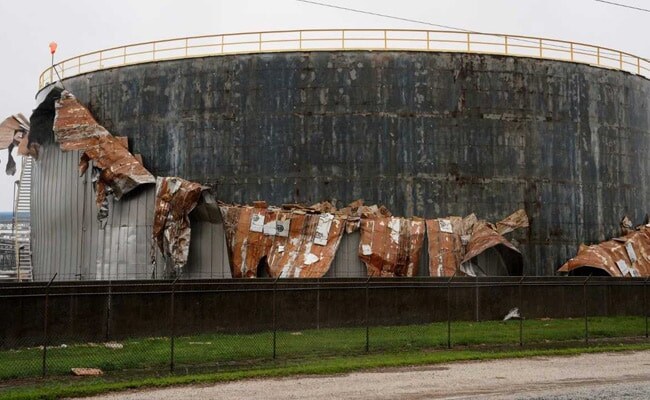
Boston/Frankfurt: Hurricane Harvey's whipsaw of wind and rain across Houston and the Texas Gulf Coast hurt the shares of US property and casualty insurers on Monday as Wall Street analysts estimated insured losses as high as $20 billion. That would make it one of the costliest storms in history for US insurers, but could ultimately help insurers and reinsurers to raise rates, some analysts said, after a period of low premiums. "Our best guess at this point is Harvey could result in $10 billion to $20 billion of industry insured losses, making it one of the top 10 most costly hurricanes to hit the United States," JPMorgan analyst Sarah DeWitt said in a research note on Monday.
Swathes of Houston were underwater on Monday, the effect of Harvey sweeping ashore on Friday as the most powerful hurricane to hit Texas in 50 years. It has since been downgraded to a tropical storm, but more rain is expected to fall on the fourth-largest US city.
Damage caused by flooding is not included in standard homeowners insurance policies and is covered by the US government. However, flood damage to businesses is covered by commercial policies, said DeWitt, which could result in "meaningful losses for the commercial reinsurers and insurers".
JPMorgan's and other estimates are currently well below the $75 billion in insured losses caused by Hurricane Katrina hitting New Orleans in 2005, but are likely to grow.
Shares of Travelers Companies Inc and Allstate Corp, two of the largest homeowners insurers in Texas, fell 2.6 per cent and 1.5 per cent respectively on the New York Stock Exchange. Shares of Progressive Corp, a large auto insurer in Texas, fell 2.3 per cent.
Stabilise rates
Harvey struck only days before senior insurance executives hold their annual meeting in Monte Carlo to haggle over reinsurance renewals as premiums remain stubbornly low across the industry.
"We think Harvey could help stabilise global reinsurance pricing, but do not expect a major turn in pricing to follow," Kai Pan, an insurance analyst at Morgan Stanley, said in a research note on Monday.
Property and casualty insurance stocks tend to underperform immediately after a catastrophic storm, but often beat the overall market once loss estimates become more accurate and insurers are able to stabilise or raise premium rates.
By contrast, insurance brokerage stocks, such as Marsh & McLennan Cos Inc, tend to rise immediately after a storm because such companies are not exposed to underwriting risk and a rise in premium rates boosts their commission income.
Shares of Marsh & McLennan, which bought one of the largest insurance brokerages in Texas in 2015, closed up 0.5 per cent on Monday.
Early estimates
Houston is facing worsening flooding in the coming days as the storm dumps more rain on the city, swelling rivers to record levels and forcing federal engineers on Monday to release water from reservoirs in an effort to control the rushing currents.
Swiss Re said it is too early to gauge the full impact.
"There are so many areas that have been hit by devastating winds and now the massive flooding, and insurance adjusters are having to wait for first responders to simply check on the safety and welfare of citizens," said Mark Hanna of the Insurance Council of Texas.
Claims are expected to accelerate once Texas residents get their bearings.
"We have just over 2,000 claims across all lines of business," said Farmers Insurance Group spokesman Trent Frager. "While that may sound low, residents who are evacuated haven't (yet) been able to assess and report damage for claims handling."

-
We May Need Another Tukaram Mundhe To Fight Air Pollution | The Reason Why

Developers may install basic measures such as sprinklers and green nets, resume work, and continue violating rules when this equipment stops working.
-
Extracting Value From Battery Scrap Could Be Challenging For India | The Reason Why
A discarded lithium-ion battery still contains valuable materials such as lithium, nickel and cobalt. These can be recovered and reused. When such batteries are crushed and shredded, they produce a dark powder called black mass.
-
One El Nino, India Can Handle. Two Could Break The Granary
India's grain stocks can absorb one bad year, but a second El Nino could drain the buffer in two to three years, economists say.
-
India's Troika Of Good Luck | Joining The Dots
As Jensen Huang's exit drags Nvidia down, a cooling AI trade and resilient earnings have revived investor interest in India. A likely RBI rate hike looms.
-
Talking Points This Week: Leadership Shock At Nvidia, Earnings Strength, And The Fog Over Hormuz
The Anthropic IPO pricing and first trading day, Nvidia's upcoming earnings, and any fresh signals from Iran will set the tone for the following week.
-
Signature Play: The Classic Cocktail Is Dead. Or Is It?
Classic cocktails are disappearing from India's cocktail menus. But they're still being ordered, taught to bartenders and borrowed from. So, who's really having the last drink?
-
A New Samvat Wishlist: Inclusive Prosperity And Human Development
India has strengthened its economic foundations through infrastructure, digital access and enterprise. Its next growth chapter must deepen productivity, create better livelihoods and widen participation in prosperity.
-
Love, Sex Aur Dhokha: The Audacious Plot To Spy On Jensen Huang
A Taipei dinner, a Singapore chip buyer and a suspected Chinese asset: inside the alleged spy operation that got close to NVIDIA's Jensen Huang.
-
Ten Things I Learnt This Samvat
Patience can be a trap. Cheap stocks can stay cheap. Leverage can wipe you out. What did Samvat 2082 teach us? Niraj Shah writes on 10 lessons from the year gone by.
-
Talking Points This Week: Tech Nerves, FII Buying, And A Faraway Banking Shock
The global markets are not shining this Diwali. The exception in the large markets is, India.









